Rantowles in Charleston County, South Carolina — The American South (South Atlantic)
The Stono Rebellion (1739)
Photographed by Mike Stroud, November 15, 2008
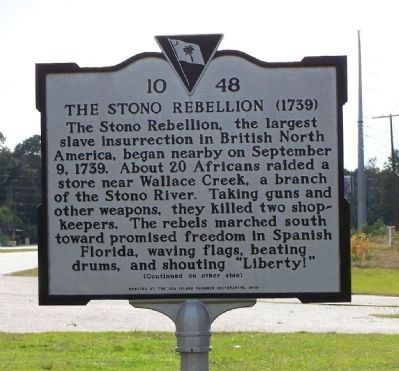
1. The Stono Rebellion Marker, front side
The Stono Rebellion, the largest slave insurrection in British North America, began nearby on September 9, 1739. About 20 Africans raided a store near Wallace Creek, a branch of the Stono River. Taking guns and other weapons, they killed two shopkeepers. The Rebels marched south toward promised freedom in Spanish Florida, waving flags, beating drums, and shouting "Liberty!"
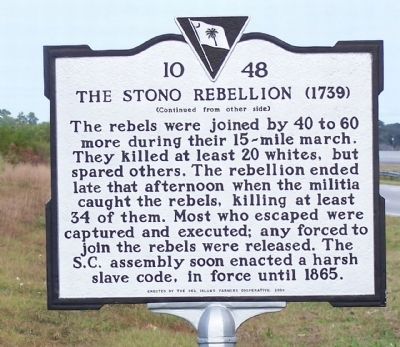
The rebels were joined by 40 to 50 more during their 15-mile march. They killed at least 20 whites, but spared others. The rebellion ended late that afternoon when militia caught the rebels, killing at least 34 of them. Most who escaped were captured and executed; any forced to join the rebels were released. The S.C. assembly soon enacted a harsh slave code, in force until 1865.
Erected 2006 by South Carolina Department of Archives and History, sponsored by The Sea Island Farmers Cooperative. (Marker Number 10-48.)
Topics and series. This historical marker is listed in these topic lists: African Americans • Colonial Era • Notable Events. In addition, it is included in the National Historic Landmarks, and the South Carolina Historical Markers
this page online
Location. 32° 47.111′ N, 80° 8.83′ W. Marker is in Rantowles, South Carolina, in Charleston County. It is on Savannah Highway (U.S. 17), on the right when traveling south. Marker is just south side of the Wallace River. Touch for map. Marker is in this post office area: Hollywood SC 29449, United States of America. Touch for directions.

Regionally, this marker is in the Lowcountry. It is also in the American South, specifically in the Deep South, and on the Eastern Seaboard. Globally, it is in the North Atlantic Region, North America, the Western Hemisphere, the Western World, and the Anglosphere. Historically, it finds itself in what was once the territory of the Mississippian Culture, one of the original Thirteen Colonies, one of the Confederate States of America, and the Antebellum South.
Other nearby markers. At least 8 other markers are within 6 miles of this marker, measured as the crow flies: Grave Of Colonel William A. Washington (approx. one mile away); New Bethel African Methodist Episcopal Church (approx. 2 miles away); Belvidere School Site (approx.
Photographed by Mike Stroud, November 2008
2. The Stono Rebellion Marker, reverse side
Also see . . .
1. The Stono Rebellion (sometimes called Cato's Conspiracy or Cato's Rebellion). (Submitted on December 26, 2008, by Mike Stroud of Bluffton, South Carolina.)
2. South Carolina Department of Archives and History. Contains a little history on the Stono Rebellion. It also list the entry into the National Historic Landmarks as 1974. (Submitted on October 26, 2009, by Michael Sean Nix of Spartanburg, South Carolina.)
Additional keywords. Jemmy
Photographed by Mike Stroud, November 15, 2008
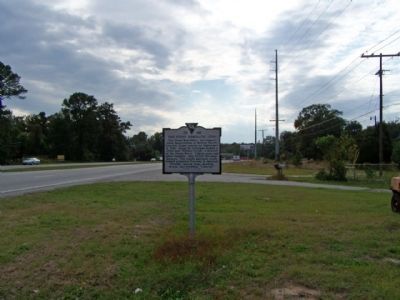
3. The Stono Rebellion Marker, looking south on US 17
Photographed by Mike Stroud, November 2008
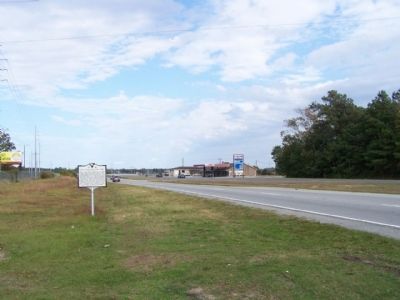
4. The Stono Rebellion Marker, looking north on US 17
Credits. This page was last revised on January 19, 2026. It was originally submitted on December 26, 2008, by Mike Stroud of Bluffton, South Carolina. This page has been viewed 28,966 times since then and 705 times this year. Last updated on December 30, 2008, by Richard E. Miller of Oxon Hill, Maryland. Photos: 1, 2, 3, 4. submitted on December 26, 2008, by Mike Stroud of Bluffton, South Carolina. • Kevin W. was the editor who published this page.
