Near Fredonia in Mohave County, Arizona — The American Mountains (Southwest)
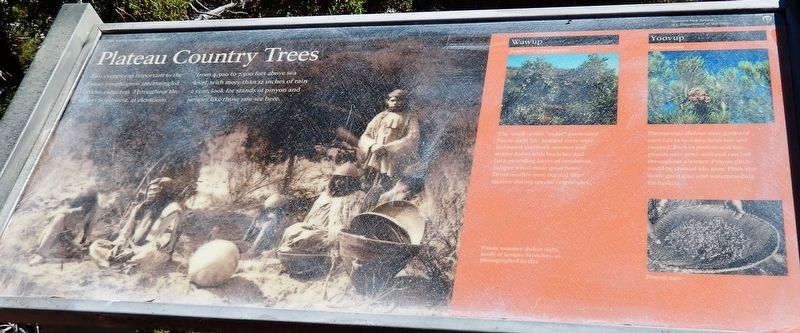
Plateau Country Trees
| — | Pipe Spring National Monument | — |
Photographed by Cosmos Mariner, June 10, 2016
1. Plateau Country Trees Marker
Wawup
Juniperus Osteosperma
The smell of this “cedar” permeated Paiute daily life. Juniper trees were fashioned into both summer and winter kahns with branches and bark providing layers of insulation. Juniper wood made good bows. Dried needles were burned like incense during special ceremonies.
Yoovup
Pinus edulis
Pinyon nuts were gathered each fall to be eaten both raw and roasted. Rich in protein and fats, pinyon nuts store well and can last throughout a winter. Pinyon pitch could be chewed like gum. Pitch also made good glue and waterproofing for baskets.
Erected by National Park Service, U.S. Department of the Interior.
Topics. This historical marker is listed in this topic list: Indigenous Peoples and Communities.
Location. 36° 51.86′ N, 112° 44.499′ W. Marker is near Fredonia,
this page online

Regionally, this marker is in the American Southwest and on the Colorado Plateau. Globally, it is in North America, the Western Hemisphere, the Western World, and the Anglosphere. Historically, it finds itself in what was once New Spain and also Mexico’s Alta California.
Other nearby markers. At least 8 other markers are within walking distance of this marker: Remnants of a Frozen Sahara (a few steps from this marker); Tup' (a few steps from this marker); Cut Off By The Grand Canyon (within shouting distance of this marker); Suh-uhv' (within shouting distance of this marker); Boundaries and Fencing (within shouting distance of this marker); Oos'eev (within shouting distance of this marker); Kwi'-uv (within shouting distance of this marker); Boulders to Building Blocks
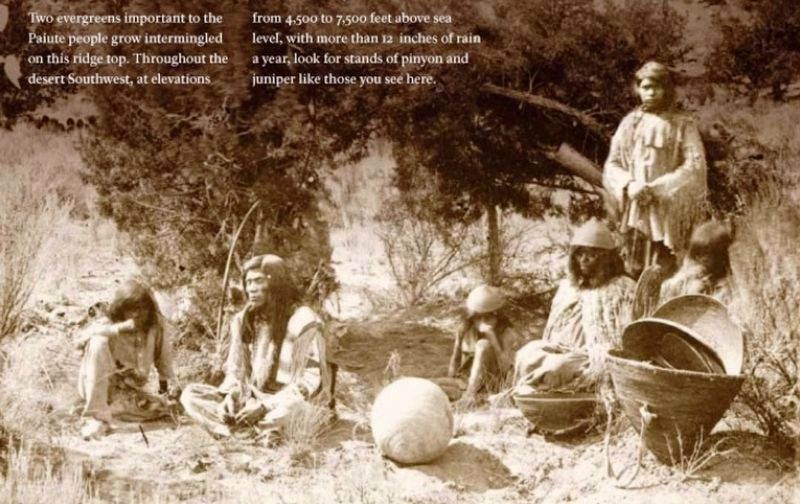
2. Marker detail: Background Photo
as photographed in 1872
Related markers. Click here for a list of markers that are related to this marker. Pipe Spring National Monument
Also see . . .
1. Plateau Country Trees. (A National Park Service link for this marker.) (Submitted on May 6, 2020, by Cosmos Mariner of Cape Canaveral, Florida.)
2. Juniperus Osteosperma (Wikipedia). Native Americans such as the Havasupai used the bark for a variety of purposes, including beds, and ate the cones both fresh and in cakes. The Havasupai used the gum to make a protective covering over wounds. Additionally, the Yavapai gave their women a tea made from the leaves to calm their contractions after giving birth, and fumigated them with smoke from the leaves placed over hot coals. The Navajo sweep their tracks with boughs from the trees so death will not follow them. (Submitted on May 6, 2020, by Cosmos Mariner of Cape Canaveral, Florida.)
3. Pinus edulis (Wikipedia). The edible seeds, pine nuts, are extensively collected throughout its range; in many areas, the seed harvest
Photographed by Cosmos Mariner, June 10, 2016
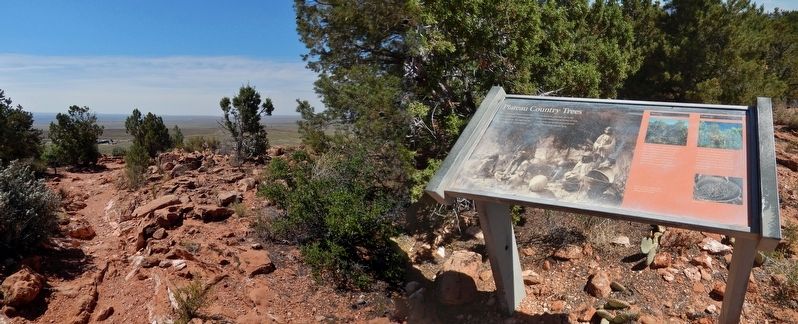
3. Plateau Country Trees Marker
Photographed by Cosmos Mariner, June 10, 2016
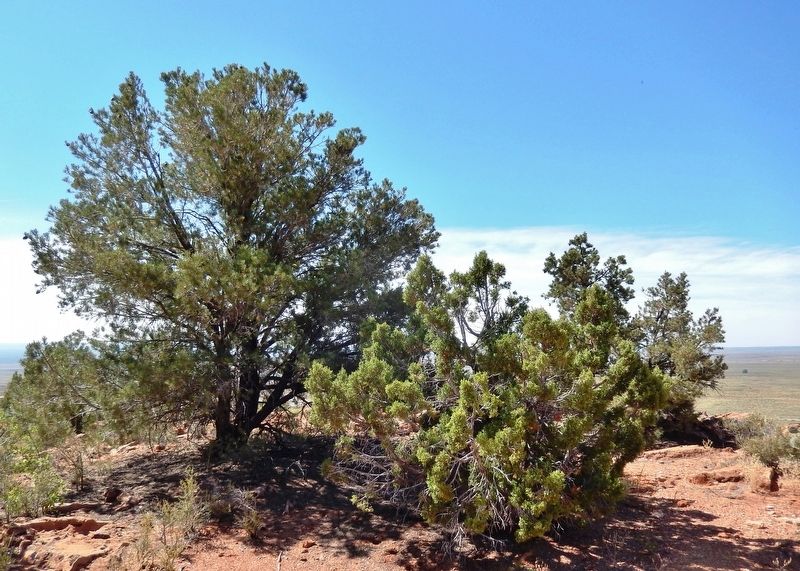
4. Plateau Country Trees • Pinyon & Juniper
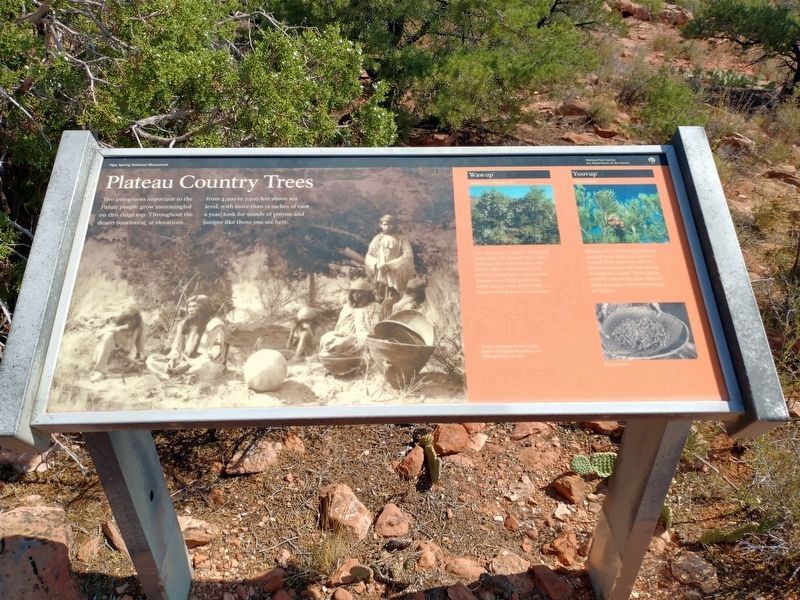
Photographed by Tom Bosse, July 23, 2024
5. Plateau Country Trees Marker
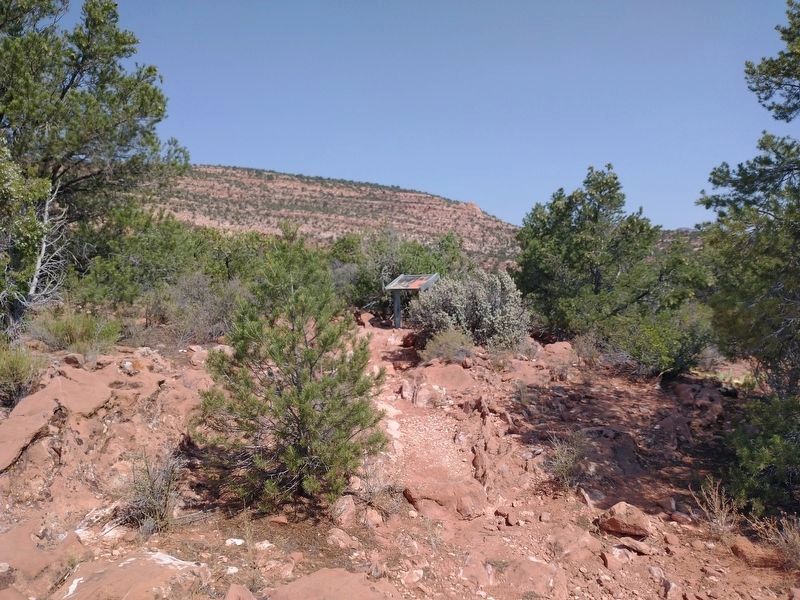
Photographed by Tom Bosse, July 23, 2024
6. Plateau Country Trees Marker
Credits. This page was last revised on September 21, 2024. It was originally submitted on May 5, 2020, by Cosmos Mariner of Cape Canaveral, Florida. This page has been viewed 277 times since then and 25 times this year. Photos: 1. submitted on May 5, 2020, by Cosmos Mariner of Cape Canaveral, Florida. 2. submitted on May 6, 2020, by Cosmos Mariner of Cape Canaveral, Florida. 3. submitted on May 5, 2020, by Cosmos Mariner of Cape Canaveral, Florida. 4. submitted on May 6, 2020, by Cosmos Mariner of Cape Canaveral, Florida. 5, 6. submitted on September 6, 2024, by Tom Bosse of Jefferson City, Tennessee.
