North Haverhill in Grafton County, New Hampshire — The American Northeast (New England)
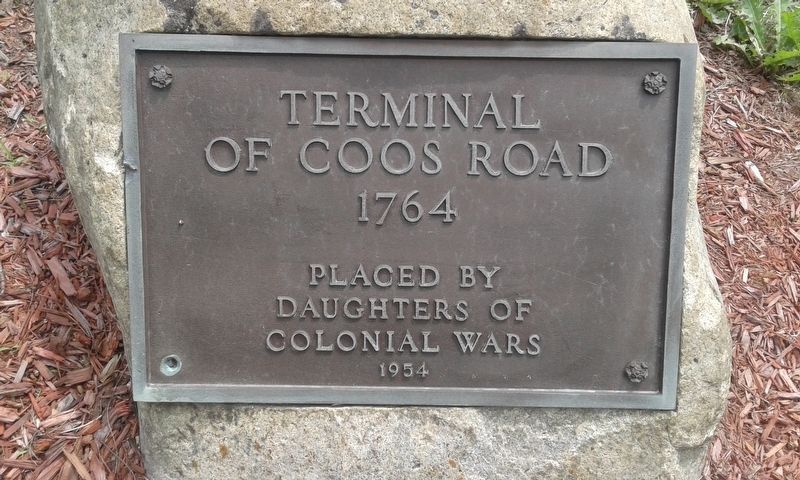
Terminal Of Coos Road
1764
| — | Northern Terminus | — |
Photographed by Craig Doda, July 2, 2018
1. Terminal Of Coos Road Marker
of Coos Road
1764
Placed by
Daughters of
Colonial Wars
1954
Erected 1954 by Daughters of Colonial Wars.
Topics and series. This historical marker is listed in these topic lists: Colonial Era • Roads & Vehicles. In addition, it is included in the Daughters of Colonial Wars series list. A significant historical year for this entry is 1764.
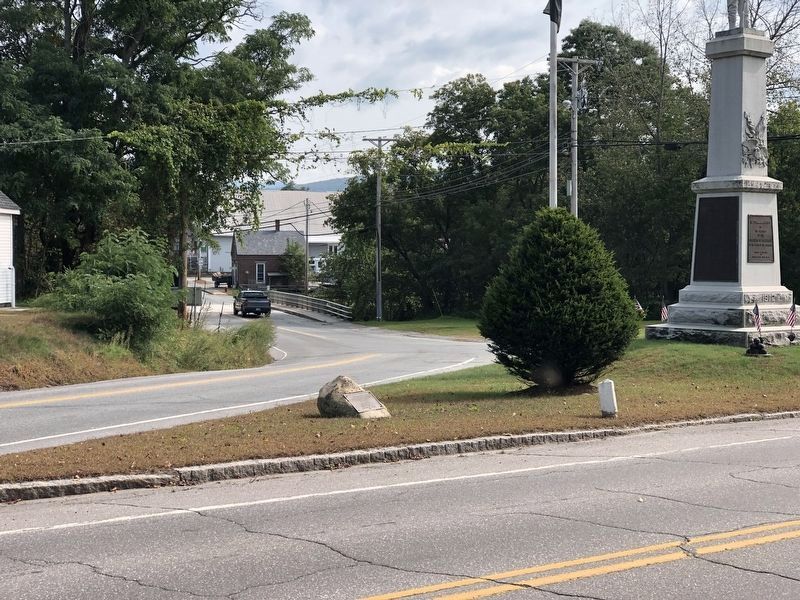
Location. 44° 5.395′ N, 72° 1.556′ W. Marker is in North Haverhill, New Hampshire, in Grafton County. It is at the intersection of Dartmouth College Highway (New Hampshire Route 10) and Benton Road ( Route 116), on the right when traveling north on Dartmouth College Highway. Touch for map. Marker is in this post office area: North Haverhill NH 03774, United States of America. Touch for directions.

Regionally, this marker is in the White Mountains. It is also in the American Northeast and in New England. Globally, it is in North America, the Great North Woods, the Western Hemisphere, the Western World, and the Anglosphere. Historically, it finds itself in what was once one of the original Thirteen Colonies.
Other nearby markers. At least 8 other markers
this page online
Related markers. Click here for a list of markers that are related to this marker. This link lists both terminals, which you can then map.
Additional commentary.
1. The Coos Road
The Coos Road — also known as the Province Road — was the first major road built in colonial New Hampshire to connect the seacoast settlements around Portsmouth with the fertile agricultural lands of the upper Connecticut River valley, a region then known as Coös, an Abenaki word for the area around the great northern bends of the river. The road's southern terminus was at Durham, near the Oyster River, and its northern terminus was at Haverhill, which the
Photographed by Craig Doda, July 2, 2018
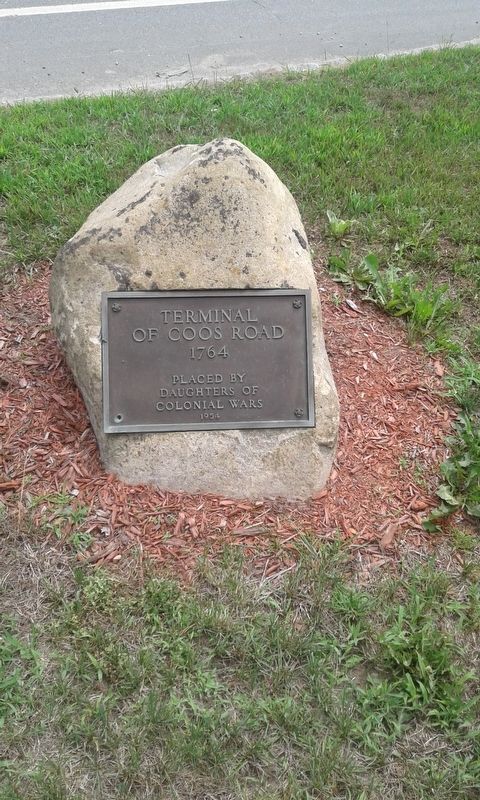
2. Terminal Of Coos Road Marker
The road's purpose was essentially economic. The colonial government was concerned that the rich alluvial farmlands along the Connecticut River oxbows — among the most productive in New England — were so remote from Portsmouth, then the provincial capital and dominant seaport, that farmers would route their produce southward into other colonies rather than supplying New Hampshire's own coastal population. The Province Road was the answer, giving the upper valley a direct overland link to market. Completed in the early 1770s, it subsequently became the Coos Turnpike. The northern terminus marker stands today at the intersection of New Hampshire Route 10 (Dartmouth College Highway) and Route 116 in North Haverhill, while the southern terminus marker stands on Route 108 (Newmarket Road) in Durham. Both markers were placed by the Daughters of Colonial Wars in 1954. ✨
— Submitted July 1, 2026, by J. J. Prats of Powell, Ohio.
Photographed by Kevin Craft, September 25, 2023
3. Wideview of Terminal Of Coos Road Marker
Credits. This page was last revised on July 1, 2026. It was originally submitted on December 15, 2020, by Craig Doda of Napoleon, Ohio. This page has been viewed 401 times since then and 37 times this year. Photos: 1, 2. submitted on December 15, 2020, by Craig Doda of Napoleon, Ohio. 3. submitted on September 28, 2023, by Kevin Craft of Bedford, Quebec. • Michael Herrick was the editor who published this page.
