Ross County Earthworks
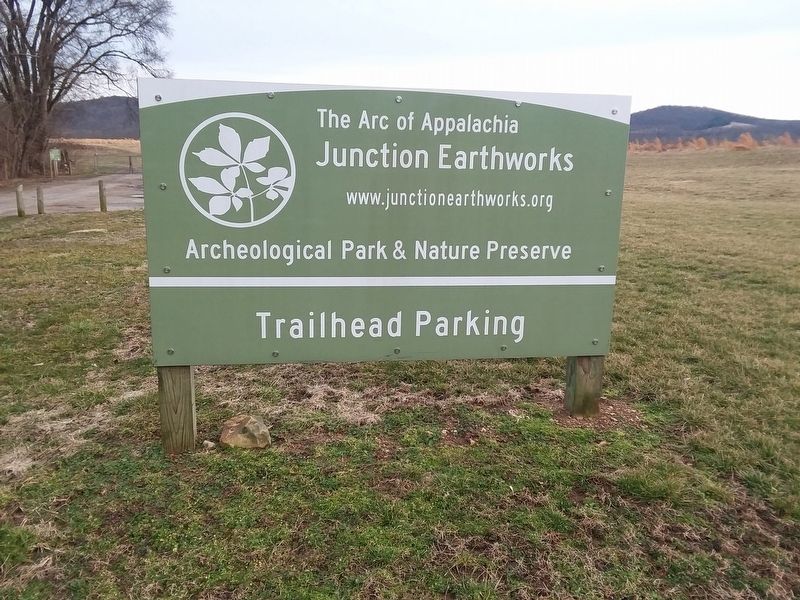
The Arc Of Appalachia Junction Earthworks Archeological Park & Nature Preserve
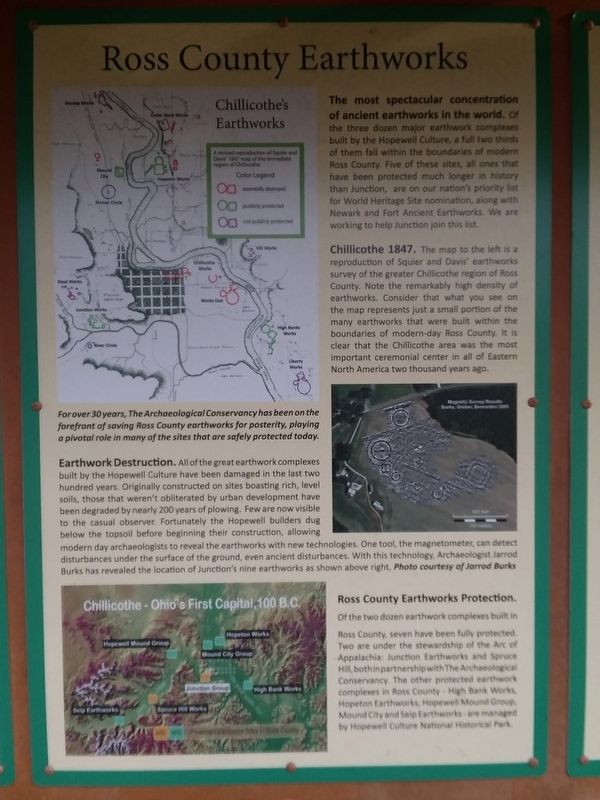
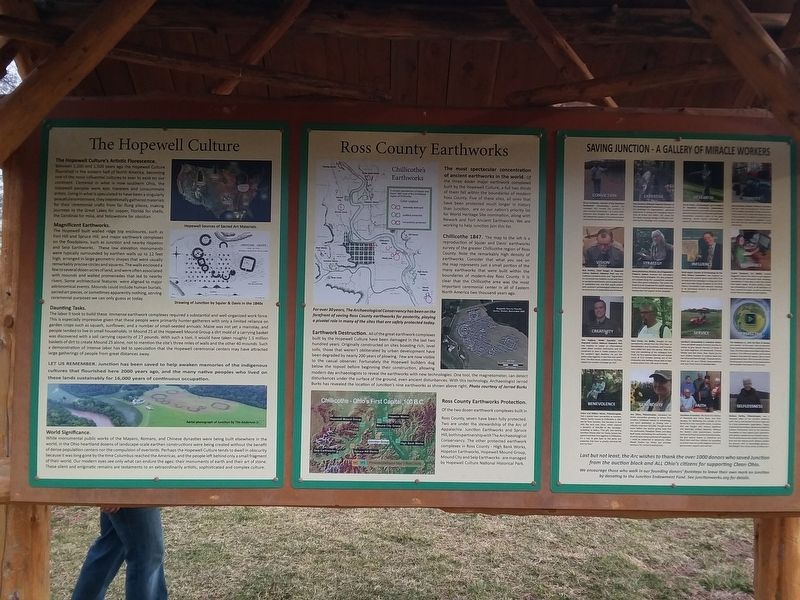
The most spectacular concentration of ancient earthworks in the world. Of the three dozen major earthwork complexes built by the Hopewell Culture, a full two thirds of them fall within the boundaries of modern Ross County. Five of these sites, all ones that have been protected much longer in history than Junction, are on our nation's priority list for World Heritage Site nomination, along with Newark and Fort Ancient Earthworks. We are working to help Junction join this list.
Chillicothe 1847. The map to the left is a reproduction of Squier and Davis' earthworks survey of the greater Chillicothe region of Ross County. Note the remarkably high density of earthworks. Consider that what you see on the map represents just a small portion of the many earthworks that were built within the boundaries of modern-day Ross County. It is clear that the Chillicothe area was the most important ceremonial center in all of Eastern North America two thousand years ago.
Earthwork Destruction. All of the great earthwork complexes built by the Hopewell Culture have been damaged in the last two hundred years. Originally
this page online
Ross County Earthworks Protection.
Of the two dozen earthwork complexes built in
Ross County, seven have been fully protected.
Two are under the stewardship of the Arc of
Appalachia: Junction Earthworks and Spruce
Hill, both in partnership with The Archaeological
Conservancy. The other protected earthwork
complexes in Ross County High Bank Works,
Hopeton Earthworks, Hopewell Mound Group,
Mound City and Seip Earthworks-are managed
by Hopewell Culture National Historical Park
For over
Topics. This historical marker is listed in these topic lists: Anthropology & Archaeology • Indigenous Peoples and Communities. A significant historical year for this entry is 1847.
Location. 39° 19.042′ N, 83° 0.757′ W. Marker is in Chillicothe, Ohio, in Ross County. It can be reached from Belleview Avenue (County Road 377) 0.1 miles east of Plyleys Lane, on the right when traveling east. Touch for map. Marker is at or near this postal address: 2 Bellcreek Ln, Chillicothe OH 45601, United States of America. Touch for directions.

Regionally, this marker is in the Scioto Valley and in Southern Ohio Hill Country. It is also in the American Midwest, in the Corn Belt, and in Northern Appalachia. Globally, it is in North America, the Western Hemisphere, the Western World, and the Anglosphere. Historically, it finds itself in what was once the Viceroyalty of New France, the Haudenosaunee (Iroquois) Confederacy, the territory of the
Other nearby markers. At least 8 other markers are within walking distance of this marker: The Hopewell Culture (here, next to this marker); Sacred Ground (within shouting distance of this marker); Circles (about 500 feet away, measured in a direct line); Quatrefoil (about 600 feet away); Crescents (about 600 feet away); Squircles (about 700 feet away); Magnetometry (about 700 feet away); Joseph Carter Corbin (approx. 0.9 miles away). Touch for a list and map of all markers in Chillicothe.
Credits. This page was last revised on February 14, 2021. It was originally submitted on February 14, 2021, by Craig Doda of Napoleon, Ohio. This page has been viewed 394 times since then and 38 times this year. Photos: 1, 2, 3. submitted on February 14, 2021, by Craig Doda of Napoleon, Ohio. • Devry Becker Jones was the editor who published this page.
