Near Chinle in Apache County, Arizona — The American Mountains (Southwest)
House Under Rock

Photographed by Cosmos Mariner, May 23, 2016
1. House Under Rock Marker
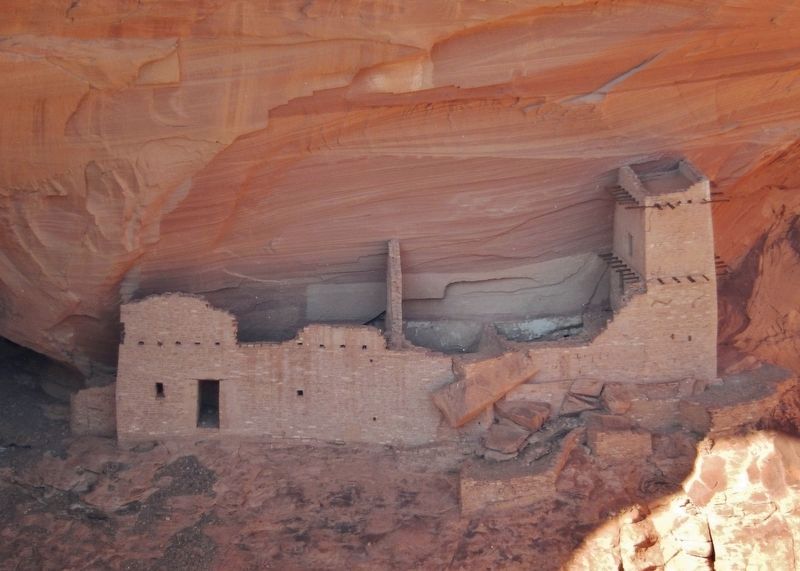
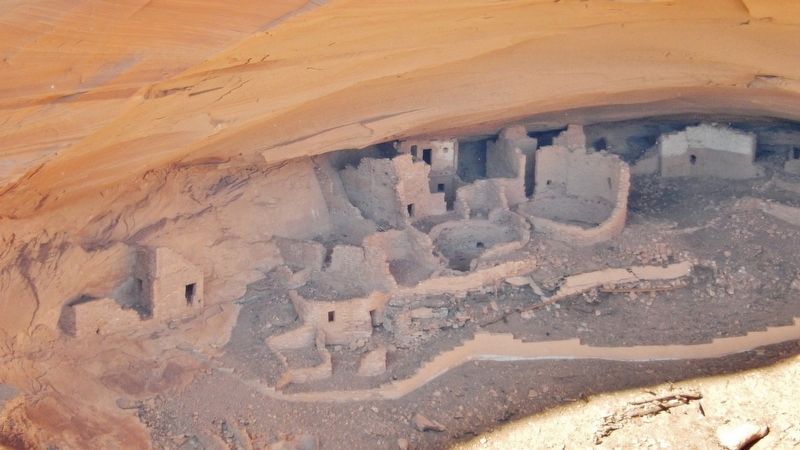
The large rooms and masonry of the central tower area are Mesa Verde in style and contrast with the coarser construction in the smaller rooms at either side. This dramatic evidence suggests that people from the Mesa Verde area may have moved into Canyon de Chelly sometime around AD 1286.
Topics. This historical marker is listed in these topic lists: Anthropology & Archaeology • Architecture • Indigenous Peoples and Communities. A significant historical year for this entry is 1286.
Location. 36° 13.719′ N, 109° 21.673′ W. Marker is near Chinle, Arizona, in Apache County. It can be reached from Mummy Cave Overlook Road 1½ miles east of North Rim Highway (Indian Route 64). Marker is located within Canyon de Chelly National Monument, at Mummy Cave Overlook. Touch for map. Marker is in this post office
this page online

Regionally, this marker is in Arizona’s Navajo Nation. It is also in the American Southwest, in the Mountain West, on the Colorado Plateau, and at the Four Corners. Globally, it is in North America, the Western Hemisphere, the Western World, and the Anglosphere. Historically, it finds itself in what was once New Spain, the territory of the Ancestral Puebloans, and Mexico’s Alta California.
Other nearby markers. At least 2 other markers are within 9 miles of this marker, measured as the crow flies: The Place Where Two Fell Off (approx. 0.6 miles away); Sliding House Ruins (approx. 8.8 miles away).
Also see . . .
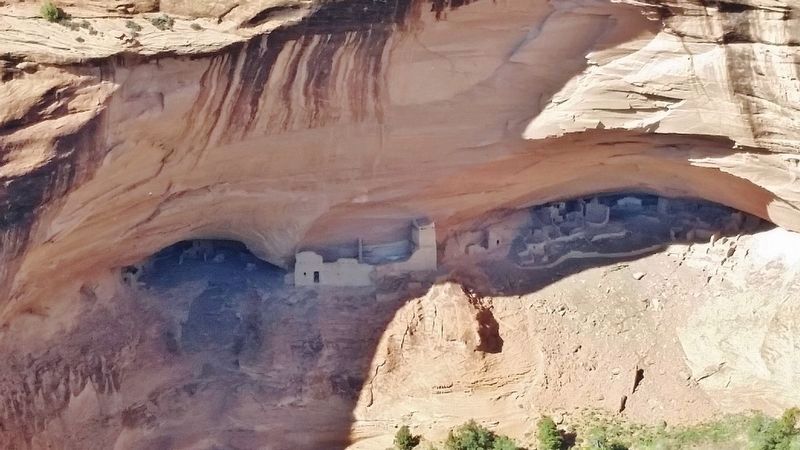
1. Mummy Cave Overlook. Mummy Cave is the name of the ruin visible from the overlook. With over 80 rooms and three kivas, this is one of the largest dwelling structures in the park. (Submitted on April 9, 2021, by Cosmos Mariner of Cape Canaveral, Florida.)
2. Mummy Cave Overlook. The Mummy Cave complex looks like a miniature city clinging to the cliffs, 300 feet above the valley floor, opposite of the overlook.

Photographed by Cosmos Mariner, May 23, 2016
2. House Under Rock Marker
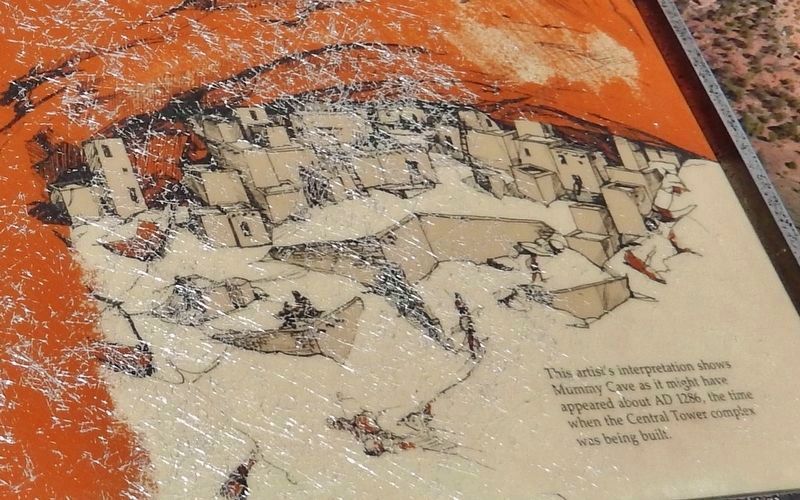
3. Marker detail: Mummy Cave, circa 1286
This artist’s interpretation shows Mummy Cave as it might have appeared about AD 1286, the time when the Central Tower complex was being built.
Photographed by Cosmos Mariner, May 23, 2016
4. House Under Rock (wide telephoto view from marker)
Photographed by Cosmos Mariner, May 23, 2016
5. House Under Rock — Central Tower
(zoomed telephoto view from marker)
(zoomed telephoto view from marker)
Photographed by Cosmos Mariner, May 23, 2016
6. House Under Rock — Smaller Rooms on side
(zoomed telephoto view from marker)
(zoomed telephoto view from marker)
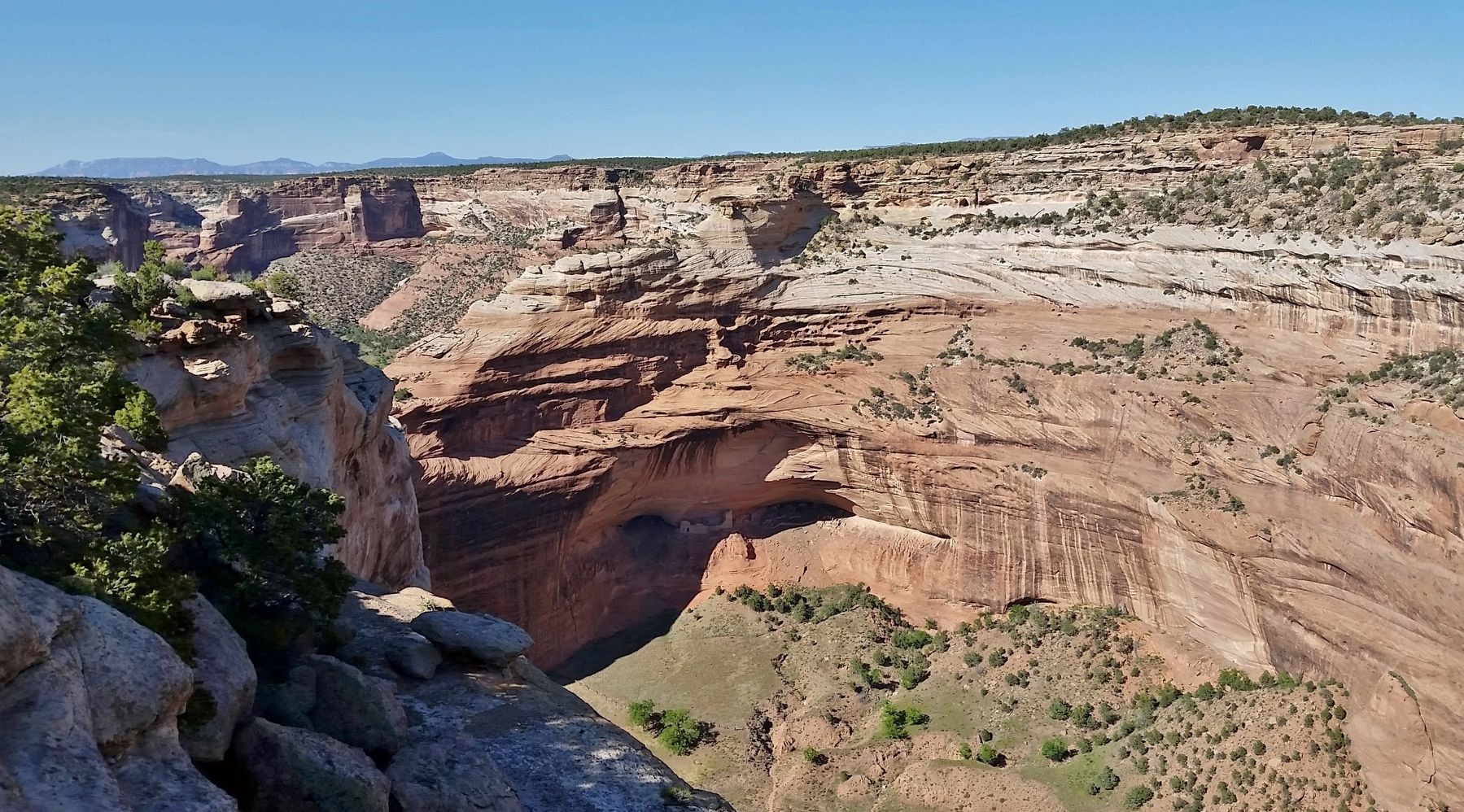
Photographed by Cosmos Mariner, May 23, 2016
7. Mummy Cave (canyon view from near marker)
Credits. This page was last revised on June 28, 2025. It was originally submitted on April 9, 2021, by Cosmos Mariner of Cape Canaveral, Florida. This page has been viewed 1,163 times since then and 67 times this year. Photos: 1, 2, 3, 4, 5, 6, 7. submitted on April 9, 2021, by Cosmos Mariner of Cape Canaveral, Florida.
