Winston-Salem in Forsyth County, North Carolina — The American South (South Atlantic)
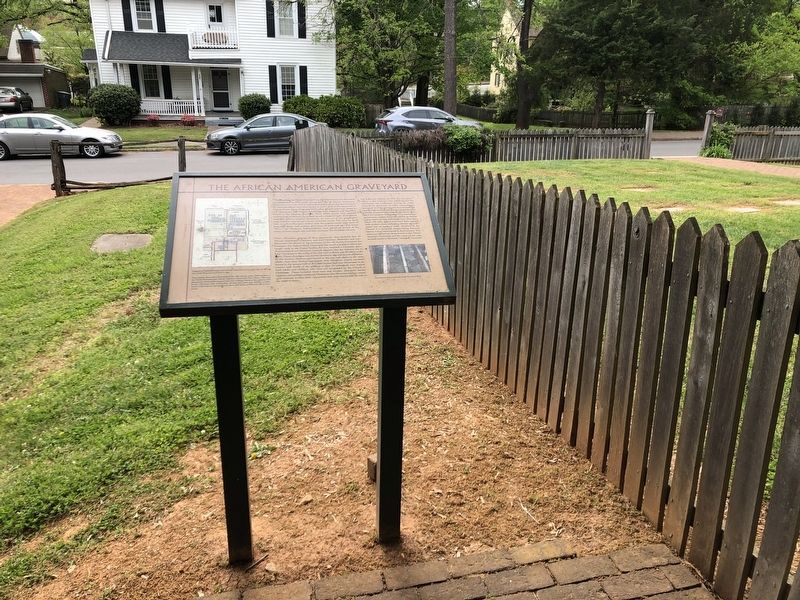
The African American Graveyard
Photographed by Devry Becker Jones (CC0), April 23, 2021
1. The African American Graveyard Marker
Inscription.
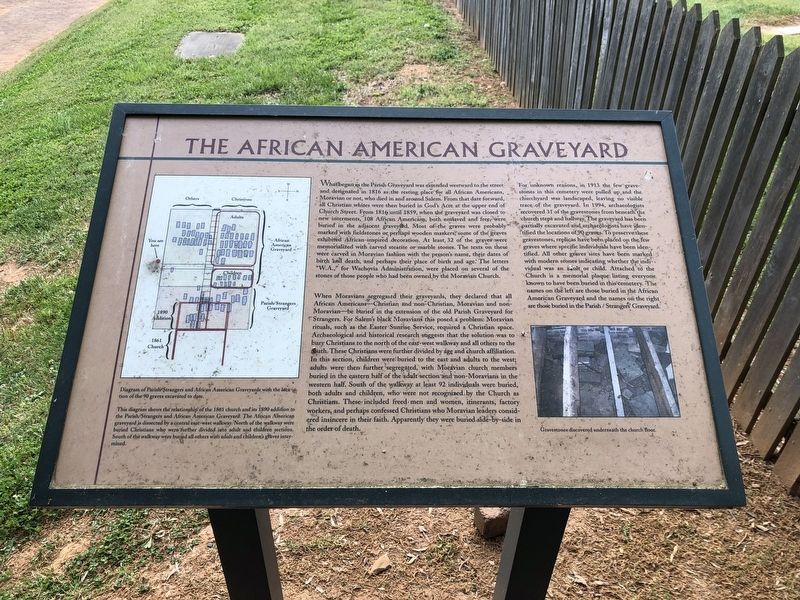
The African American Graveyard. . , What began as the Parish Graveyard was extended westward to the street and designated in 1816 as the resting place for all African Americans, Moravian or not, who died in and around Salem. From that date forward, all Christian whites were then buried in God's Acre at the upper end of Church Street. From 1816 until 1859, when the graveyard was closed to new interments, 108 African Americans, both enslaved and free, were buried in the adjacent graveyard. Most of the graves were probably marked with fieldstones or perhaps wooden markers; some of the graves exhibited African-inspired decoration. At least 32 of the graves were memorialized with carved steatite or marble stones. The texts on these were carved in Moravian fashion with the person's name, their dates of birth and death, and perhaps their place of birth and age. The letters "W.A.," for Wachovia Administration, were placed on several of the stones of those people who had been owned by the Moravian Church.
When Moravians segregated their graveyards, they declared that all African Americans, Christian and non-Christian, Moravian and non-Moravian, be buried in the extension of the old Parish Graveyard for Strangers. For Salem's black Moravian this posed a problem: Moravian rituals, such as the Easter Sunrise Service, required a Christian space. Archaeological and historical research suggests that the solution was to bury Christians to the north of the east-west walkway and all others to the south. These Christians were further divided by age and church affiliation. In this section, children were buried to the east and adults to the west; adults were then further segregated, with Moravian church members buried in the eastern half of the adult section and non-Moravians in the western half. South of the walkway at least 92 individuals were buried, both adults and children, who were not recognized by the Church as Christians. These included freed men and women, itinerants, factory workers, and perhaps confessed Christians who Moravian leaders considered insincere in their faith. Apparently they were buried side-by-side in the order of death.
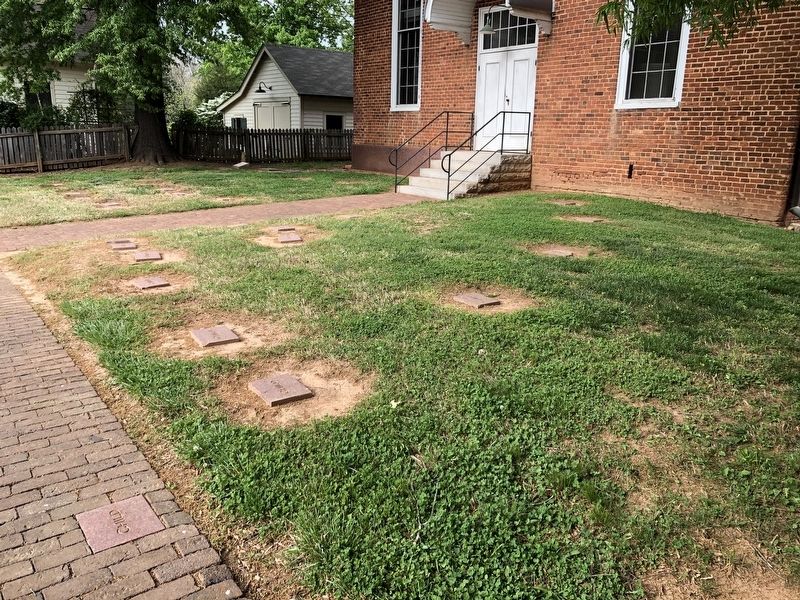
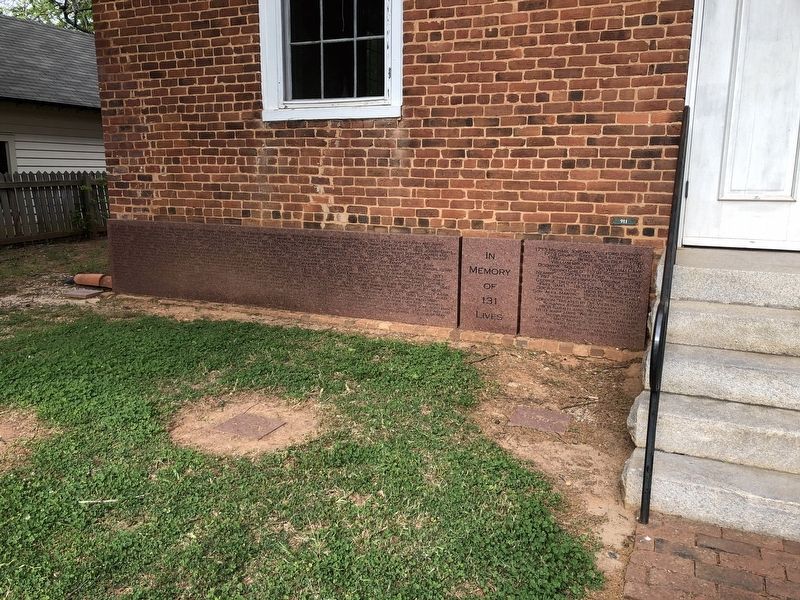
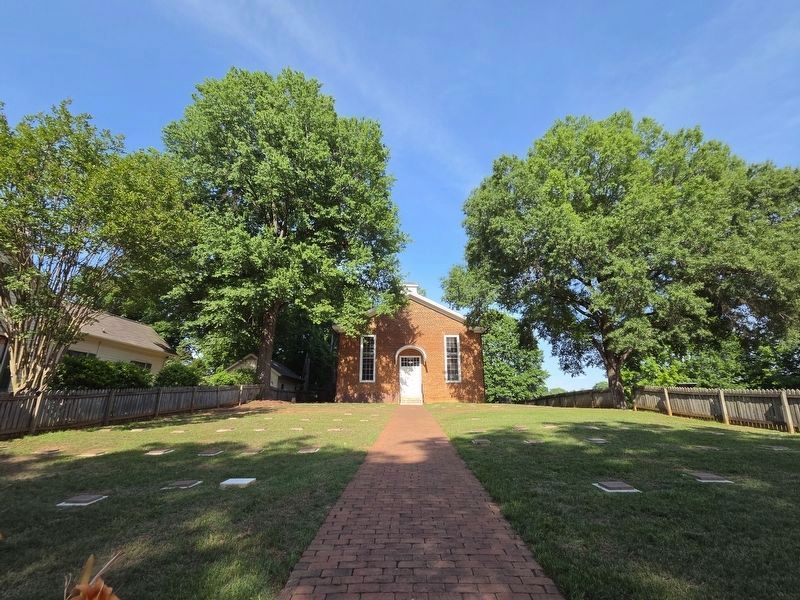
For unknown reasons, in 1913 the few gravestones in this cemetery were pulled up and the churchyard was landscaped, leaving no visible trace of the graveyard. In 1994, archaeologists recovered 31 of the gravestones from beneath the church steps and hallway. The graveyard has been partially excavated and archaeologists have identified the locations of 90 graves. To preserve these gravestones, replicas have been placed on the few graves that were specific individuals have been identified. All other graves sites have been marked with modern stones indicating whether the individual was an adult or child. Attached to the Church is a memorial plaque: listing everyone known to have been buried in this cemetery. The names on the left are those buried in the African American Graveyard and the names on the right are those buried in the Parish / Strangers' Graveyard.
[Caption:] , Diagram of Parish/Strangers and African American Graveyards with the location of the 90 graves excavated to date.
This diagram shows the relationship of the 1861 church and its 1890 addition to the Parish/Strangers and African American Graveyard. The African American graveyard is dissected by a central east-west walkway. North of the walkway were buried Christians who were further divided into adult and children sections. South of the walkway were buried all others with adult and children's graves intermixed.
What began as the Parish Graveyard was extended westward to the street and designated in 1816 as the resting place for all African Americans, Moravian or not, who died in and around Salem. From that date forward, all Christian whites were then buried in God's Acre at the upper end of Church Street. From 1816 until 1859, when the graveyard was closed to new interments, 108 African Americans, both enslaved and free, were buried in the adjacent graveyard. Most of the graves were probably marked with fieldstones or perhaps wooden markers; some of the graves exhibited African-inspired decoration. At least 32 of the graves were memorialized with carved steatite or marble stones. The texts on these were carved in Moravian fashion with the person's name, their dates of birth and death, and perhaps their place of birth and age. The letters "W.A.," for Wachovia Administration, were placed on several of the stones of those people who had been owned by the Moravian Church.
When Moravians segregated their graveyards, they declared that all African Americans—Christian and non-Christian, Moravian and non-Moravian—be buried in the extension of the old Parish Graveyard for Strangers. For Salem's black Moravian this posed a problem: Moravian rituals, such as the Easter Sunrise Service, required a Christian space. Archaeological
Click or scan to see this page online
and historical research suggests that the solution was to bury Christians to the north of the east-west walkway and all others to the south. These Christians were further divided by age and church affiliation. In this section, children were buried to the east and adults to the west; adults were then further segregated, with Moravian church members buried in the eastern half of the adult section and non-Moravians in the western half. South of the walkway at least 92 individuals were buried, both adults and children, who were not recognized by the Church as Christians. These included freed men and women, itinerants, factory workers, and perhaps confessed Christians who Moravian leaders considered insincere in their faith. Apparently they were buried side-by-side in the order of death.
For unknown reasons, in 1913 the few gravestones in this cemetery were pulled up and the churchyard was landscaped, leaving no visible trace of the graveyard. In 1994, archaeologists recovered 31 of the gravestones from beneath the church steps and hallway. The graveyard has been partially excavated and archaeologists have identified the locations of 90 graves. To preserve these gravestones, replicas have been placed on the few graves that were specific individuals have been identified. All other graves sites have been marked with modern stones indicating whether the individual was an adult or
Photographed by Devry Becker Jones (CC0), April 23, 2021
2. The African American Graveyard Marker
child. Attached to the Church is a memorial plaque: listing everyone known to have been buried in this cemetery. The names on the left are those buried in the African American Graveyard and the names on the right are those buried in the Parish / Strangers' Graveyard.
[Caption:]
Diagram of Parish/Strangers and African American Graveyards with the location of the 90 graves excavated to date.
This diagram shows the relationship of the 1861 church and its 1890 addition to the Parish/Strangers and African American Graveyard. The African American graveyard is dissected by a central east-west walkway. North of the walkway were buried Christians who were further divided into adult and children sections. South of the walkway were buried all others with adult and children's graves intermixed.
Location. 36° 5.048′ N, 80° 14.415′ W. Marker is in Winston-Salem, North Carolina, in Forsyth County. It is on South Church Street just north of Race Street, on the right when traveling north. Touch for map. Marker is at or near this postal address: 913 S Church St, Winston Salem NC 27101, United States of America. Touch for directions.

Regionally, this marker is in North Carolina’s Piedmont and specifically in Piedmont Triad. It is also in the American South and specifically in the Upper South. Globally, it is in the North Atlantic Region, North America, the Western Hemisphere, the Western World, and the Anglosphere. Historically, it finds itself in what was once the territory of the Mississippian Culture, one of the original Thirteen Colonies, one of the Confederate States of America, and the Antebellum South.
Other nearby markers.
Photographed by Devry Becker Jones (CC0), April 23, 2021
4. The memorial of known individuals interred
Photographed by Mark Parker, May 29, 2026
5. Full view of The African American Graveyard at St Philips Moravian
Credits. This page was last revised on May 31, 2026. It was originally submitted on April 28, 2021, by Devry Becker Jones of Washington, District of Columbia. This page has been viewed 727 times since then and 40 times this year. Photos:1, 2, 3, 4. submitted on April 28, 2021, by Devry Becker Jones of Washington, District of Columbia. 5. submitted on May 30, 2026, by Mark Parker of Hickory, North Carolina.