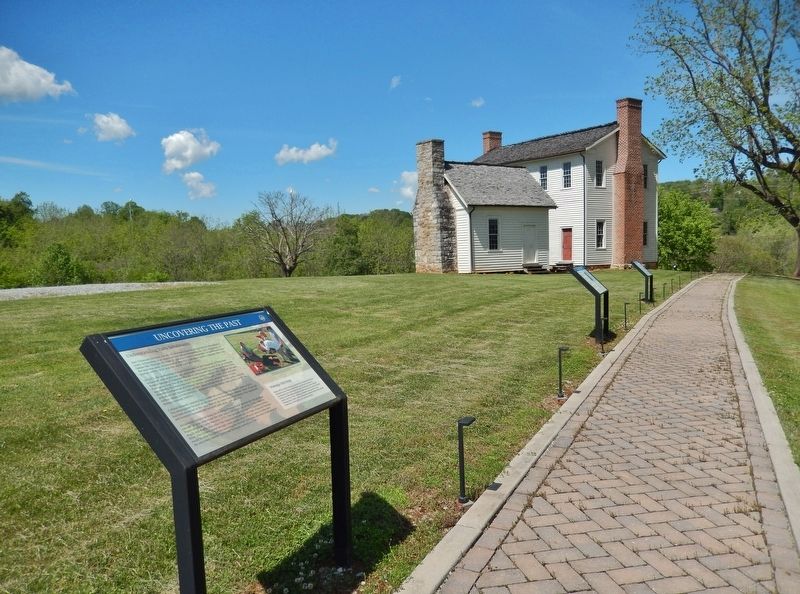
Uncovering the Past
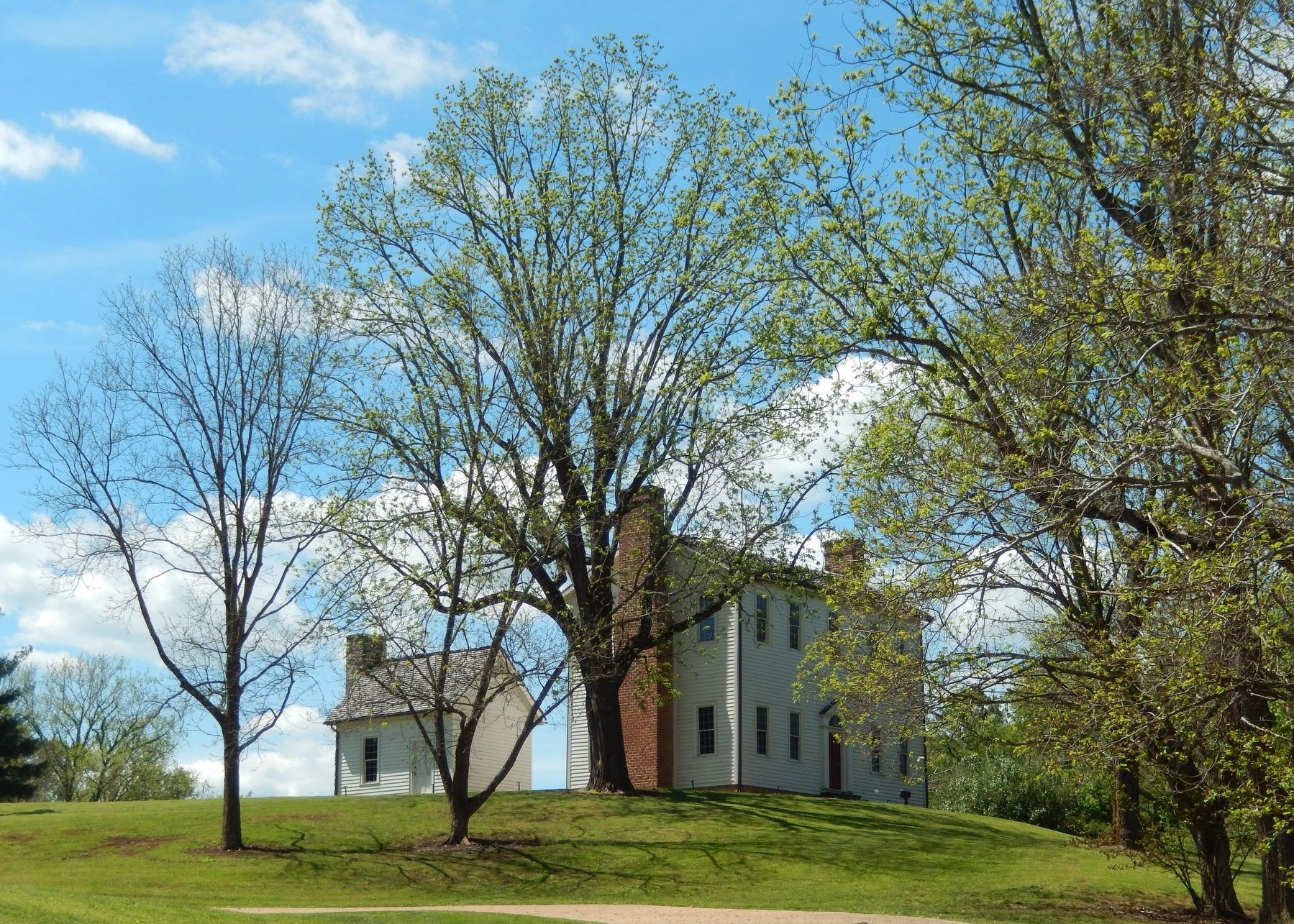
Sabine Hill State Historic Site

Understanding Early Inhabitants
East Tennessee has been the site of continuous human occupation for thousands of years. Archaeology is an important tool for understanding the early inhabitants of Sabine Hill. Through the study of artifacts, it allows researchers to understand how the land was used. Archaeological evidence from these studies indicates there was human activity at or near this site as early as 6500 B.C.
In 2013, the Archaeology Research Laboratory at the University of Tennessee excavated several pits near and around the main house as part of an investigation funded through a Tennessee Historical Commission Federal Historic Preservation Fund grant. Very few of the objects found dated to before 1830. Much of the land surrounding the house was used for farming in the early 1900s. This may have disturbed archaeological evidence. Several recovered artifacts dated to early prehistoric and historic time periods. These include four projectile points, with the earliest dating to 6500-6000 B.C. Archaeologists also found early pottery on the site dating to around 1000 B.C.
Cultural Resource Analysts, Inc., completed a
this page online
Archaeology completed along the Watauga River and near present-day Elizabethton can also help us understand life near Sabine Hill at the end of the 1700s. Artifacts found nearby at Carter Mansion (1775-1781) include two types of Cherokee pottery, Pisgah and Qualla, that reflect the important crossroads for trade along the Watauga River. This trading center brought many people from different areas to what later would become Elizabethton, including the Overhill Cherokees who were established in the area when Andrew Taylor and his family arrived in 1778.
Watauga Old Fields
Sabine Hill is located within an area known by eighteenth-century Cherokee as the Watauga Old Fields, land devoid of forest to accommodate the cultivation of crops. In finding the land already cleared, the Old Fields provided an ideal situation for early European settlers. By the 1770s, a thriving settlement
[photo caption] Archaeology students from the University of Tennessee digging test units at Sabine Hill. (Source: Collection of Sycamore Shoals State Park)
Erected by Tennessee Historical Commission.
Topics and series. This historical marker is listed in these topic lists: Anthropology & Archaeology • Indigenous Peoples and Communities • Settlements & Settlers. In addition, it is included in the Tennessee Historical Commission series list.
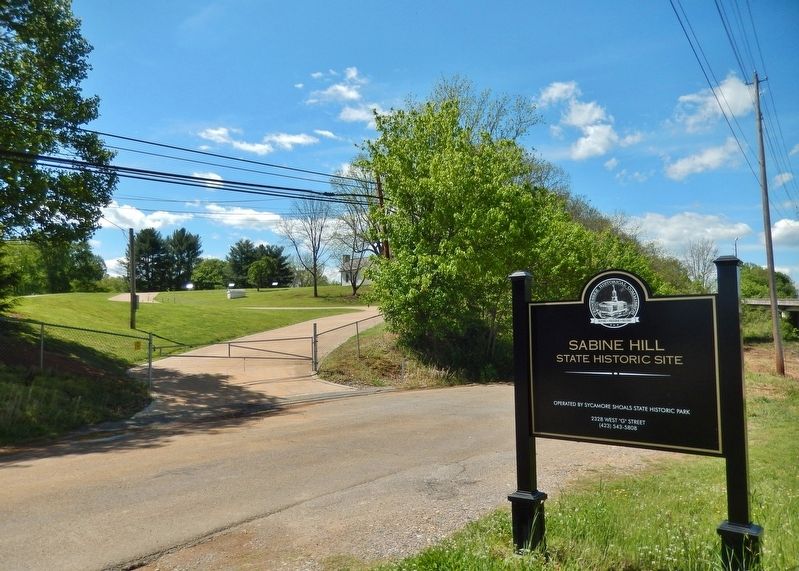
Location. 36° 19.615′ N, 82° 16.131′ W. Marker is in Elizabethton, Tennessee, in Carter County. It can be reached from West G Street (Tennessee Route 67) 0.1 miles west of Sabine Street, on the left when traveling west. Marker is located at the Sabine Hill State Historic Site. Touch for map. Marker is at or near this postal address: 2328 West G Street, Elizabethton TN 37643, United States of America. Touch for directions.
Regionally, this marker is in East Tennessee and in the Tri-Cities Area. It
Other nearby markers. At least 8 other markers are within walking distance of this marker: The Taylor Family (here, next to this marker); Restoration of Sabine Hill (a few steps from this marker); Sabine Hill (about 300 feet away, measured in a direct line); a different marker also named Sabine Hill (about 300 feet away); Buffalo Creek (approx. ¼ mile away); Gap Branch Clean Water Project (approx. 0.4 miles away); Fort Watauga Monument (approx. 0.6 miles away); Monument to the Patriots (approx. 0.6 miles away). Touch for a list and map of all markers in Elizabethton.
Related markers. Click here for a list of markers that are related to this marker. Sabine Hill State Historic Site
Credits. This page was last revised on June 4, 2021. It was originally submitted on June 4, 2021, by Cosmos Mariner of Cape Canaveral, Florida. This page has been viewed 712 times since then and 47 times this year. Photos: 1, 2, 3, 4. submitted on June 4, 2021, by Cosmos Mariner of Cape Canaveral, Florida.
