Knoxville in Knox County, Tennessee — The American South (East South Central)
Magnolia Avenue History
Photographed by Tom Bosse, July 24, 2021
1. Magnolia Avenue History Marker
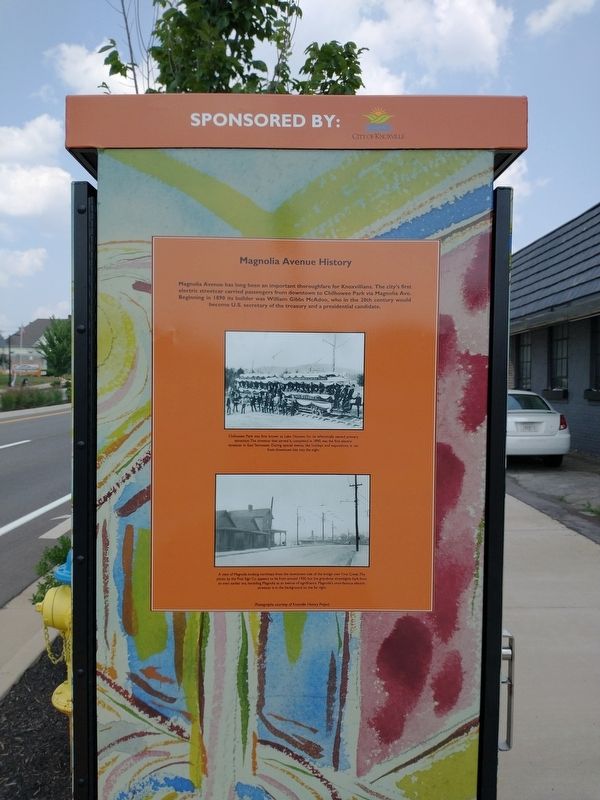
Magnolia Avenue has long been an important thoroughfare for Knoxvillians. The city's first electric streetcar carried passengers from downtown to Chilhowee Park via Magnolia Ave. Beginning in 1890 its builder was William Gibbs McAdoo, who in the 20th century would become U.S. secretary of the treasury and a presidential candidate.
[Captions:]
Chilhowee Park was first known as Lake Ottosee, for its whimsically named primary attraction. The streetcar that served it, completed in 1890, was the first electric streetcar in East Tennessee. During special events, like holidays and expositions, it ran from downtown late in the night.
A view of Magnolia looking northeast from the downtown side of the bridge over First Creek. The photo by the Post Sign Co. appears to be from around 1930, but the grandiose streetlights hark from an even earlier era, heralding Magnolia as an avenue of significance. Magnolia's once-famous electric streetcar is in the background on the far right.
Erected by Knoxville History Project.
Topics and series. This historical marker is listed in these topic lists: Parks & Recreational Areas
this page online
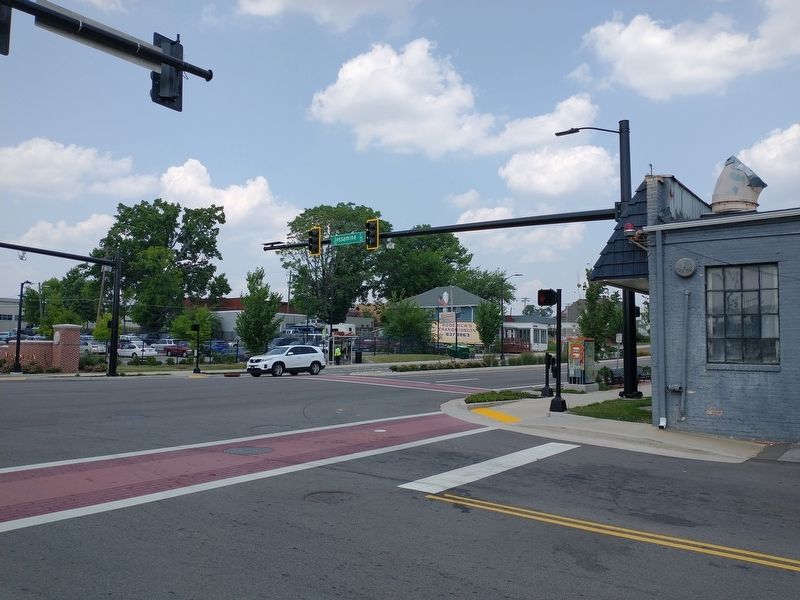
Location. 35° 58.632′ N, 83° 54.728′ W. Marker is in Knoxville, Tennessee, in Knox County. It is at the intersection of East Magnolia Avenue (U.S. 70) and Jessamine Street, on the left when traveling west on East Magnolia Avenue. Touch for map. Marker is at or near this postal address: 1200 E Magnolia Ave, Knoxville TN 37917, United States of America. Touch for directions.

Regionally, this marker is in East Tennessee. It is also in the American South, specifically in the Upper South, in Appalachia, and specifically in Southern Appalachia. Globally, it is in North America, the Western Hemisphere, the Western World, and the Anglosphere. Historically, it finds itself in what was once the original Cherokee Nation, the territory of the Mississippian Culture, one of the Confederate States of America, and the Antebellum South.
Other nearby markers. At least 8 other markers are within walking distance of this marker: Beauford Delaney

Photographed by Tom Bosse, July 24, 2021
2. Magnolia Avenue History Marker
Photographed by Tom Bosse, July 24, 2021
3. Magnolia Avenue History Marker
Credits. This page was last revised on July 28, 2021. It was originally submitted on July 27, 2021, by Tom Bosse of Jefferson City, Tennessee. This page has been viewed 398 times since then and 35 times this year. Photos: 1, 2, 3. submitted on July 27, 2021, by Tom Bosse of Jefferson City, Tennessee. • Devry Becker Jones was the editor who published this page.
