South Colton in St. Lawrence County, New York — The American Northeast (Mid-Atlantic)
The History of Sunday Rock
An Adirondack Legend
Photographed by Robert Rusaw, August 3, 2021
1. The History of Sunday Rock Marker
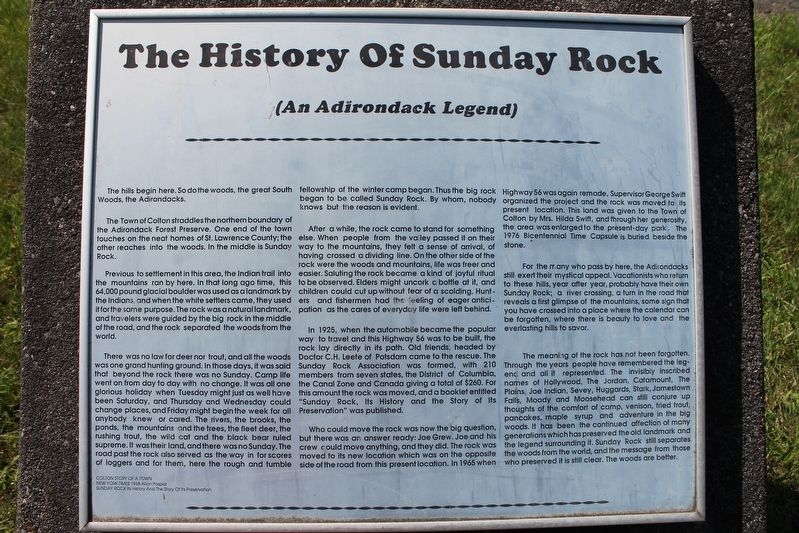
The hills begin here. So do the woods, the great South Woods, the Adirondacks.
The town of Colton straddles the northern boundary of the Adirondack Forrest Preserve. On end of the town touches on the neat homes of St. Lawrence County; the other reaches into the woods. In the middle is Sunday Rock.
Previous to settlement in this area, the Indian trail into the mountains ran by here. In that long ago time, this 64,000 pound glacial boulder was used as a landmark by the Indians, and when the white settlers came, they used it for the same purpose. The rock was a natural landmark, and travelers were guided by the big rock in the middle of the road, and the rock separated the woods from the world.
There was no law for deer nor trout, and all the woods was one grand hunting ground. In those days, it was said that beyond the rock there was no Sunday. Camp life went on from day to day with no change. It was all one glorious holiday when Tuesday might just as well have been Saturday, and Thursday and Wednesday could change places. Friday might have begun the week for all anyone knew or cared. The rivers, the brooks, the
this page online
After a while, the rock came to stand for something else. When people from the valley passed it on their way to the mountains, they felt a sense of arrival, of having crossed a dividing line. On the other side of the rock were the woods and mountains, life was freer and easier. Saluting the rock became a kind of joyful ritual to be observed. Elders might uncork a bottle and children could cut up without fear of a scolding. Hunter and fisherman had the feeling of eager anticipation as the cares of everyday life were left behind.
In 1925, when the automobile became the popular way to travel and this Highway 56 was to be built, the rock lay directly in its path. Old friends, headed by Doctor C.H. Leete of Potsdam, came to the rescue. The
Photographed by Robert Rusaw, August 3, 2021
2. Sunday Rock
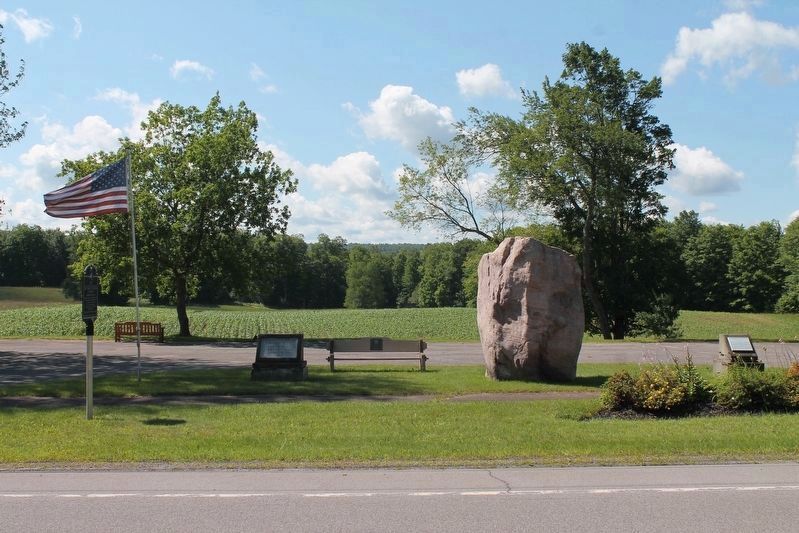
The marker is the plaque at the right.
'Who could move the rock' was now the big question, but there was a ready answer: Joe Grew. Joe and his crew could move anything, and they did. The rock was moved to its new location, which was on the opposite side of the road from this present location. In 1965 when Highway 56 was again remade, Supervisor George Swift organized the project and the rock was moved to its present location. The land was given to the Town of Colton by Mrs. Hilda Swift, and through her generosity, the area was enlarged to the present day park with the 1976 Bicentennial Time Capsule buried beneath the mammoth stone.
For many who pass by here, the Adirondacks still exert their mystical appeal. Vacationers who return to these hills, year after year, probably have their own "Sunday Rock"; a river crossing, a turn in the road that reveals a first glimpse of the mountains, some
Photographed by Robert Rusaw, August 3, 2021
3. Welcome to Sunday Rock
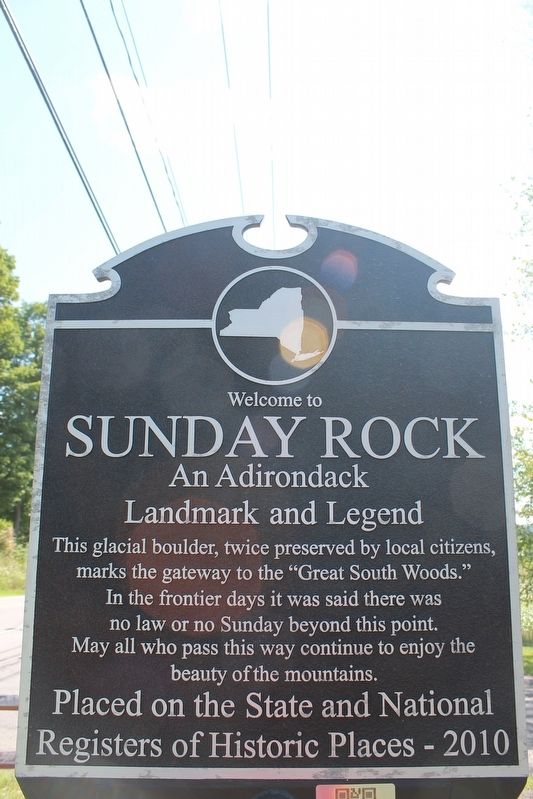
An Adirondack Landmark and Legend
The meaning of the rock has not been forgotten. Through the years, people have remembered the legend and all it represented. The invisibly inscribed names of Hollywood, The Jordan, Catamount, The Plains, Joe Indian, Sevey, Huggards, Stark, Jamestown Falls, Moody and Moosehead can still conjure up thoughts of the comfort of camp, venison, fried trout, pancakes, maple syrup and adventure in the big woods. It has been the continued affection of many generations, which has preserved the old landmark and the legend surrounding it. Sunday Rock still separates the woods from the world, and the message from those who preserved it is still clear. The woods are better."
Topics and series. This historical marker is listed in these topic lists: Indigenous Peoples and Communities • Roads & Vehicles • Settlements & Settlers. In addition, it is included in the National Register of Historic Places (NRHP), and the Time Capsules series lists. A significant historical year for this entry is 1925.
Location. 44° 30.589′ N, 74° 53.654′ W. Marker is in South Colton, New York, in St. Lawrence County. It is on New York State Route 56 ¼ mile north of Sugarbush Lane, on the left when traveling west. Touch for map. Marker is in this post office area: South Colton NY 13687, United States of America. Touch for directions.

Regionally, this marker is in Upstate New York and in the Adirondacks & North Country. It is also in the American Northeast and in the Mid-Atlantic. Globally, it is in North America, the Great North Woods, the Western Hemisphere, the Western World, and the Anglosphere. Historically, it finds itself in what was once the Viceroyalty of New France, the Haudenosaunee (Iroquois)
Photographed by Robert Rusaw, August 3, 2021
4. Sunday Rock
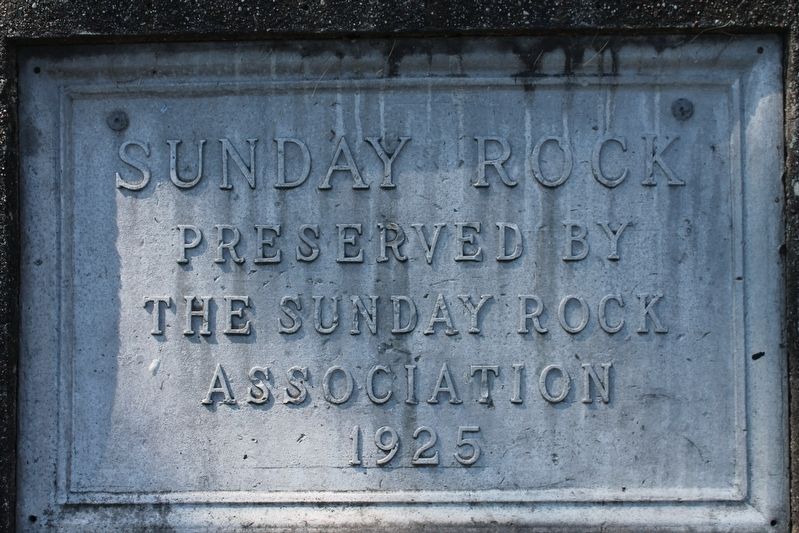
Preserved by the Sunday Rock Association 1925
Other nearby markers. At least 8 other markers are within 9 miles of this marker, measured as the crow flies: Gravesites (approx. 6 miles away); Cox's Mill (approx. 8.1 miles away); Site of Log Cabin of Luke Brown (approx. 8.3 miles away); First Church (approx. 8.3 miles away); This was the First Road in the Town of Parishville (approx. 8.8 miles away); Parish Tavern (approx. 9 miles away); Site Of First Bridge (approx. 9 miles away); West Branch St. Regis River (approx. 9.1 miles away).
Also see . . .
1. Sunday Rock. Wikipedia entry (Submitted on August 28, 2024, by Larry Gertner of New York, New York.)
2. Sunday Rock - Sunday Rock: A Historic Adirondack Landmark. The Adirondack Almanack website entry (Submitted on August 8, 2021, by Michael Herrick of Southbury, Connecticut.)
3. Sunday Rock - National Archives. National Register of Historic Places documentation (Submitted on October 24, 2023, by Anton Schwarzmueller of Wilson, New York.)
4. National Register of Historic Places Registration Form, 2010. Statement
Photographed by Robert Rusaw, August 3, 2021
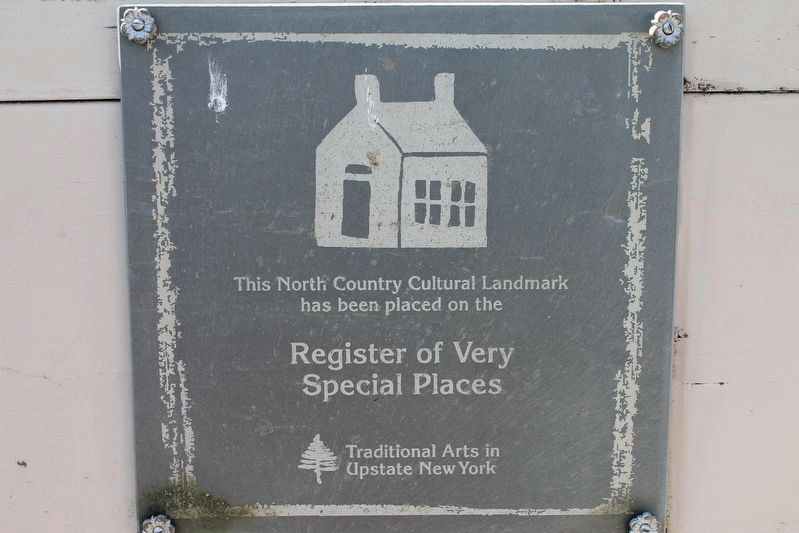
5. Register of Very Special Places
Plaque on the bench.
Sunday Rock is significant under Criterion A in the area of Conservation for its association with local efforts to preserve important natural and historic landmarks from the threats of demolition. This 64,000 pound, 11-foot tall glacial erratic survives today as testament to the success of these early preservation efforts. Sunday Rock’s imposing presence on the main travel corridor between the Adirondacks and the northern flatlands of St. Lawrence County has been threatened twice by the increasing development of highways brought about by the advent of the automobile in the early 20th century. Originally in 1925, and again in 1965, Sunday Rock was threatened with demolition for road widening projects. However, the public outcry was such that, in both cases, Sunday Rock was moved and preserved. Sunday Rock is also significant under Criterion A in the area of Social History as an important natural landmark that for local residents and travelers represents a symbolic place marking a traveler’s transition from “the woods to the world.” It has been the source of legends for generations and is embedded in the area’s history and identity.(Submitted on August 12, 2025, by Douglass Halvorsen of Klamath Falls, Oregon.)
Credits. This page was last revised on November 12, 2025. It was originally submitted on August 3, 2021, by Robert Rusaw of Massena, New York. This page has been viewed 799 times since then and 83 times this year. Photos: 1, 2, 3, 4, 5. submitted on August 3, 2021, by Robert Rusaw of Massena, New York. • Michael Herrick was the editor who published this page.
