Near Bruce in Brookings County, South Dakota — The American Midwest (Upper Plains)
Oakwood Lakes State Park
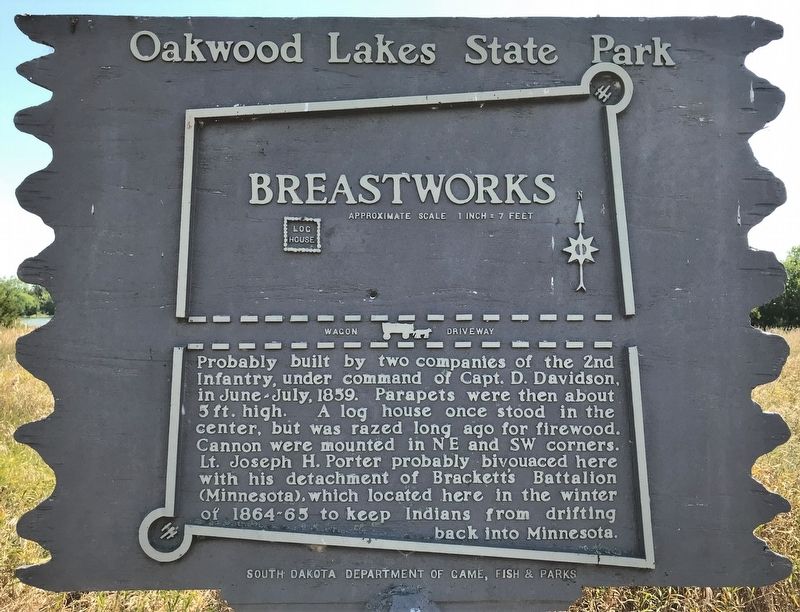
Breastworks
⎯⎯⎯
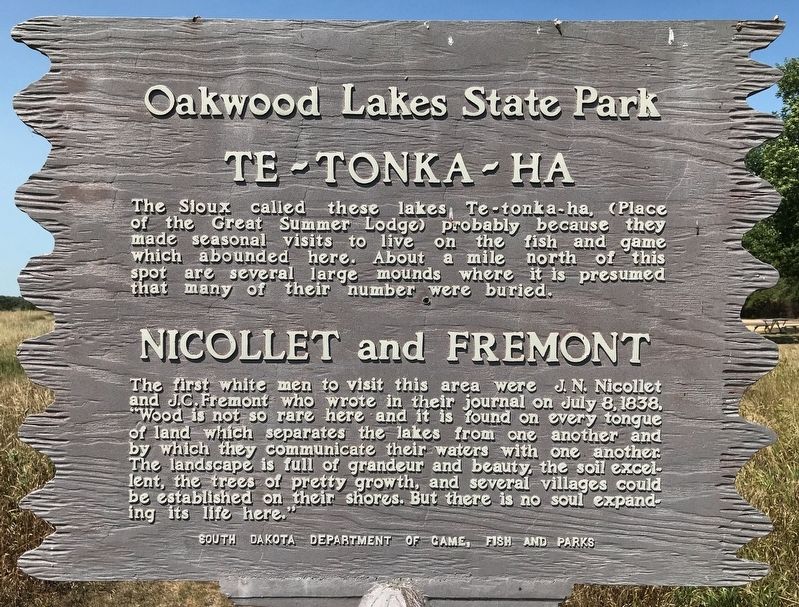
Te-Tonka-Ha
⎯⎯⎯
Nicollet and Fremont
August 15, 2021
1. Oakwood Lakes State Park Breastworks Marker
this page online
Erected 1951 by South Dakota Department of Game, Fish and Parks. (Marker Number 8.)
Topics and series. This historical marker is listed in these topic lists: Forts and Castles • Indigenous Peoples and Communities • Waterways & Vessels. In addition, it is included in the South Dakota State Historical Society Markers series list. A significant historical date for this entry is July 8, 1838.
Location. 44° 26.574′ N, 96° 59.062′ W. Marker is near Bruce, South Dakota, in Brookings County. It can be reached from South Oakwood Shoreline Drive. Located in Oakwood Lakes State Park, at the breastworks. Touch for map. Marker is at or near this postal address: 20247 South Oakwood Shoreline Drive, Bruce SD 57220, United States of America. Touch for directions.

Regionally, this marker is in East River. It is also in the American Midwest, in the Lewis & Clark Corridor, in the Corn Belt, on the prairies, and on the Northern Plains. Globally, it is in North America, the Western Hemisphere,
August 15, 2021
2. Oakwood Lakes State Park Te-Tonka-Ha & Nicollet and Fremont Marker
Other nearby markers. At least 8 other markers are within walking distance of this marker: What is this earthen wall? (within shouting distance of this marker); Hessel and Charlotte Houtman Family Farm (approx. 0.4 miles away); Oakwood Lakes Burial Mounds (approx. half a mile away); Milkweed (approx. half a mile away); Bur Oak (approx. 0.6 miles away); Ash, Ponderosa Pine (approx. 0.6 miles away); Significant Site (approx. 0.6 miles away); Dogwood, Jewelweed (approx. 0.7 miles away). Touch for a list and map of all markers in Bruce.
August 15, 2021
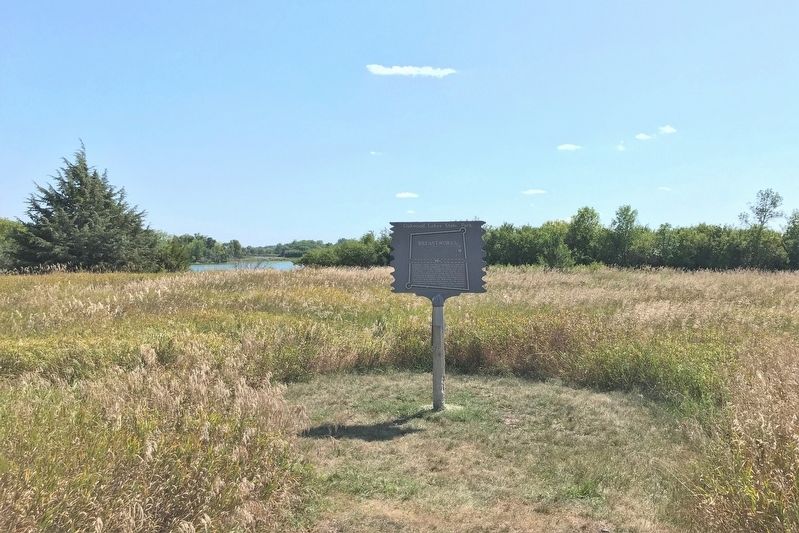
3. Oakwood Lakes State Park Marker
August 15, 2021
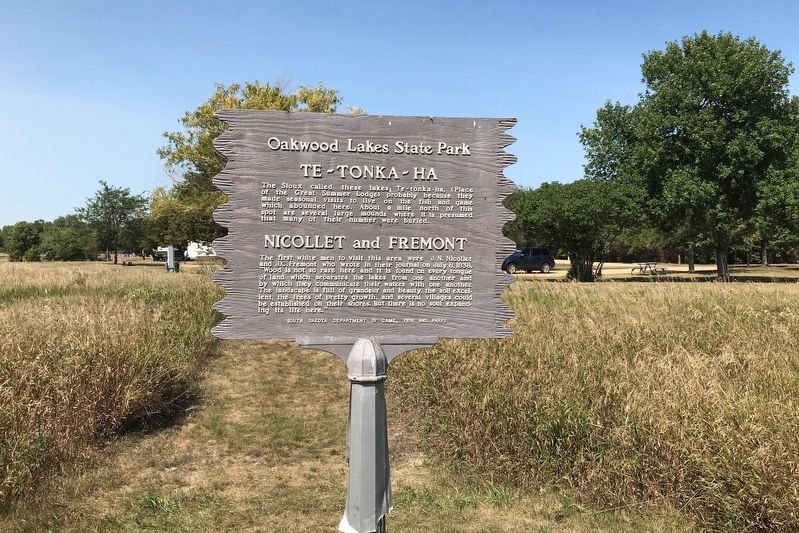
4. Oakwood Lakes State Park Marker
Credits. This page was last revised on June 15, 2022. It was originally submitted on August 18, 2021. This page has been viewed 843 times since then and 76 times this year. Photos: 1, 2, 3, 4. submitted on August 18, 2021. • Bill Pfingsten was the editor who published this page.
