Seward in Seward County, Nebraska — The American Midwest (Upper Plains)
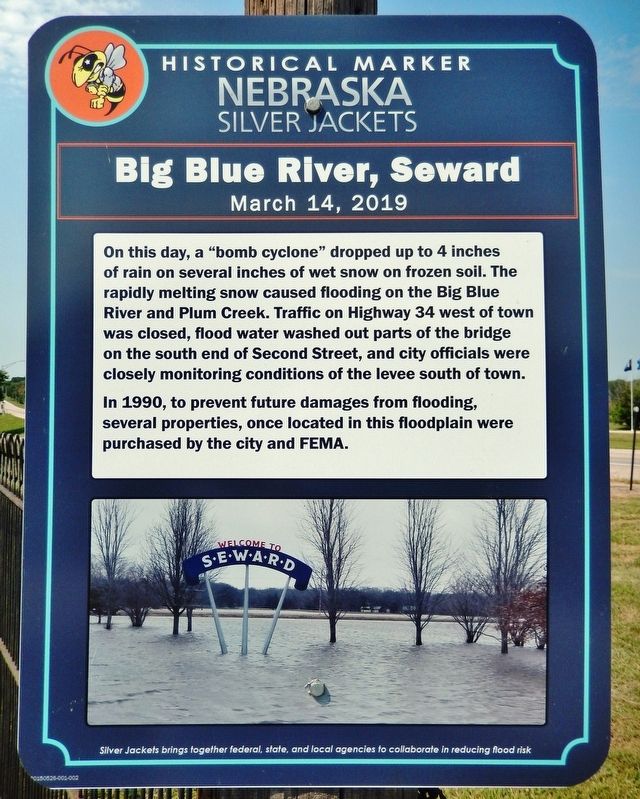
Big Blue River, Seward
March 14, 2019
Photographed by Cosmos Mariner, August 12, 2021
1. Big Blue River, Seward Marker
In 1990, to prevent future damages from flooding, several properties, once located in this floodplain were purchased by the city and FEMA.
Silver Jackets brings together federal, state, and local agencies to collaborate in reducing flood risk.
Erected by Nebraska Silver Jackets.
Topics. This historical marker is listed in these topic lists: Bridges & Viaducts • Disasters • Roads & Vehicles • Waterways & Vessels. A significant historical date for this entry is March 14, 2019.
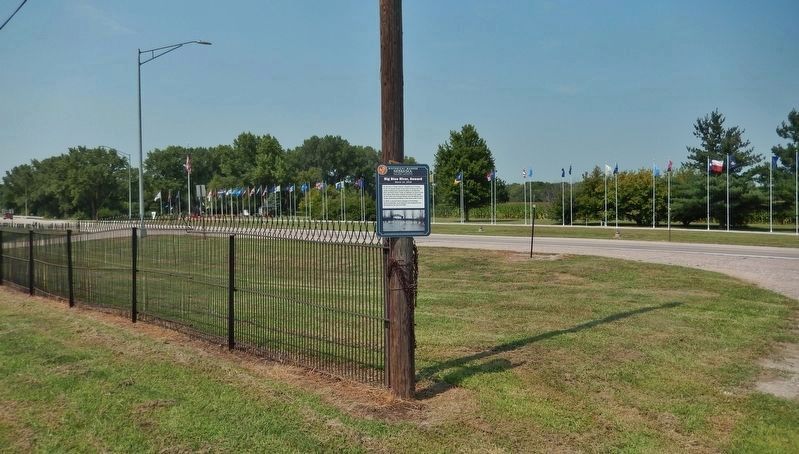
Location. 40° 54.167′ N, 97° 5.233′ W. Marker is in Seward, Nebraska, in Seward County. It is on McKelvie Road (U.S. 34) 0.1 miles west of Crooked Mile Road, on the left when traveling west. Marker is mounted at eye-level on a power pole in the pull-out on
this page online

Regionally, this marker is in Eastern Nebraska and in Greater Lincoln. It is also in the American Midwest, in the Corn Belt, and on the prairies. Globally, it is in North America, the Western Hemisphere, the Western World, and the Anglosphere. Historically, it finds itself in what was once the Louisiana Purchase.
Other nearby markers. At least 8 other markers are within 6 miles of this marker, measured as the crow flies: Plum Creek Prairie Historic Site (a few steps from this marker); Seward, 4th of July City (approx. 0.7 miles away); William Henry Seward / Artists David and Judith Rubin (approx. 0.7 miles away); Worlds Largest Time Capsule and Pyramid (approx. one mile away); Farming in Nebraska (approx. 5.8 miles away); a different marker also named The Big Blue River (approx. 5.8 miles away); Purple Heart Trail (approx. 5.8 miles away); Tall Grass Prairie (approx. 5.8 miles away). Touch for a list and map of all markers in Seward.
Also see . . . What Is a Bomb Cyclone?.
Photographed by Cosmos Mariner, August 12, 2021
2. Big Blue River, Seward Marker
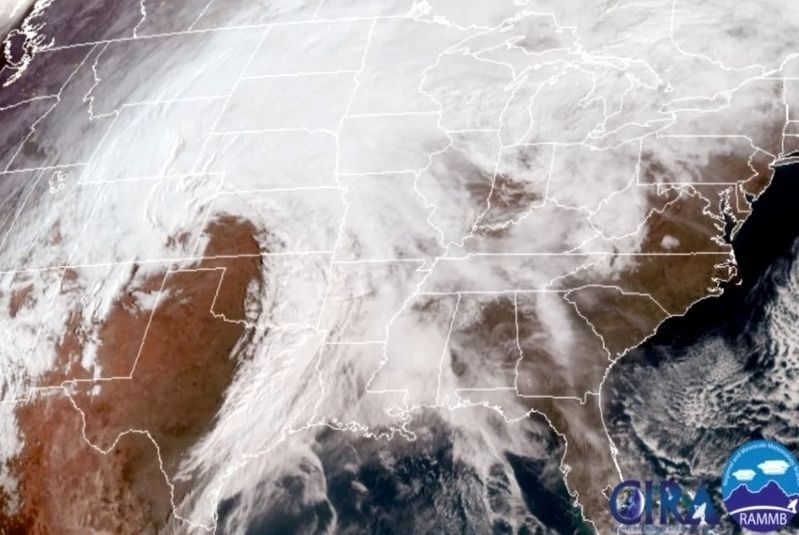
A bomb cyclone is a large, intense midlatitude storm that has low pressure at its center, weather fronts and an array of associated weather, from blizzards to severe thunderstorms to heavy precipitation. It becomes a bomb when its central pressure decreases very quickly—by at least 24 millibars in 24 hours. Two famed meteorologists, Fred Sanders and John Gyakum, gave this pattern its name in a 1980 study.(Submitted on November 26, 2022, by Cosmos Mariner of Cape Canaveral, Florida.)
via National Weather Service, 2019
3. March 13th and 14th, 2019 Bomb Blizzard
National Weather Service website entry
Click for more information.
Click for more information.
Photographed by Cosmos Mariner, August 12, 2021
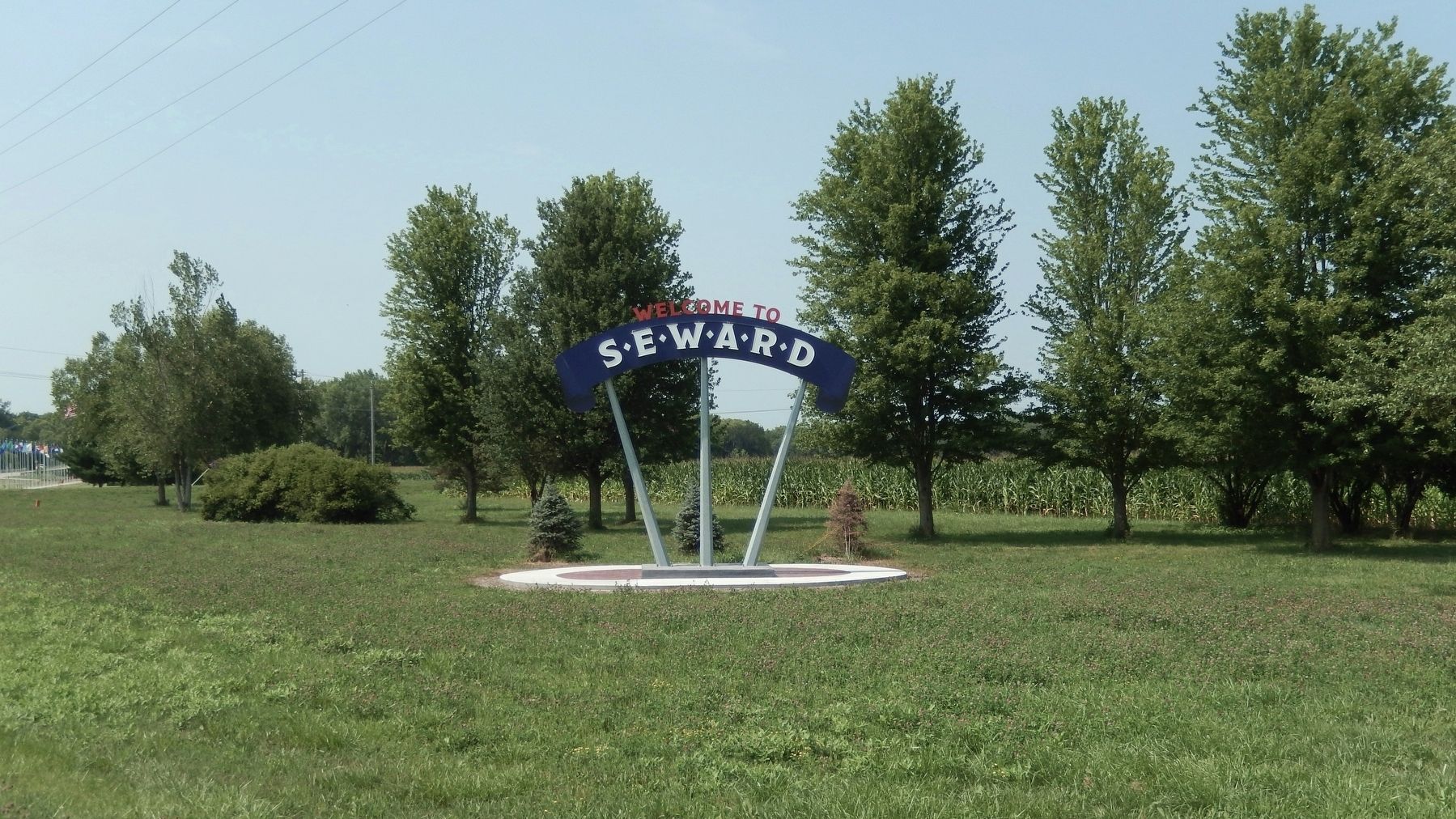
4. Welcome to Seward Sign, August 12, 2021
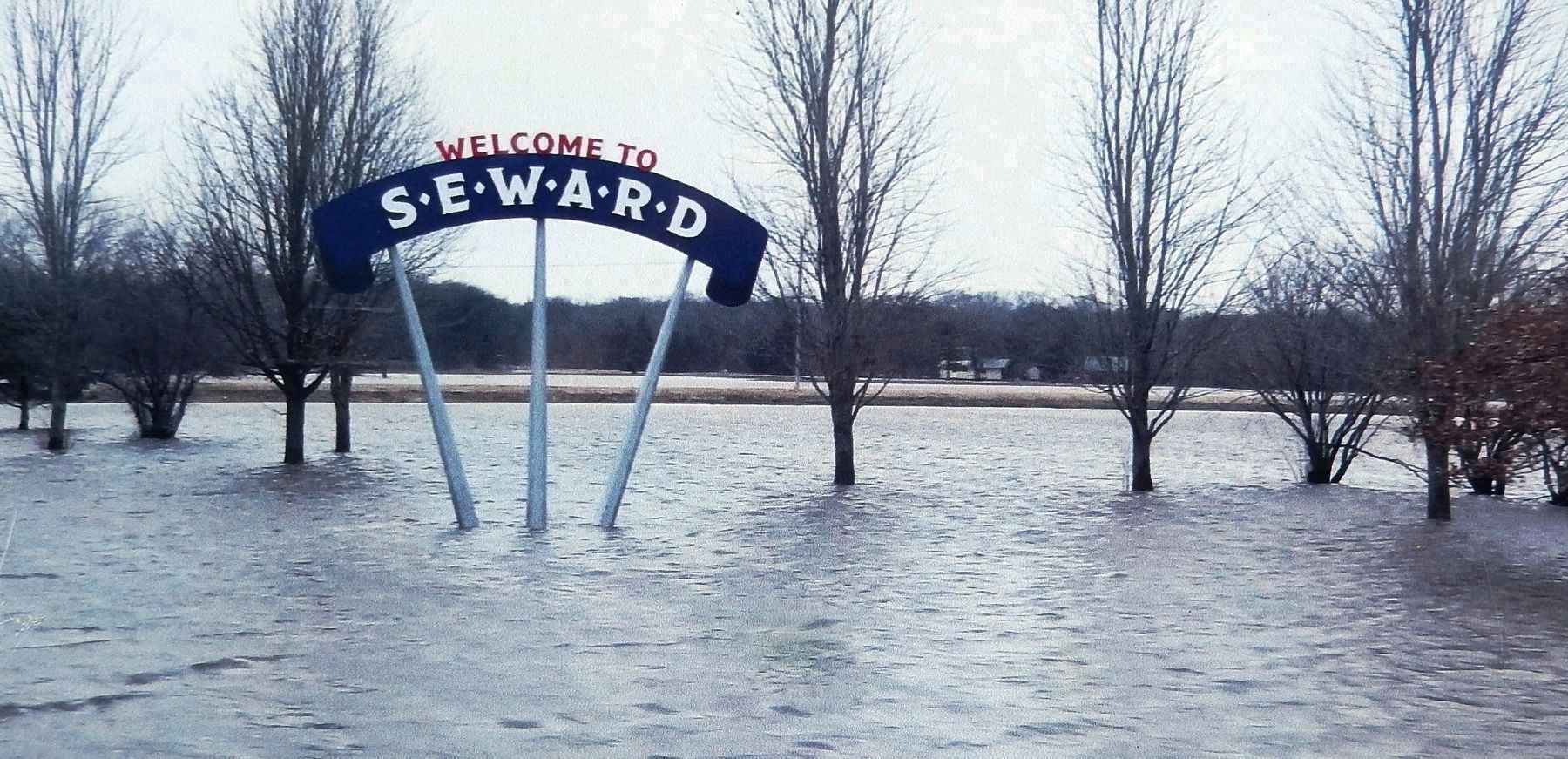
5. Marker detail: Welcome to Seward Sign, March 14, 2019
Click for more information.
Credits. This page was last revised on September 7, 2026. It was originally submitted on September 17, 2021, by Cosmos Mariner of Cape Canaveral, Florida. This page has been viewed 740 times since then and 51 times this year. Photos: 1, 2. submitted on September 17, 2021, by Cosmos Mariner of Cape Canaveral, Florida. 3. submitted on March 12, 2022, by Larry Gertner of New York, New York. 4, 5. submitted on September 17, 2021, by Cosmos Mariner of Cape Canaveral, Florida.
