Pensacola in Escambia County, Florida — The American South (South Atlantic)
Second Spanish Period
| — | Colonial Archaeological Trail | — |
Photographed by Mark Hilton, October 9, 2021
1. Second Spanish Period Marker
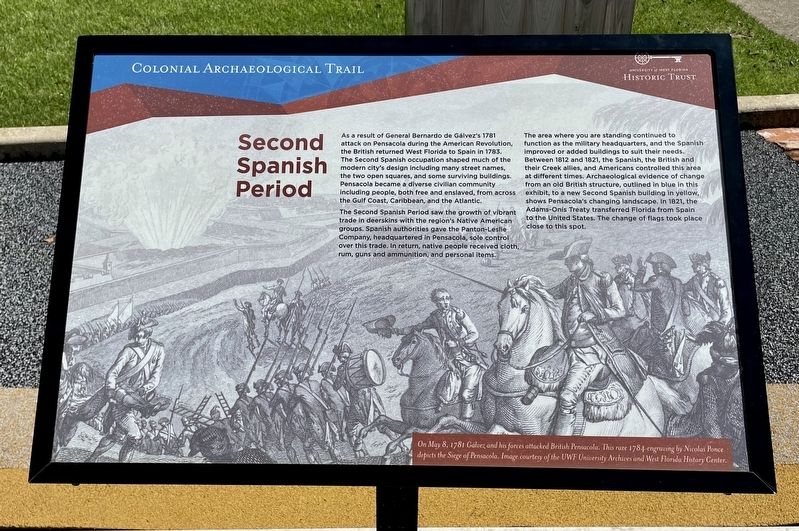
The Second Spanish Period saw the growth of vibrant trade in deerskins with the region's Native American groups. Spanish authorities gave the Panton-Leslie Company, headquartered in Pensacola, sole control over this trade. In return, native people received cloth, rum, guns and ammunition, and personal items.
The area where you are standing continued to function as the military headquarters, and the Spanish improved or added buildings to suit their needs. Between 1812 and 1821, the Spanish, the British and their Creek allies, and Americans controlled this area at different times. Archaeological evidence of change from an old British structure, outlined in
this page online
On May 8, 1781 Gálvez and his forces attacked British Pensacola. This rare 1784 engraving by Nicolas Ponce depicts the Siege of Pensacola. Image courtesy of the UWF University Archives and West Florida History Center.
Erected by University of West Florida Historic Trust.
Topics. This historical marker is listed in these topic lists: Anthropology & Archaeology • Colonial Era • Settlements & Settlers. A significant historical date for this entry is May 8, 1781.
Location. 30° 24.517′ N, 87° 12.756′ W. Marker is in Pensacola, Florida, in Escambia County. It is on Zaragoza Street east of Jefferson Street, on the left when traveling east. Located in the Museum Plaza behind the Pensacola Museum of History. Touch for map. Marker is at or near this postal address: 330 S Jefferson St, Pensacola FL 32502, United States of America. Touch for directions.

Regionally, this marker is on the Florida Panhandle.
Photographed by Mark Hilton, October 9, 2021
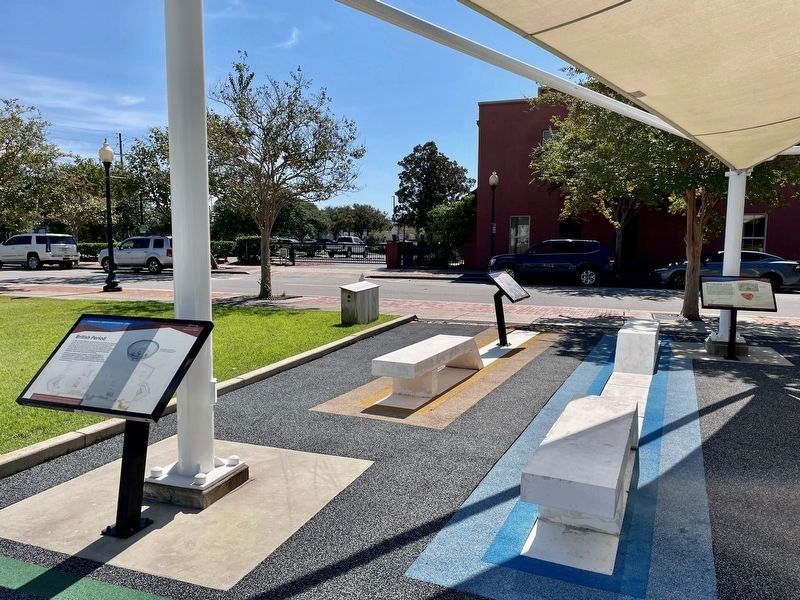
2. Second Spanish Period Marker is on left rear.
Other nearby markers. At least 8 other markers are within walking distance of this marker: First Spanish Period (here, next to this marker); Colonial Cooking (here, next to this marker); Wells and Cellars (here, next to this marker); American Period (a few steps from this marker); British Period (a few steps from this marker); Archaeology in Pensacola (a few steps from this marker); a different marker also named Commanding Officer's Compound (a few steps from this marker); Stop and Smell the Roses (a few steps from this marker). Touch for a list and map of all markers in Pensacola.
Other markers no longer nearby. The Commanding Officer's Compound (was a few steps from this marker but has been permanently removed);
Photographed by Mark Hilton, October 9, 2021
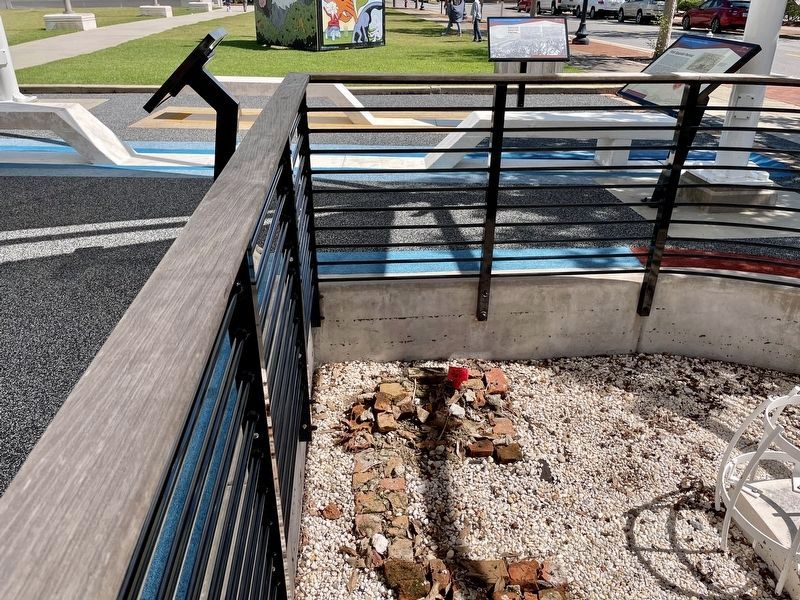
3. Second Spanish Period Marker (in background) is facing the excavation.
Regarding Second Spanish Period. The Colonial Archaeological Trail is a collection of outdoor exhibits relating the Spanish, British, and American occupations of Pensacola. This interpretive trail highlights the rich deposits of colonial history and archaeology in the heart of downtown Pensacola.
Credits. This page was last revised on October 10, 2021. It was originally submitted on October 10, 2021, by Mark Hilton of Montgomery, Alabama. This page has been viewed 820 times since then and 47 times this year. Photos: 1, 2, 3. submitted on October 10, 2021, by Mark Hilton of Montgomery, Alabama.
