Smithsonian National Zoo in Northwest Washington in Washington, District of Columbia — The American Northeast (Mid-Atlantic)
Rebuilding in the Wild
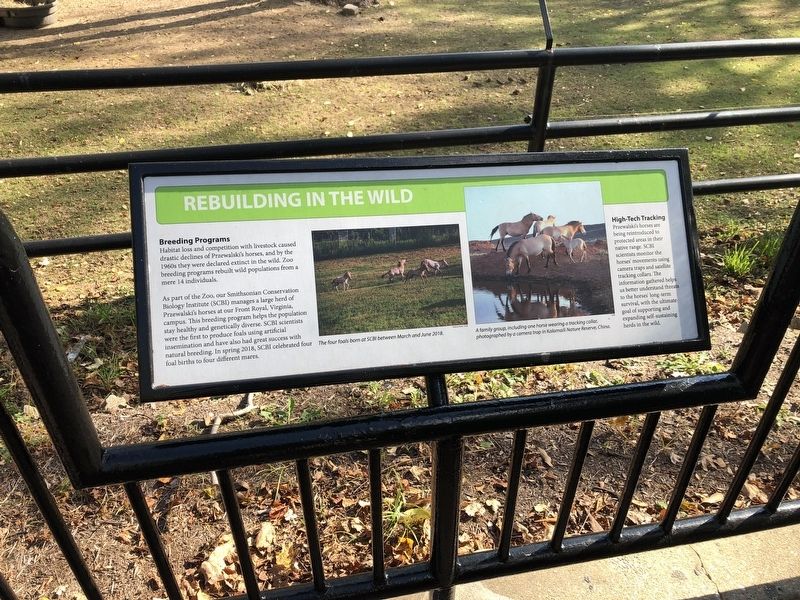
Breeding Programs
Habitat loss and competition with livestock caused drastic declines of Przewalski's horses, and by the 1960s they were declared extinct in the wild. Zoo breeding programs rebuilt wild populations from a mere 14 individuals.
As part of the Zoo, our Smithsonian Conservation Biology Institute (SCBI) manages large herd of Przewalski's horses at our Front Royal, Virginia campus. This breeding program helps the population stay healthy and genetically diverse. SCBI scientists were the first to produce foals using artificial insemination and have also had great success with natural breeding. In spring 2018, SCBI celebrated four foal births to four different mares.
High-Tech Tracking
Przewalski's horses are being reintroduced to protected areas in their native range. SCBI scientists monitor the horses' movements using camera traps and satellite tracking collars. The information gathered helps us better understand threats to the horses' long-term survival, with the ultimate goal of supporting and expanding self-sustaining herds in the wild.
Erected by Smithsonian Institution.
Topics. This historical
this page online
Location. 38° 55.854′ N, 77° 2.968′ W. Marker is in Northwest Washington in Washington, District of Columbia. It is in Smithsonian National Zoo. It is on Olmsted Walk half a mile east of Connecticut Avenue Northwest, on the left when traveling east. Touch for map. Marker is at or near this postal address: 3001 Connecticut Ave NW, Washington DC 20008, United States of America. Touch for directions.

Regionally, this marker is in the Washington Metropolitan Area. It is also in the American Northeast, in the Upper South, in the Mid-Atlantic, in the Tidewater, and in the Chesapeake Bay Region. Globally, it is in North America, the Western Hemisphere, the Western World, and the Anglosphere.
Other nearby markers. At least 8 other markers are within walking distance of this marker: National Zoo Stories (within shouting distance of this marker); A Trail Transformed (about 300 feet away, measured in a direct line); Bald Eagle (about 400 feet away); A Capital Bird (about 400 feet away); Smithsonian's National Zoo
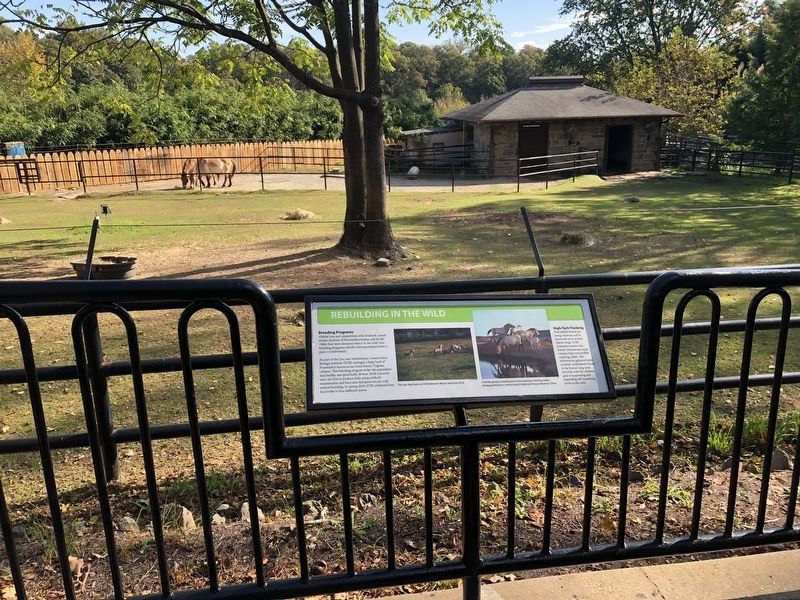
Another marker is no longer nearby. Rebuilding in the Wild (was a few steps from this marker but has been replaced with another marker now near it).
Related marker. Click here for another marker that is related to this marker. This marker has replaced the linked marker.
Credits. This page was last revised on January 30, 2023. It was originally submitted on October 22, 2021, by Devry Becker Jones of Washington, District of Columbia. This page has been viewed 191 times since then and 12 times this year. Photos: 1, 2. submitted on October 22, 2021, by Devry Becker Jones of Washington, District of Columbia.
