Central City in Birmingham in Jefferson County, Alabama — The American South (East South Central)
Shuttlesworth v. "Bull"
March Route Towards a Purposeful Life
| — | Birmingham Civil Rights Heritage Trail | — |
Photographed by Mark Hilton, December 5, 2021
1. Shuttlesworth v. "Bull" Marker
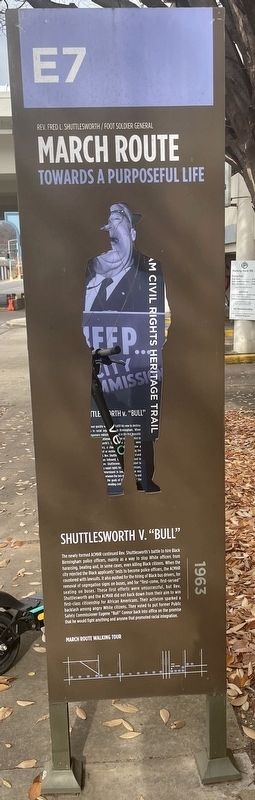
 The newly formed ACMHR continued Rev. Shuttlesworth's battle to hire Black
Birmingham police officers, mainly as a way to stop White officers from
harassing, beating and, in some cases, even killing Black citizens. When the
city rejected the Black applicants' tests to become police officers, the ACMHR
countered with lawsuits. It also pushed for the hiring of Black bus drivers, for
removal of segregation signs on buses, and for "first-come, first-served”
seating on buses. These first efforts were unsuccessful, but Rev.
Shuttlesworth and the ACMHR did not back down from their aim to win
first-class citizenship for African Americans. Their activism sparked a
backlash among angry White citizens. They voted to put former Public
Safety Commissioner Eugene "Bull” Connor back into office on the promise
that he would fight anything and anyone that promoted racial integration.
Paired marker
1957
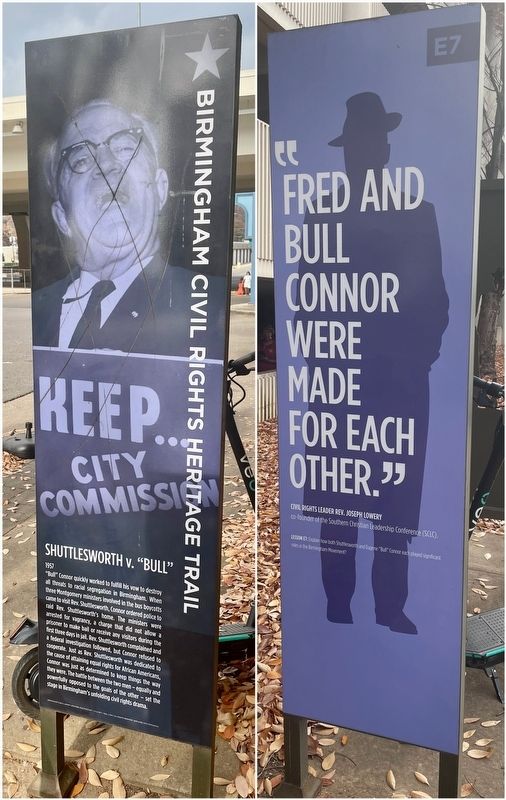
"Bull” Connor quickly worked to fulfill his vow to destroy all threats to racial segregation in Birmingham. When three Montgomery ministers involved in the bus boycotts came to visit Rev. Shuttlesworth, Connor
this page online
"Fred and Bull Connor were made for each other."
Civil Rights Leader Rev. Joseph Lowery
Co-founder of the Southern Christian Leadership Conference (SCLC).
Lesson E7: Explain how both Shuttlesworth and Eugene “Bull” Connor each played significant roles in the Birmingham Movement?
Erected by the Birmingham Civil Rights Heritage Trail. (Marker Number E7.)
Topics and series. This historical marker is listed in this topic list: Civil Rights. In addition, it is included in the Birmingham Civil Rights Heritage Trail
Photographed by Mark Hilton
2. Shuttlesworth v. "Bull" paired marker
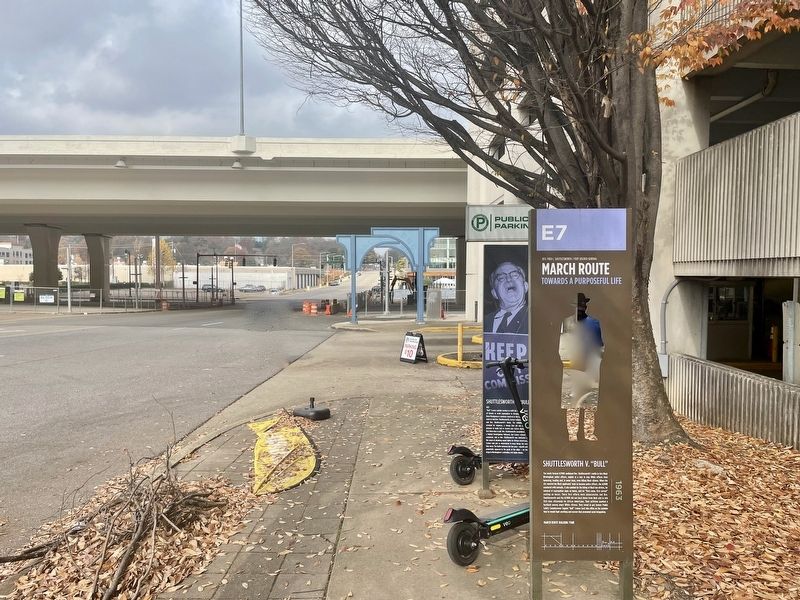
Location. 33° 31.299′ N, 86° 48.735′ W. Marker is in Birmingham, Alabama, in Jefferson County. It is in Central City. It is on 19th Street North north of Reverend Abraham Woods Jr Boulevard, on the right when traveling north. Touch for map. Marker is at or near this postal address: 801 19th St N, Birmingham AL 35203, United States of America. Touch for directions.

Regionally, this marker is in the American South and specifically in the Deep South. Globally, it is in North America, a Gulf of Mexico state, the Western Hemisphere, the Western World, and the Anglosphere. Historically, it finds itself in what was once the territory of the Mississippian Culture, one of the Confederate States of America, and the Antebellum South.
Other nearby markers. At least 8 other markers are within walking distance of this marker: Shuttlesworth Starts the ACMHR (within shouting distance of this marker); Shuttlesworth Goes to Work (about 300 feet away, measured in a direct line); Answering the Call (about 300 feet away); Boutwell Auditorium (about 400 feet away); Love & Marriage (about 400 feet away); Raymond Weeks (about 400 feet away); The Boy Becomes a Man (about 400 feet away); Birth of an Icon (about 600 feet away). Touch for a list and map of all markers in Birmingham.
More about this marker. ACMHR = Alabama Christian Movement for Human Rights.
Regarding Shuttlesworth v. "Bull". The Civil Rights Activist Committee “Home of the Foot Soldiers“ is the Information Center for the Birmingham Civil Rights Heritage Trail.
Photographed by Mark Hilton, December 5, 2021
3. Shuttlesworth v. "Bull" Marker
Public domain via Wikipedia Commons, 1960
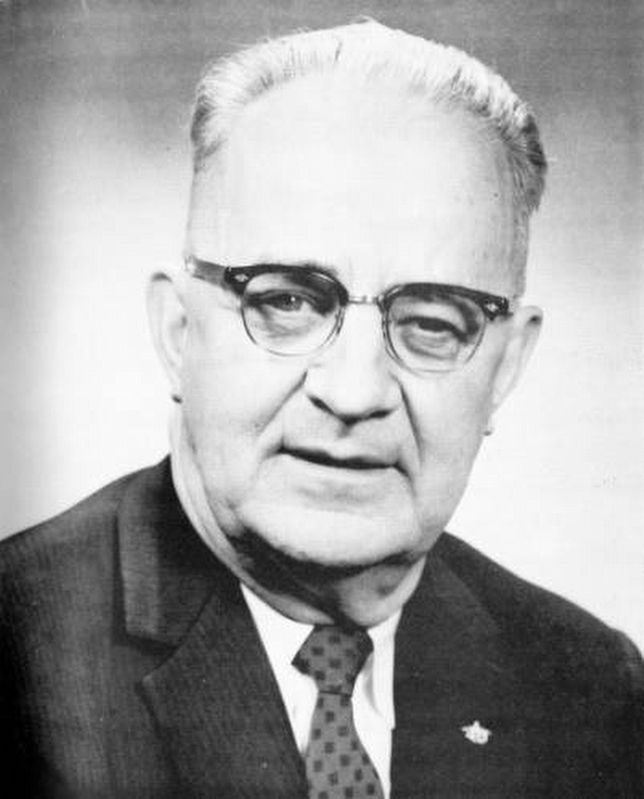
4. Theophilus Eugene "Bull" Connor (July 11, 1897 – March 10, 1973)
Credits. This page was last revised on January 8, 2022. It was originally submitted on December 6, 2021, by Mark Hilton of Montgomery, Alabama. This page has been viewed 285 times since then and 37 times this year. Photos: 1, 2, 3, 4. submitted on December 6, 2021, by Mark Hilton of Montgomery, Alabama.