Corona in Queens in Queens County, New York — The American Northeast (Mid-Atlantic)
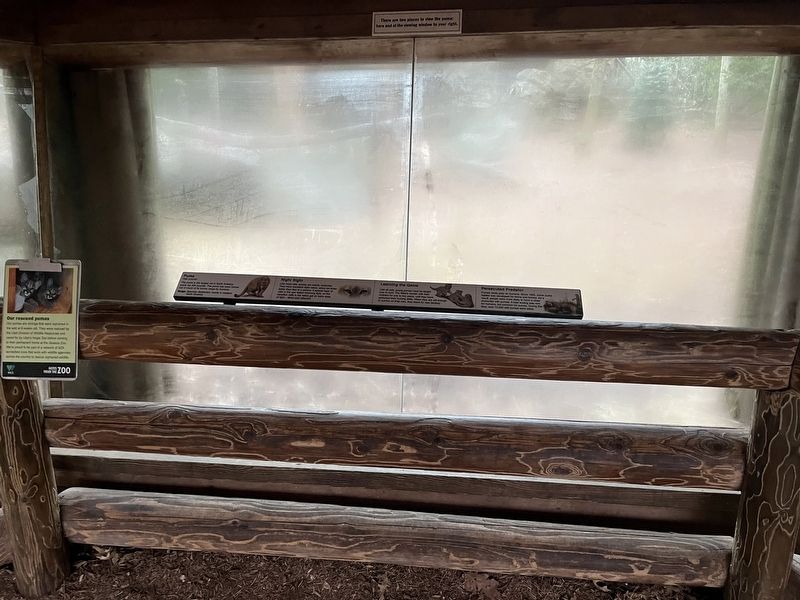
Puma
Felis concolor

The puma is the largest cat in North America: some top 200 pounds. The puma has been forced out of much of its former range by humans.
Range: Sparsely distributed, mostly in western North America
Night Sight
Like most cats, pumas are mainly nocturnal. They have excellent night vision, about six times better than that of a person. A special layer of cells in the eye reflect incoming light, so the sensitive cells in the retina get an extra dose of light — direct and reflected.
Learning the Game
Like all cats, young pumas must be taught how to hunt. The kittens remain with their mothers for one to two years, until they have perfected their hunting skills. When they are old enough to survive on their own, they leave for new territory.
Persecuted Predator
Pumas rarely prey on humans. Since 1900, prime puma habitat was developed for farms and homes. As a result, people were more likely to have a close encounter with pumas. A fatal ending was rare for humans, but common for pumas. During this time, over 70,000 wild pumas were killed.
Erected by Wildlife Conservation Society.
Topics. This historical
this page online
Location. Marker has been permanently removed. It was located near 40° 44.751′ N, 73° 51′ W. Marker was in Queens, New York, in Queens County. It was in Corona. It was on Zoo Path 0.2 miles Zoo Bridge, on the right when traveling north. Touch for map. Marker was in this post office area: Corona NY 11368, United States of America.
We have been informed that this marker is no longer there and will not be replaced. This page is an archival view of what was.
Regionally, this marker was in New York City and on Long Island. It was also in the American Northeast, in the Mid-Atlantic, and on the Eastern Seaboard. Globally, it was in the North Atlantic Region, North America, the Western Hemisphere, the Western World, and the Anglosphere. Historically, it found itself in what was once New Netherland and also one of the original Thirteen Colonies.

Other nearby markers. At least 8 other markers are within walking distance of this location: What's Amazing about this Aviary?
Other markers no longer nearby. Our rescued pumas (was here, next to this marker but has been permanently removed); Puma: The Hunted (was a few steps from this marker but has been permanently removed); WCS In Action: Big Cat Conservation (was within shouting distance of this marker but has been permanently removed); Canadian Lynx (was within shouting distance of this marker but has been permanently removed); a different marker also named Coyote (was about 400 feet away but has been replaced with another marker now near it); The Life and Times of the Coyote (was about 400 feet away but has been permanently removed).
Credits. This page was last revised on January 13, 2024. It was originally submitted on March 14, 2022, by Devry Becker Jones of Washington, District of Columbia. This page has been viewed 209 times since then and 15 times this year. Photos: 1, 2. submitted on March 14, 2022, by Devry Becker Jones of Washington, District of Columbia.
