Historic District - North in Savannah in Chatham County, Georgia — The American South (South Atlantic)
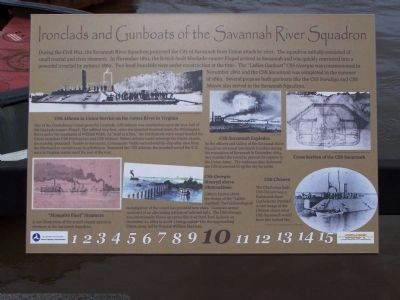
Ironclads and Gunboats of the Savannah River Squadron
Photographed by Mike Stroud, 2009
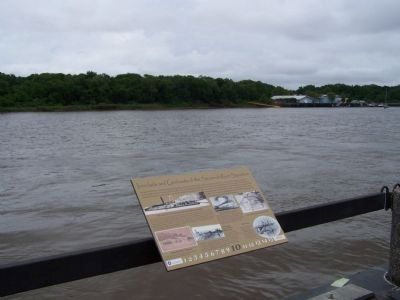
1. Ironclads and Gunboats of the Savannah River Squadron Marker
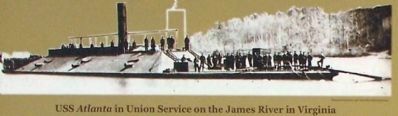
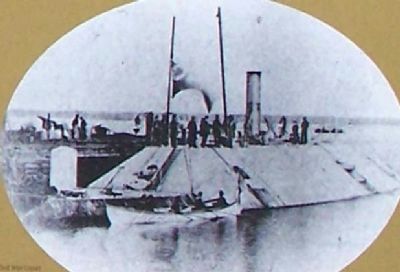
USS Atlanta in Union Service on the James River in Virginia
( Picture included )
One of the Confederacy's most powerful ironclads, CSS Atlanta was constructed upon the iron hull of the blockade-runner Fingal. The refitted 204-foot, 1000-ton ironclad steamed down the Wilmington River under the command of William Webb. As "bold as a lion," the Confederate navy vessel headed for Union monitors USS Weehawken and USS Nahant. Before Atlanta could intercept the Union vessels, the warship grounded. Unable
this page online
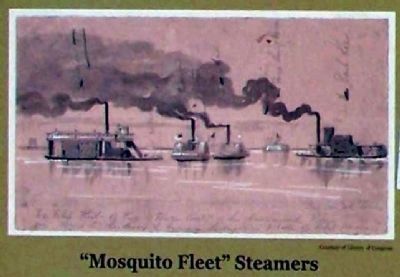
"Mosquito Fleet" Steamers
( Picture included )
A rare illustration of the armed coastal and river steamers in the Savannah Squadron
CSS Georgia moored above Obstructions
( Picture included )
Little is known about the design of the "Ladies Gunboat", but archaeological investigation of the vessel has provided new clues. Georgia's armor consisted of an alternating pattern of railroad rails. The CSS Georgia was intentionally blown up across the river from Fort Jackson on December 21, 1864 to avoid it being captured by the approaching Union Army led by General William Sherman.
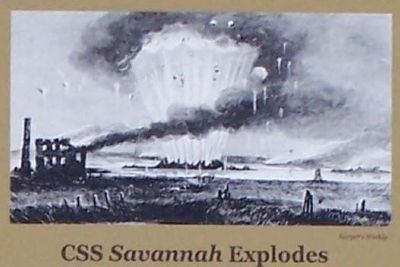
CSS Savannah Explodes
( Picture included )
As the officers and sailors of the Savannah River Squadron retreated into South Carolina during the evacuation of Savannah in December 1864, they scuttled the vessel to prevent its capture by the Union Army. The explosion that destroyed the CSS Savannah lit up the sky
Ironclads and Gunboats of the Savannah River Squadron Marker
2. CSS Atlanta, captured
Renamed the USS Atlanta, the ironclad served the U.S. Navy in Virginia waters until the end of the war.
Cross Section of the CSS Savannah
CSS Chicora
The Charleston built CSS Chicora was a Richmond-class Confederate ironclad. A rare image of the Chicora shows what CSS Savannah would have also looked like.
Erected 2009 by U.S. Dept. Of Transportation Federal Highway Administration, Georgia Dept. of Transportation. (Marker Number 10.)
Topics. This historical marker is listed in these topic lists: War, US Civil • Waterways & Vessels. A significant historical month for this entry is November 1861.
Location. 32° 4.814′ N, 81° 5.073′ W. Marker is in Savannah, Georgia, in Chatham County. It is in the Historic District - North. It is on East River Street, on the left when traveling east. Located near East Broad Street ramp at the riverside. Touch for map. Marker is in this post office area: Savannah GA 31401, United States of America. Touch for directions.

Regionally, this marker is on the Coastal Plain and on the Georgia Coast and the Golden Isles. It is also in the American South, specifically in the Deep South, and on the Eastern Seaboard. Globally, it is in the North Atlantic Region, North America, the
Ironclads and Gunboats of the Savannah River Squadron Marker, Library of Congress
3. "Mosquito Fleet" Steamers
Other nearby markers. At least 8 other markers are within walking distance of this marker: “Liberty” 1775 (a few steps from this marker); The Lions Club of Savannah (within shouting distance of this marker); The Liberty (within shouting distance of this marker); Crossing the Savannah (within shouting distance of this marker); 1996 Olympic Yachting Cauldron (within shouting distance of this marker); Old Harbor Light (about 300 feet away, measured in a direct line); The Georgia Medical Society (about 300 feet away); Native Americans on the Georgia Coast (about 400 feet away). Touch for a list and map of all markers in Savannah.
Also see . . .
1. Encyclopedia of Civil War shipwrecks By W. Craig Gaines page 47-48. CSS Georgia (Submitted on June 8, 2009, by Mike Stroud of Bluffton, South Carolina.)
2. The Richmond-Class Ironclads. An article
Ironclads and Gunboats of the Savannah River Squadron Marker
4. CSS Savannah Explodes
Ironclads and Gunboats of the Savannah River Squadron Marker
5. CSS Chicora
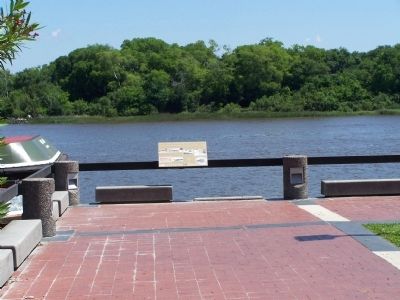
Photographed by Mike Stroud, May 24, 2009
6. Ironclads and Gunboats of the Savannah River Squadron Marker
as seen along the river
Photographed by Mike Stroud, May 30, 2009
7. Ironclads and Gunboats of the Savannah River Squadron Marker
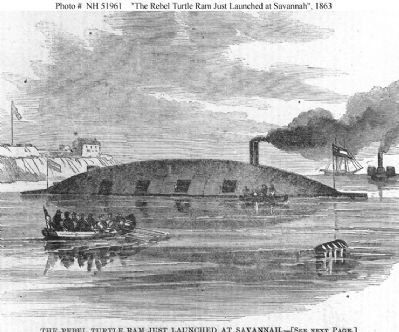
Naval Historical Center NH # 51961
8. CSS Savannah, as mentioned
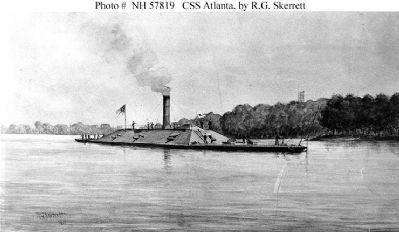
Naval Historical Center NH # 57819
9. CSS Georgia
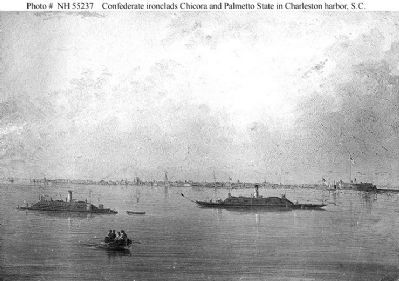
Naval Historical Center, NH # 55237
10. CSS Chicora, at left
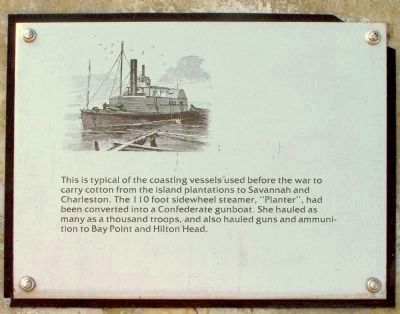
The Hilton Head Island Historical Society Port Royal Interpretive Marker
11. Sidewheel steamer, "Planter"
This is typical of the coasting vessels used before the war to carry cotton from the island plantations to Savannah and Charleston. The 110 foot sidewheel steamer, "Planter", had been converted into a Confederate gunboat. She hauled as many as a thousand troops, and also hauled guns and ammunition to Bay Point and Hilton Head.
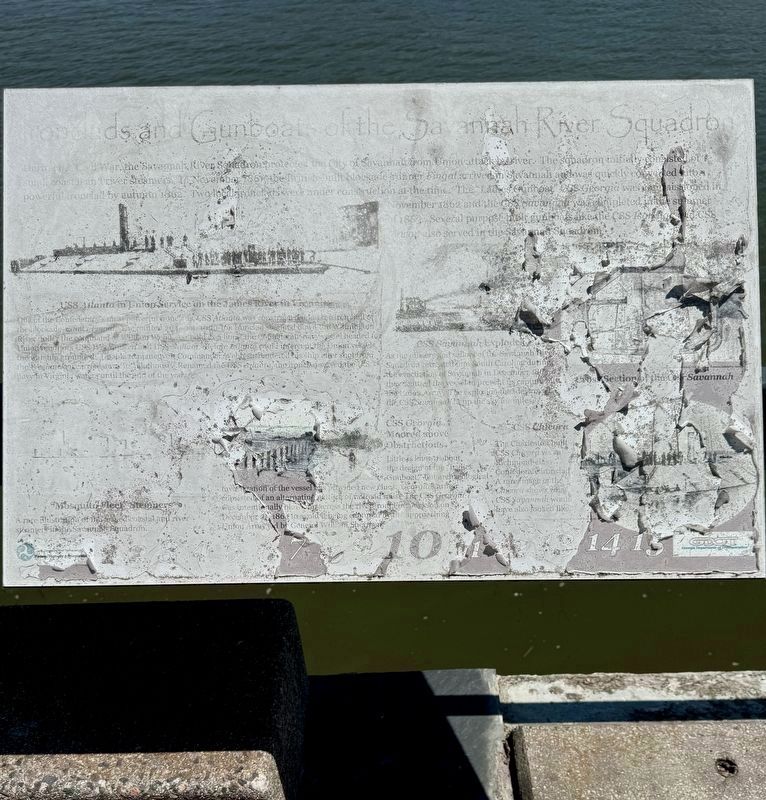
Photographed by Brandon D Cross, July 16, 2024
12. Ironclads and Gunboats of the Savannah River Squadron Marker, 2024
Marker is severely damaged.
Credits. This page was last revised on July 16, 2024. It was originally submitted on June 8, 2009, by Mike Stroud of Bluffton, South Carolina. This page has been viewed 5,513 times since then and 87 times this year. Photos: 1, 2, 3, 4, 5, 6, 7, 8, 9, 10. submitted on June 8, 2009, by Mike Stroud of Bluffton, South Carolina. 11. submitted on August 30, 2009, by Mike Stroud of Bluffton, South Carolina. 12. submitted on July 16, 2024, by Brandon D Cross of Flagler Beach, Florida. • Craig Swain was the editor who published this page.
