
Teotihuacán de Arista in Teotihuacán, Mexico State, Mexico — The Central Highlands (North America)
Former Convent of San Juan Bautista
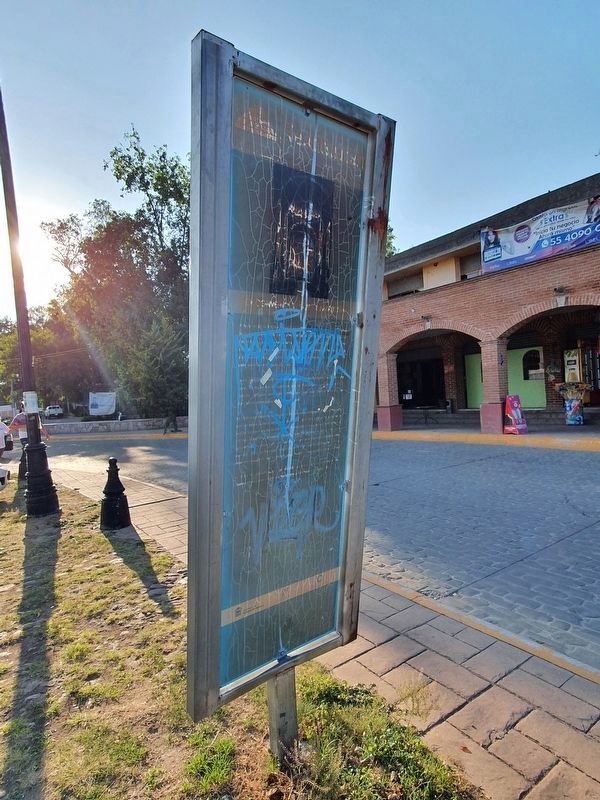
Photographed by J. Makali Bruton, May 15, 2022
1. Former Convent of San Juan Bautista Marker
The marker is severly weathered and vandalized.

A lo largo de su historia, el Valle de Teotihuacán ha albergado una larga tradición cultural, la que dan testimonios de las imponentes ruinas de la ciudad arqueológica, que en tiempos prehispánicos fueron objeto de una gran admiración por propios y extraños. Poco antes de la llegada de los españoles, la región estuvo bajo la jurisdicción de los señores de Texcoco quienes lo contaban entre sus mas preciadas posesiones.
Con la conquista el valle formó parte de la encomienda de Francisco de Verdugo Bazán. La región fue evangelizada por los franciscanos, quienes llamaron al poblado indígena San Juan Teotihuacán, que muy pronto aquirió una importancia comercial y religiosa en la región.
En 1548 se comenzó la construcción del convento y templo de San Juan Bautista con un estilo barroco temprano, que al igual que muchos templos de la región, un ejemplo de la simplicidad funcional de la arquitectura franciscana. El edificio tiene una hermosa portada, que da acceso al atrio con arcos ornamentados y una escultura del Bautista. La portada, hecha de cantera labrada, también tiene ornamentos
this page online
La torre es probablemente un añadido posterior, con un evidente estilo churrigueresco, con columnas salomónicas, probablemente del siglo XVII.
Former Convent of San Juan Bautista
Throughout its history, the Teotihuacan Valley has hosted a long cultural tradition, which testifies the imposing ruins of the archaeological city, which in prehispanic times were still the subject of much admiration by friends and foes. Shortly before the arrival of the Spanish, the region was under the jurisdiction of the lords of Texcoco who counted it among their most prized possessions.
With the conquest the valley was part of the lands of Francisco de Verdugo Bazán. The region was evangelized by the Franciscans, who called the indigenous village San Juan Teotihuacán, which then became an important commercial and religious center in the region.
In 1548 the construction of the convent of the church of San Juan Bautista began with an early Baroque style, which is, like many churches in the region, an example of the functional
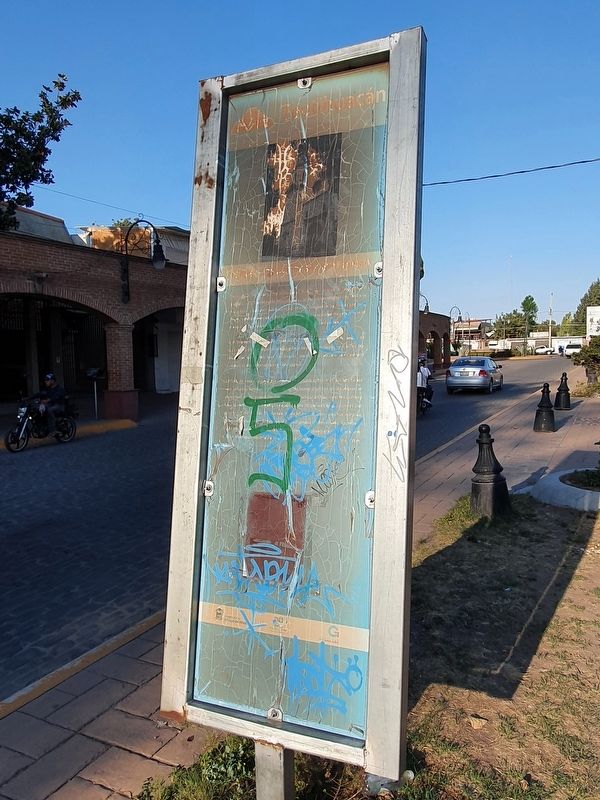
Photographed by J. Makali Bruton, May 15, 2022
2. Former Convent of San Juan Bautista Marker English text
The tower, probably a later addition with a clear churrigueresque style with salmonic columns is probably of the XVIIth century.
Erected by Gobierno del Estado de México.
Topics. This historical marker is listed in these topic lists: Architecture • Colonial Era • Indigenous Peoples and Communities • Religion & Religious Structures. A significant historical year for this entry is 1548.
Location. 19° 40.949′ N, 98° 52.221′ W. Marker is in Teotihuacán de Arista, Estado de Mexico (Mexico State), in Teotihuacán. It is on Plazuela de la Parroquia just west of Adolfo López Mateos, on the right when traveling east. Touch for map. Marker is in this post office area: Teotihuacán de Arista MEX 55805, Mexico. Touch for directions.

Regionally, this marker is in Central Mexico and specifically in
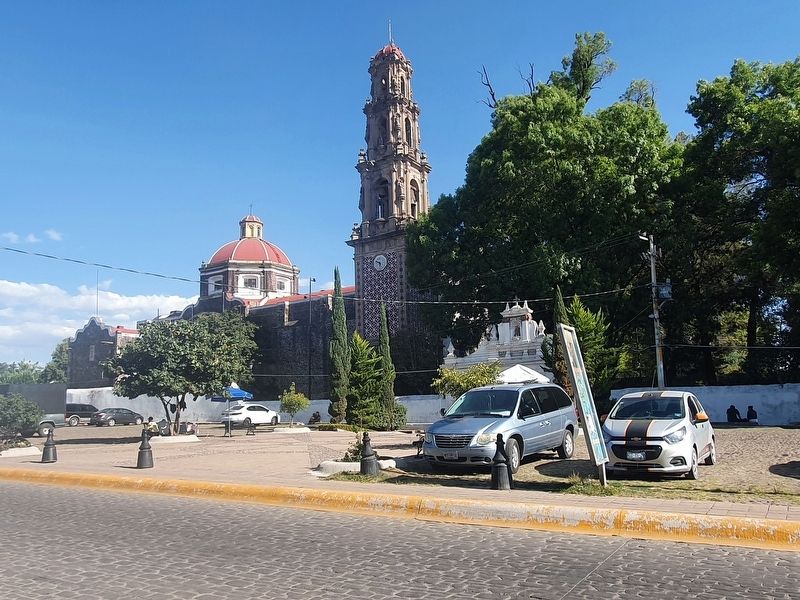
Photographed by J. Makali Bruton, May 15, 2022
3. Former Convent of San Juan Bautista and Marker
Other nearby markers. At least 8 other markers are within 3 kilometers of this marker, measured as the crow flies: Miguel Hidalgo Bicentennial Plaza (about 90 meters away, measured in a direct line); Mariano Arista (approx. 0.4 kilometers away); Monolithic Sculpture of a Water-related Deity (approx. 2.2 kilometers away); Avenue of the Dead (approx. 2.2 kilometers away); La Ciudadela (approx. 2.3 kilometers away); Northwest San Juan River Complex (approx. 2.4 kilometers away); Southern Building (approx. 2.4 kilometers away); The Southern Building of Teotihuacan (approx. 2.4 kilometers away). Touch for a list and map of all markers in Teotihuacán de Arista.
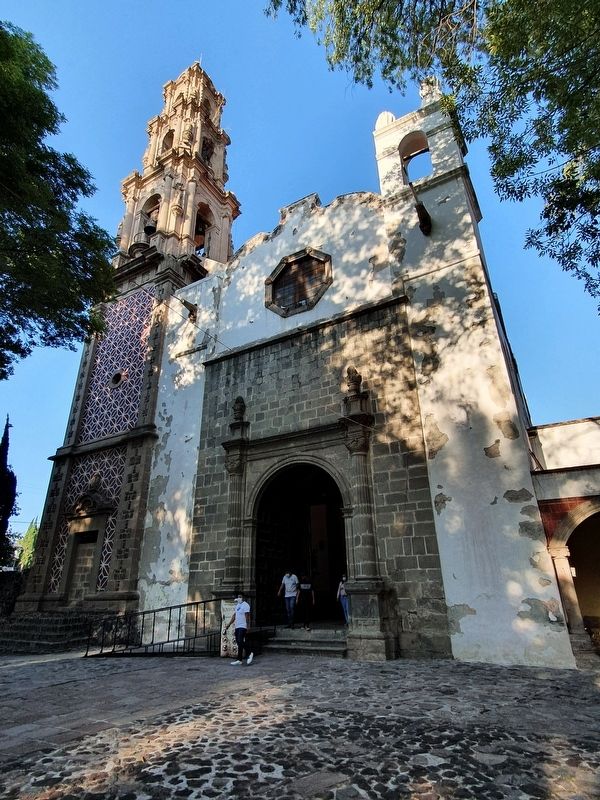
Photographed by J. Makali Bruton, May 15, 2022
4. Former Convent of San Juan Bautista
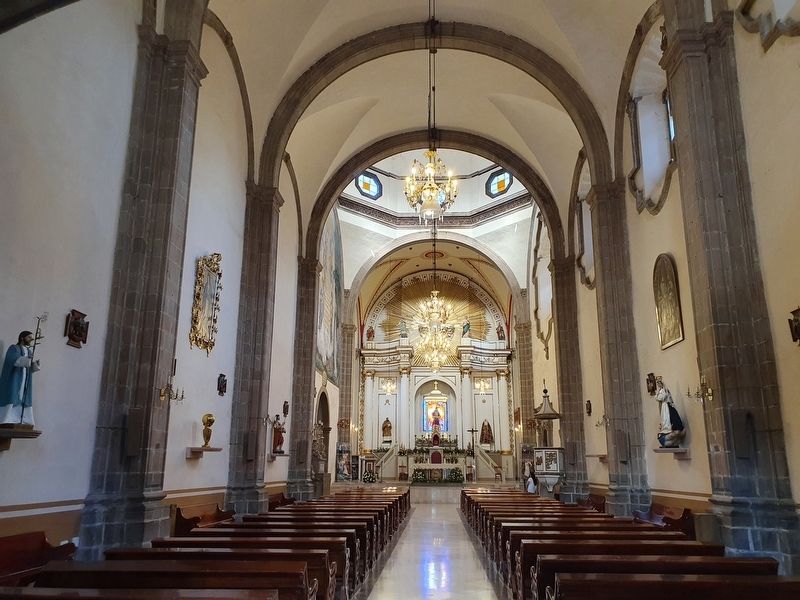
Photographed by J. Makali Bruton, May 15, 2022
5. An interior view of the Former Convent of San Juan Bautista
Credits. This page was last revised on May 27, 2022. It was originally submitted on May 27, 2022, by J. Makali Bruton of Washington, District of Columbia. This page has been viewed 195 times since then and 18 times this year. Photos: 1, 2, 3, 4, 5. submitted on May 27, 2022, by J. Makali Bruton of Washington, District of Columbia.
