Centro Histórico in Ciudad de México, Mexico — The Valley of Mexico (The Central Highlands)
The Sacred Tree
Photographed by J. Makali Bruton, May 24, 2022
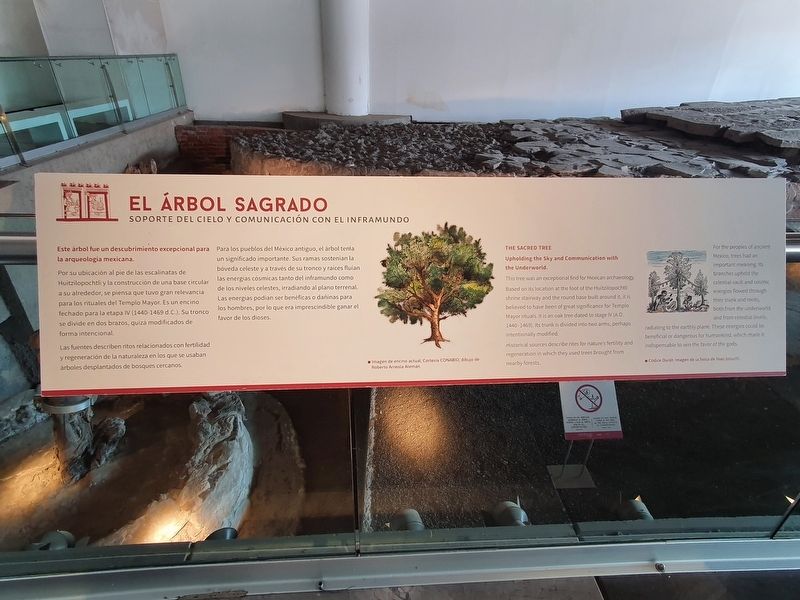
1. The Sacred Tree Marker

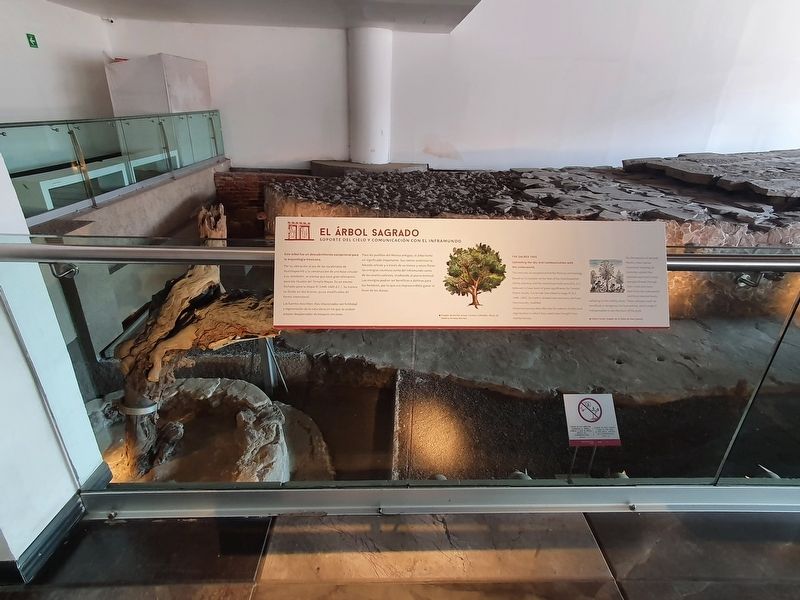
Soporte del Cielo y Comunicación con el Inframundo
Este árbol fue un descubrimiento excepcional para la arqueología mexicana.
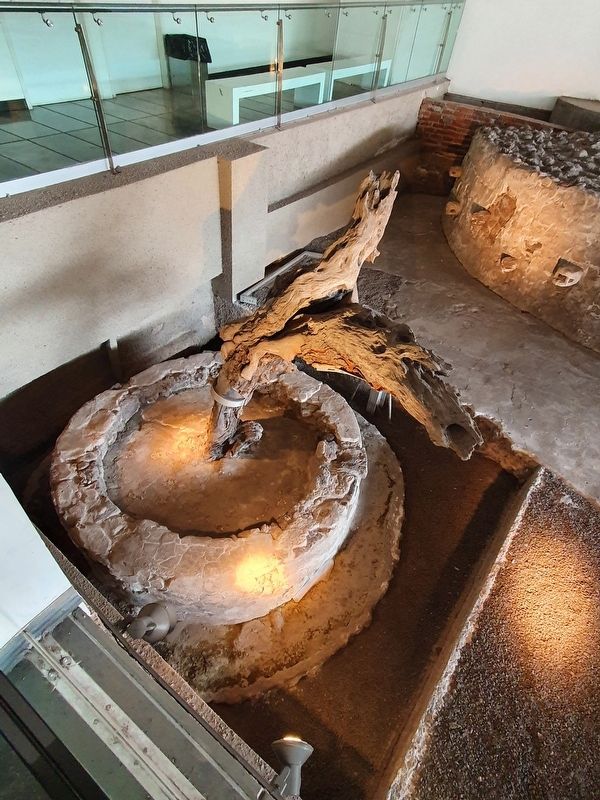
Por su ubicación al pie de las escalinatas de Huitzilopochtli y la construcción de una base circular a su alrededor, se piensa que tuvo gran relevancia para los rituales del Templo Mayor. Es un encino fechado para la etapa IV (1440-1469 d.C.). Su tronco se divide en dos brazos, quizá modificados de forma intencional.
Las fuentes describen ritos relacionados con fertilidad y regeneración de la naturaleza en los que se usaban árboles desplantados de bosques cercanos. Para los pueblos del México antiguo, el árbol tenía un significado importante. Sus ramas sostenían la bóveda celeste y a través de su tronco y raíces fluían las energías cósmicas tanto del inframundo como de los niveles celestes, irradiando al plano terrenal. Las energías podían ser benéficas o dañinas para los hombres, por lo que era imprescindible ganar el favor de los dioses.
Pie de dibujos: Imagen de encino actual, cortesía CONABIO, dibujo de Roberto Arreola Alemán.
Códice Durán. Imagen de la fiesta
this page online
The Sacred Tree
Upholding the Sky and Communication with the Underworld.
This tree was an exceptional find for Mexican archaeology, Based on its location at the foot of the Huitzilopochtli shrine stairway and the round base built around it, it is believed to have been of great significance for Templo Mayor rituals. It is an oak tree dated to stage IV (A.D. 1440-1469). Its trunk is divided into two arms, perhaps intentionally modified.
Historical sources describe rites for nature's fertility and regeneration in which they used trees brought from nearby forests.
For the peoples of ancient Mexico, trees had an important meaning. Its branches upheld the celestial vault and cosmic energies flowed through their trunk and roots, both from the underworld and from celestial levels, radiating to the earthly plane. These energies could be beneficial or dangerous for humankind, which made it indispensable to win the favor of the gods.
Topics. This historical marker is listed in these topic lists: Anthropology & Archaeology • Horticulture & Forestry • Indigenous Peoples and Communities.
Location. 19° 26.089′ N,
Photographed by J. Makali Bruton, May 24, 2022
2. The Sacred Tree and Marker

Regionally, this marker is in Central Mexico and specifically in Mexico City Metropolitan Area. Globally, it is in North America, specifically in Mesoamerica, on the Ring of Fire, and in the Western Hemisphere. Historically, it finds itself in what was once New Spain, a Spanish colony, and the Aztec Empire.
Other nearby markers. At least 8 other markers are within walking distance of this marker: The Sacred Precinct of Mexico-Tenochtitlan (here, next to this marker); The Cuauhxicalco, Place of the Eagle Vessel (here, next to this marker); What is the Templo Mayor made of? (a few steps from this marker); Pedestrian Bridge over the Templo Mayor (a few steps from this marker); The Templo Mayor and its Seven Construction Stages (a few steps from this
Photographed by J. Makali Bruton, May 24, 2022
3. The remains of The Sacred Tree
Credits. This page was last revised on February 7, 2023. It was originally submitted on September 10, 2022, by J. Makali Bruton of Washington, District of Columbia. This page has been viewed 1,654 times since then and 130 times this year. Photos: 1, 2, 3. submitted on September 10, 2022, by J. Makali Bruton of Washington, District of Columbia.
