Downtown Austin in Travis County, Texas — The American South (West South Central)
Mexican Americans in 20th Century America
Photographed by James Hulse, August 30, 2022
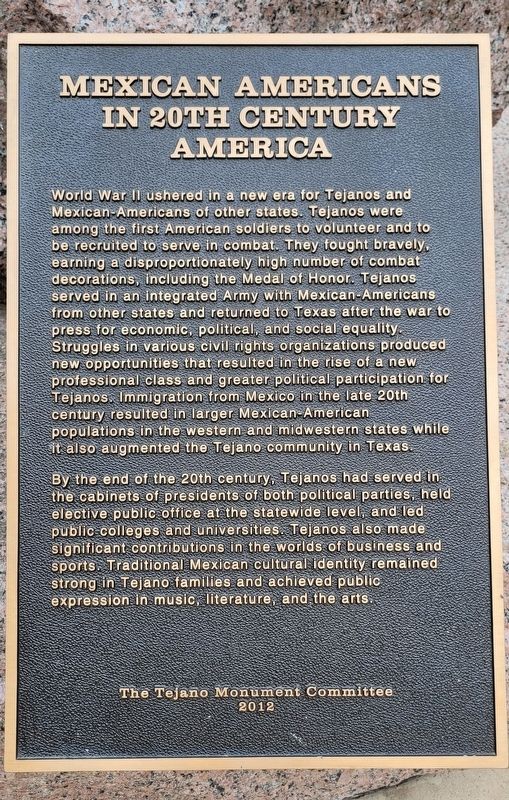
1. Mexican Americans in 20th Century America Marker
By the end of the 20th century, Tejanos had served in the cabinets of presidents of both political parties, held elective public office at the statewide level, and led public colleges and universities. Tejanos also made significant contributions in the worlds of business and sports. Traditional Mexican cultural identity remained strong in Tejano families and achieved public expression in music, literature, and the arts.
Erected 2012 by Tejano Monument Committee.
Topics. This historical marker is listed in these topic lists: Civil Rights • Hispanic Americans • Immigration • War, World II.
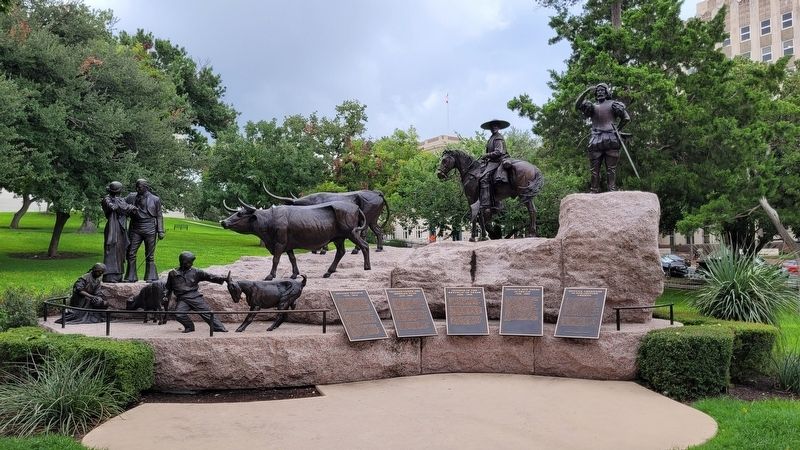
Location. 30° 16.378′ N, 97° 44.42′ W. Marker is in Austin, Texas, in Travis County. It is in Downtown Austin. It can be reached from the intersection of East 11th Street and Congress Avenue. The marker is located in the southeast section of the Texas State Capitol grounds by the south entrance gate on the Tejano Monument. Touch for map.
this page online

Regionally, this marker is in Central Texas. It is also in the American South. Globally, it is in North America, a Gulf of Mexico state, the Western Hemisphere, the Western World, and the Anglosphere. Historically, it finds itself in what was once New Spain, the Republic of Texas, one of the Confederate States of America, and the Antebellum South.
Other nearby markers. At least 8 other markers are within walking distance of this marker: Tejanos and Texas in the U.S. (here, next to this marker); Tejanos in the Republic of Texas (here, next to this marker); Tejanos Under the Mexican Flag (here, next to this marker); Spanish Tejanos (here, next to this marker); Bicentennial Fountain (within shouting distance of this marker); Southern Confederacy Monument (within shouting distance of this marker); Capitol Fence (within shouting distance of this marker); Texas Highway Department (within shouting distance of this marker). Touch for a list and map of all markers in Austin.
Another marker is no
Photographed by James Hulse, August 30, 2022
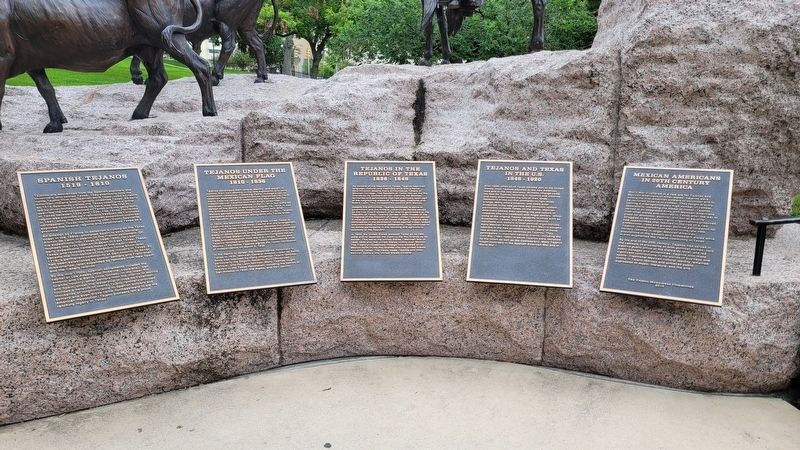
2. The Mexican Americans in 20th Century America Marker is the marker of the far right of the markers
Also see . . . History of Mexican Americans. Wikipedia
In the second half of the 20th century, Mexican Americans diffused throughout the U.S., especially into the Midwest and Southeast, though the groups’ largest population centers remain in California and Texas.[8] During this period, Mexican-Americans campaigned for voting rights, educational and employment equity, ethnic equality, and economic and social advancement. At the same time, however, many Mexican-Americans struggled with defining and maintaining their community's identity.(Submitted on September 13, 2022, by James Hulse of Medina, Texas.)
Photographed by James Hulse, August 30, 2022
3. The view of the Mexican Americans in 20th Century America Marker
Photographed by James Hulse, August 30, 2022
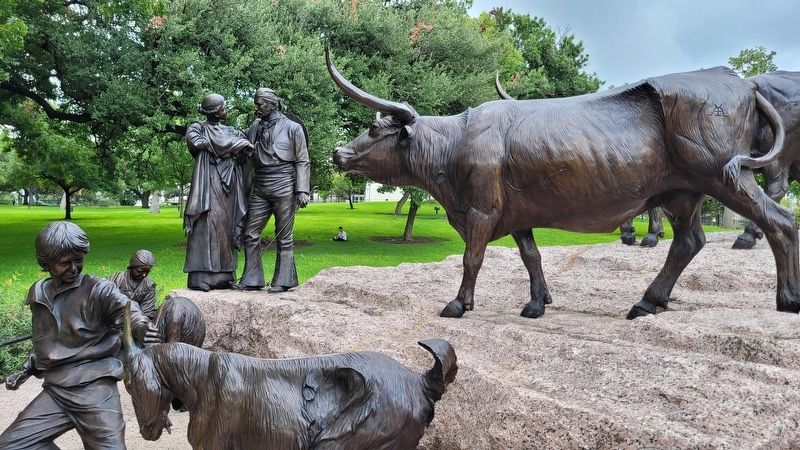
4. Closeup of the Tejano monument
Credits. This page was last revised on February 1, 2023. It was originally submitted on September 12, 2022, by James Hulse of Medina, Texas. This page has been viewed 251 times since then and 25 times this year. Photos: 1, 2, 3, 4. submitted on September 13, 2022, by James Hulse of Medina, Texas.
