Near Libby in Aitkin County, Minnesota — The American Midwest (Upper Plains)
Big Sandy Lake Reservoir
Photographed by McGhiever, September 29, 2022
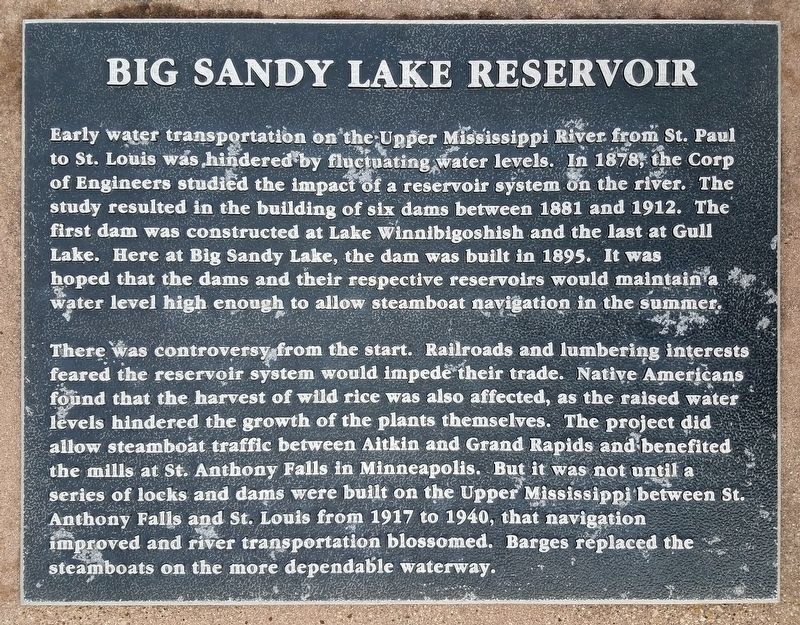
1. Big Sandy Lake Reservoir Marker
There was controversy from the start. Railroads and lumbering interests feared the reservoir system would impede their trade. native Americans found that the harvest of wild rife was also affected, as the raised water levels hindered the growth of the plants themselves. The project did allow steamboat traffic between Aitkin and Grand Rapids and benefited the mills at St. Anthony Falls in Minneapolis. But it was not until a series of locks and dams were built on the Upper Mississippi between St. Anthony Falls and St. Louis from 1917 to 1940, that navigation improved and
this page online
Topics. This historical marker is listed in these topic lists: Indigenous Peoples and Communities • Industry & Commerce • Waterways & Vessels. A significant historical year for this entry is 1895.
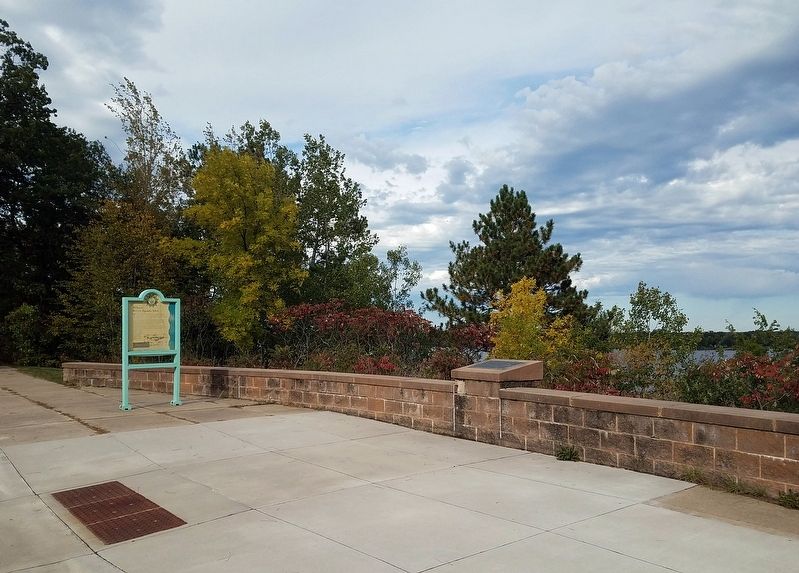
Location. 46° 46.457′ N, 93° 19.604′ W. Marker is near Libby, Minnesota, in Aitkin County. It is on State Highway 65, on the right when traveling north. Marker is at the Big Sandy Lake Wayside Rest, on the parapet of the scenic overlook. Touch for map. Marker is in this post office area: McGregor MN 55760, United States of America. Touch for directions.

Regionally, this marker is in the Northland. It is also in the American Midwest and in the Corn Belt. Globally, it is in North America, the Great North Woods, the Western Hemisphere, the Western World, and the Anglosphere. Historically, it finds itself in what was once Rupert’s Land, the territory of the Mississippian Culture, and the Northwest Territory.
Other nearby markers. At least 5 other markers are within 12 miles of this marker, measured as the crow flies: Where River Roads Met
Photographed by McGhiever, September 29, 2022
2. Markers at the Big Sandy Lake Wayside Rest scenic overlook
Credits. This page was last revised on October 18, 2022. It was originally submitted on October 14, 2022, by McGhiever of Minneapolis, Minnesota. This page has been viewed 785 times since then and 91 times this year. Photos: 1, 2. submitted on October 14, 2022, by McGhiever of Minneapolis, Minnesota. • Bill Pfingsten was the editor who published this page.
