Prospect Park in Delaware County, Pennsylvania — The American Northeast (Mid-Atlantic)
River of Change
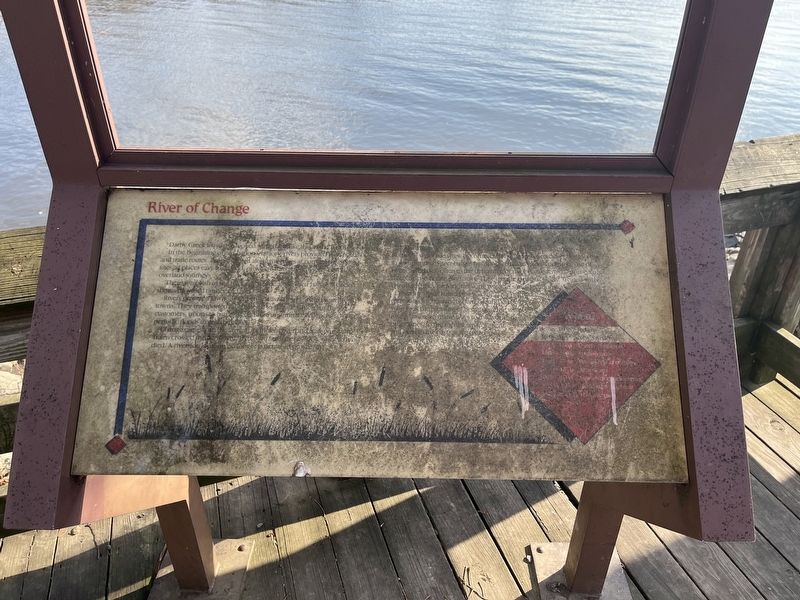
Darby Creek may have looked something like this in the 1600s.
In the beginning of our nation's history, rivers provided transportation and trade routes. People settled along the rivers at convenient landing sites at places easy to defend, or where travelers crossed to continue overland journeys.
There were fish in the rivers and game along their banks. Wooded shores provided timber and fuel.
Rivers powered sawmills and gristmills. They provided water for towns. They transported raw materials to factories merchandise, customers, troops to battle. Agriculture in some areas depended floods to enrich the soil.
Change came with the arrival of efficient overland transportation. Trains crossed the continent, bypassed settlements soon withered and died. A riverside location no longer guaranteed prosperity.
Today, rivers continue [unreadable]. Some river ports still welcome ships of commerce but many of the ships are too big to go upstream. River barges transport coal and grain. Industrial use of rivers help generate electricity. They irrigate farmers' fields. Treated with chemicals they provide drinking water in
this page online
Rivers provide habitat for wildlife. They provide recreation for boaters, fisherman and others who see the pleasure of being near the water. Rivers link us in many ways to the world, other [unreadable], to the natural environment, and even to the past, and we try to imagine the river as our ancestors saw it.
When? Before 1638: Indians
1638 - 1655: New Sweden
1655 - 1664: Dutch dominion
1664 - 1681: English rule
1681 - 1784: Pennsylvania colony
1784 - 1870: Americans
1870 - 1935: Suburban development
1935 - 1937: Building restoration
1937 - present: Historic park
Topics. This historical marker is listed in these topic lists: Agriculture • Colonial Era • Industry & Commerce • Railroads & Streetcars • Settlements & Settlers • Waterways & Vessels. A significant historical year for this entry is 1638.
Location. This marker has been replaced by another marker nearby. It was located near 39° 52.567′ N, 75° 18.341′ W. Marker was in Prospect Park, Pennsylvania, in Delaware County. It could be reached from Wanamaker Avenue (Pennsylvania Route 420) 0.2 miles south of Lafayette Avenue, on
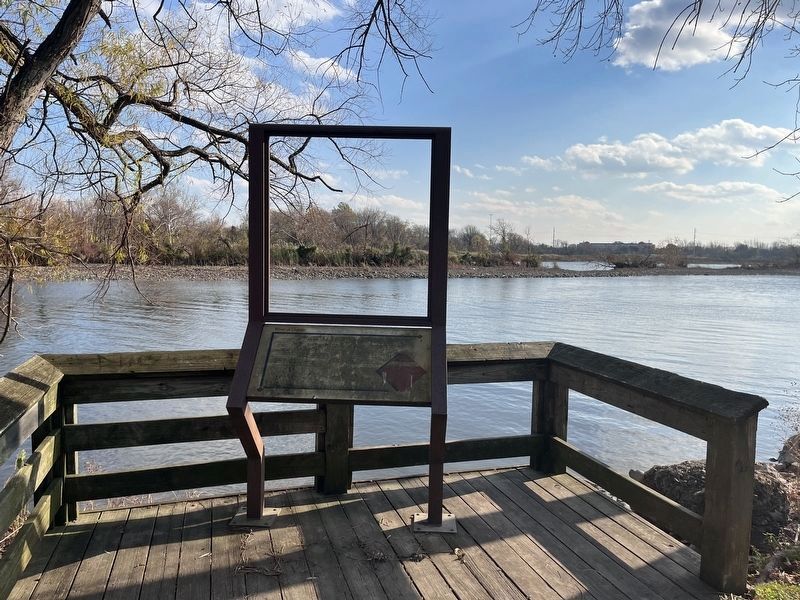

Regionally, this marker was in Southeast Pennsylvania and in Greater Philadelphia. It was also in the American Northeast and in the Mid-Atlantic. Globally, it was in North America, the Western Hemisphere, the Western World, and the Anglosphere. Historically, it found itself in what was once the Haudenosaunee (Iroquois) Confederacy, New Netherland, and one of the original Thirteen Colonies.
Other nearby markers. At least 8 other markers are within walking distance of this location: The Ferry Landing (within shouting distance of this marker); Welcome to the Morton Homestead (within shouting distance of this marker); a different marker also named Welcome to the Morton Homestead (within shouting distance of this marker); A Change For the Worse? (within shouting distance of this marker); Darby Creek Then and Now (about 300 feet away, measured in a direct line); a different marker also named Darby Creek Then and Now (about 300 feet away); John Morton– Signer of the Declaration of Independence (about 400 feet away); Welcome (about 400 feet away). Touch for a list and map of all markers in Prospect Park.
Other markers no longer nearby. The Ferry Landing (was within shouting distance of this marker but has been replaced with another marker now near it); Morton Homestead (was within shouting distance of this marker but has been replaced with another marker now near it); The Second Building (was within shouting distance of this marker but has been replaced with another marker now near it); The First Building (was within shouting distance of this marker but has been replaced with another marker now near it); A Morton Mystery (was within shouting distance of this marker but has been replaced with another marker now near it); Even History Changes (was about 300 feet away but has been replaced with another marker now near it).
More about this marker. The marker has weathered significantly and is partially unreadable.
Credits. This page was last revised on March 26, 2026. It was originally submitted on November 20, 2022, by Devry Becker Jones of Washington, District of Columbia. This page has been viewed 193 times since then and 13 times this year. Photos: 1, 2. submitted on November 20, 2022, by Devry Becker Jones of Washington, District of Columbia.
