Bolton Hill in Baltimore, Maryland — The American Northeast (Mid-Atlantic)
Neighbors and Natives
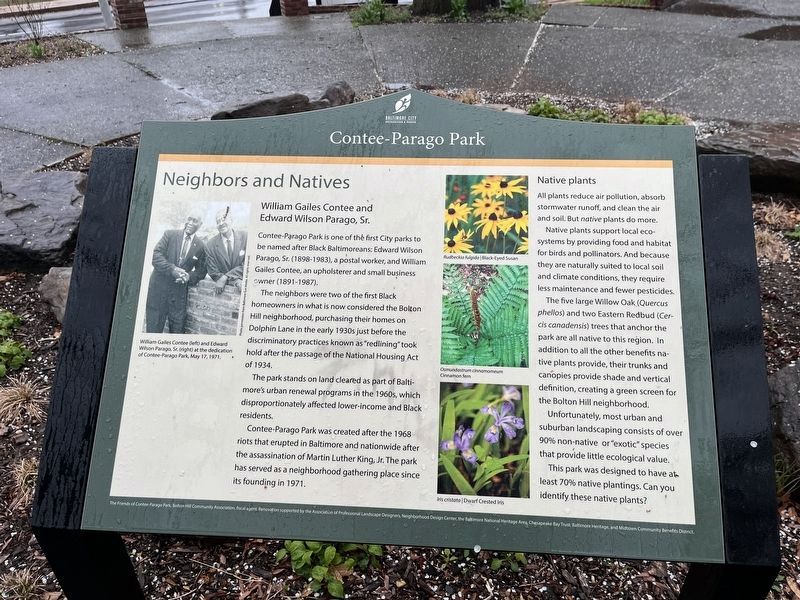
William Gailes Contee and Edward Wilson Parago, Sr.
Contee-Parago Park is one of the first City parks to be named after Black Baltimoreans: Edward Wilson Parago, Sr. (1898-1983), a postal worker, and William Gailes Contee, an upholsterer ans small business owner (1891-1987).
The neighbors were two of the first Black homeowners in what is now considered the Bolton Hill neighborhood, purchasing their homes on Dolphin Lane in the early 1930s just before the discriminatory practices known as "redlining" took hold after the passage of the National Housing Act of 1934.
The park stands on land cleared as part of Baltimore's urban renewal programs in the 1960s, which disproportionately affected lower-income and Black residents.
Contee-Parago Park was created after the 1968 riots that erupted in Baltimore and nationwide after the assassination of Martin Luther king, Jr. The park has served as a neighborhood gathering place since its founding in 1971.
Native plants
All plants reduce air pollution, absorb stormwater runoff, and clean the air and soil. But native plants do more.
Native plants support local ecosystems
this page online
The five large Willow Oak (Quercus phellos) and two Eastern Redbud (Cercis canadensis) trees that anchor the park are all native to this region. In addition to all the other benefits native plants provide, their trunks and canopies provide shade and vertical definition, creating a green screen for the Bolton Hill neighborhood.
Unfortunately, most urban and suburban landscaping consists of over 90% non-native or "exotic" species that provide little ecological value.
This park was designed to have at least 70% native plantings. Can you identify these native plants?
Erected by Baltimore City Recreation & Parks.
Topics. This historical marker is listed in these topic lists: African Americans • Civil Rights • Communications • Horticulture & Forestry • Industry & Commerce • Parks & Recreational Areas • Settlements & Settlers. A significant historical year for this entry is 1934.
Location. 39° 18.259′ N, 76° 37.391′ W.
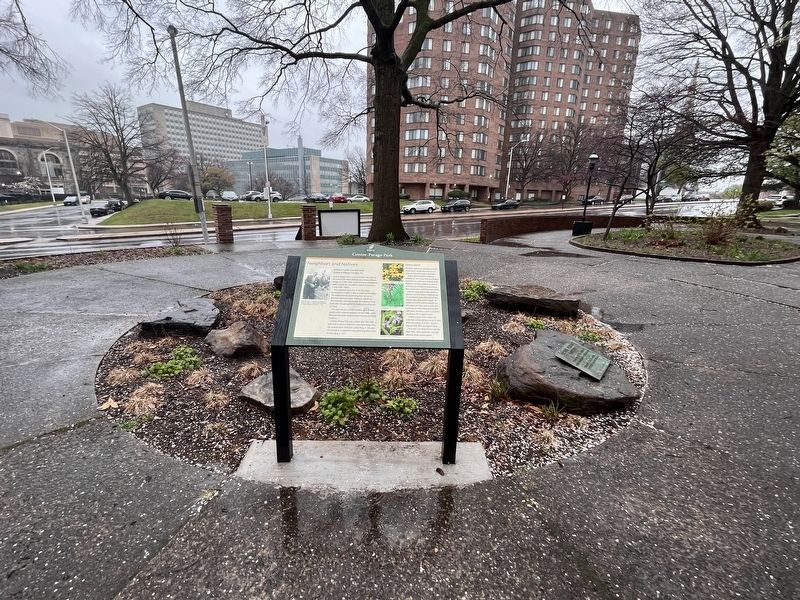

Regionally, this marker is in Central Maryland. It is also in the American Mid-Atlantic, in the Chesapeake Bay Region, and on the Eastern Seaboard. Globally, it is in the North Atlantic Region, North America, the Western Hemisphere, the Western World, and the Anglosphere. Historically, it finds itself in what was once one of the original Thirteen Colonies and also the Antebellum South.
Other nearby markers. At least 8 other markers are within walking distance of this marker: Reflections (about 400 feet away, measured in a direct line); Hugh Lennox Bond (about 400 feet away); Colonel Charles Marshall (about 500 feet away); William H. Howell, Ph.D. (about 500 feet away); Gerald W. Johnson (about 600 feet away); Family and Children’s Services of Central Maryland (about 600 feet away); Ernest Stebbins, M.D. (about 600
Photographed by Devry Becker Jones (CC0), April 1, 2023
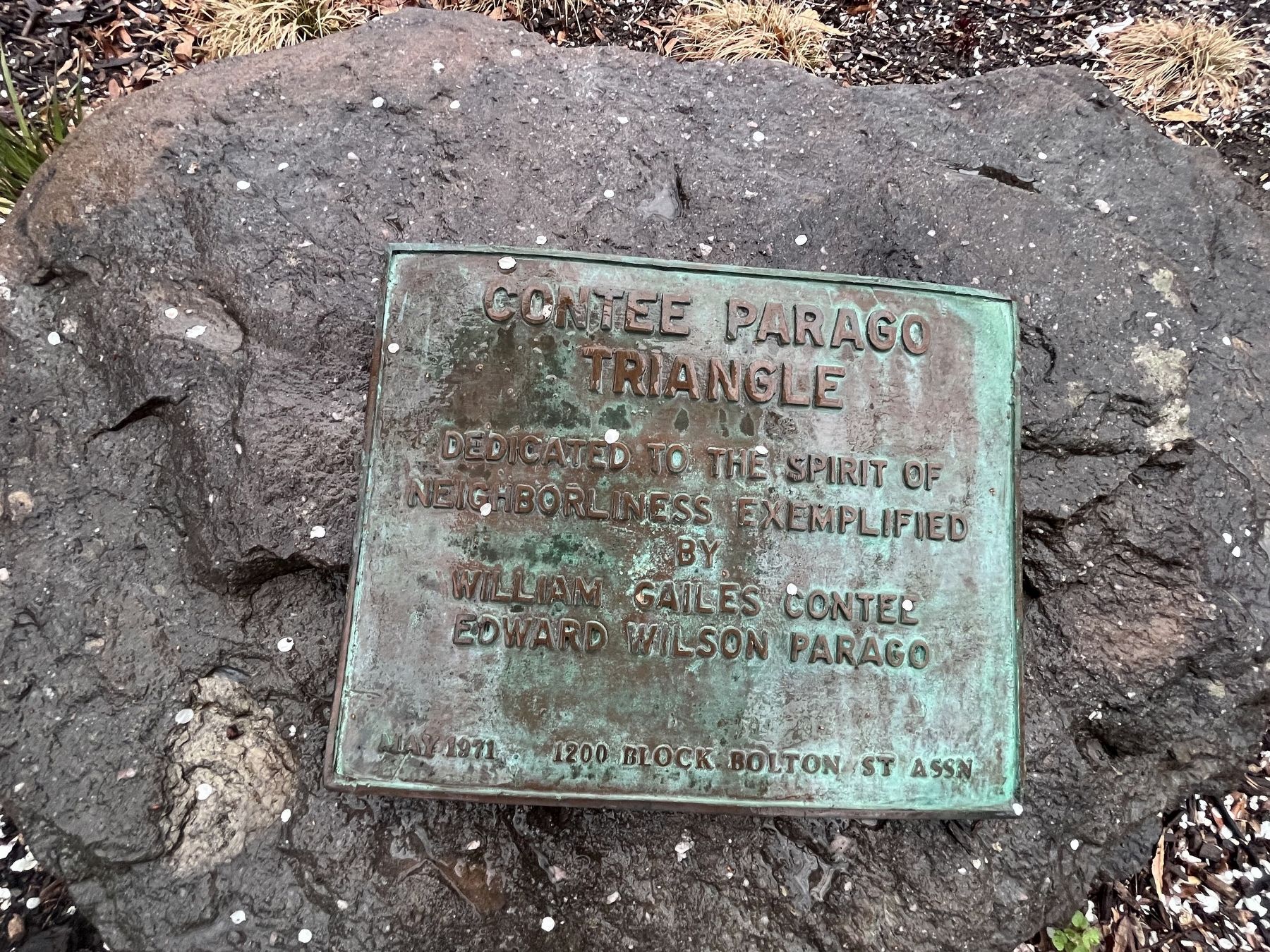
3. Dedication plaque on the grounds of the park
Credits. This page was last revised on April 2, 2023. It was originally submitted on December 11, 2022, by Devry Becker Jones of Washington, District of Columbia. This page has been viewed 229 times since then and 28 times this year. Photos: 1, 2, 3. submitted on April 2, 2023, by Devry Becker Jones of Washington, District of Columbia.
