
Near Telchaquillo in Tecoh, Yucatán, Mexico — The Southeast (Yucatan Peninsula)
The Temple of the Painted Niches
Photographed by James Hulse, February 1, 2023
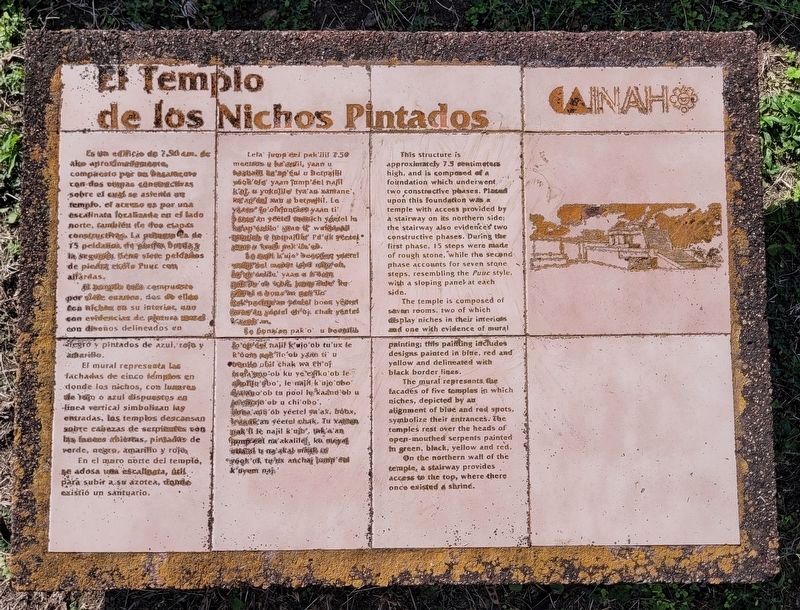
1. The Temple of the Painted Niches Marker

Esta estructura tiene aproximadamente 7,5 centímetros de altura y está compuesta por una cimentación que pasó por dos fases constructivas. Sobre este cimiento había un templo al que se accedía mediante una escalinata en su lado norte; la escalera también evidencia dos fases constructivas. Durante la primera fase, se realizaron 15 escalones de piedra tosca, mientras que la segunda fase cuenta con siete escalones de piedra, de estilo Puuc, con un panel inclinado a cada lado.
El templo está compuesto por siete salas, dos de las cuales exhiben hornacinas en su interior y una con evidencia de pintura mural; esta pintura incluye diseños pintados en azul, rojo y amarillo y delineados con líneas de borde negras.
El mural representa las fachadas de cinco templos en los que nichos, representados por una alineación de puntos azules y rojos, simbolizan sus entradas. Los templos descansan sobre cabezas de serpientes con la boca abierta pintadas de verde, negro, amarillo y rojo.
En el muro norte del templo, una escalera da acceso a la parte superior, donde una vez existió un santuario.
Mayan:
Le
this page online
Le templo táan compuesto tumen Ukp'éel salas, ka'ap'éel le máako'oba' muestran nichos ti' u interiores yéetel juntúul yéetel evidencia boonilo' mural; Le boonilo' analte'obo' yaan diseños pintados ti' azul, rojo yéetel k'an yéetel delineados yéetel líneas borde box.
Le mural leti', le fachadas jo'op'éel templos ti' le le nichos, representados tumen juntúul alineación boonol azules yéetel rojas, simbolizan u entradas. Le templos ku je'esikuba'ob yóok'ol le cabezas kaan yéetel u chi' jaapal pintadas verde, negro, amarillo yéetel rojo.
Ti' le pak'o' norte ti' le templo, jump'éel ba'ala' yaan proporciona
Photographed by James Hulse, February 1, 2023
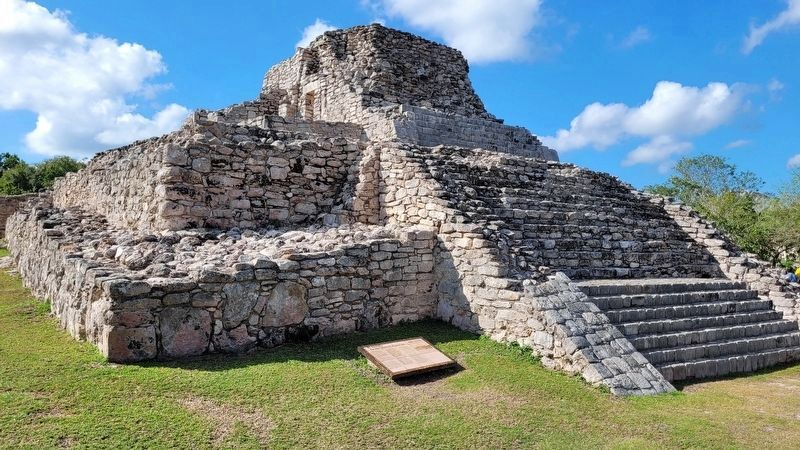
2. The view of the Temple of the Painted Niches and Marker from the north
English:
The temple is composed of seven rooms, two of which display niches in their interiors and one with evidence of mural painting; this painting includes designs painted in blue, red and yellow and delineated with black border lines.
The mural represents, the facades of five temples in which niches, depicted by an alignment of blue and red spots, symbolize their entrances. The temples rest over the heads of open-mouthed serpents painted in green, black, yellow and red.
On the northern wall of the temple, a stairway provides access to the top, where there once existed a shrine.
Erected by Instituto
Photographed by James Hulse, February 1, 2023
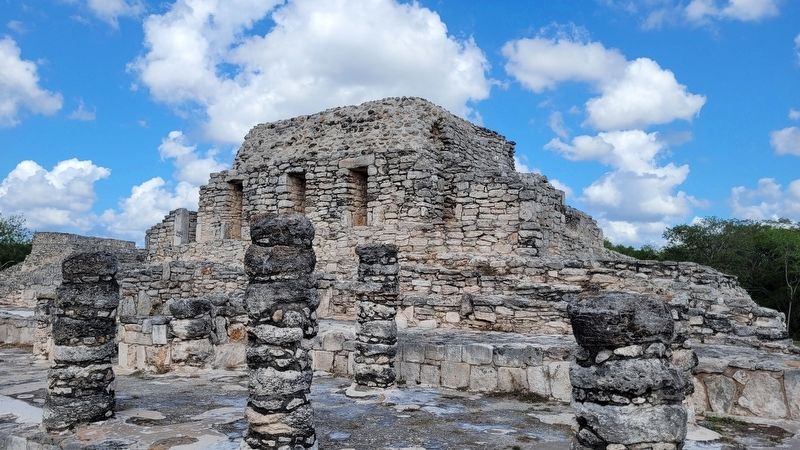
3. The view of the Temple of the Painted Niches from the south
Topics. This historical marker is listed in these topic lists: Anthropology & Archaeology • Architecture • Indigenous Peoples and Communities.
Location. 20° 37.805′ N, 89° 27.629′ W. Marker is near Telchaquillo, Yucatán, in Tecoh. It can be reached from the intersection of Mayapán and Teya-Peto (Yucatán Route 184). The marker is located at the northeast section to the Mayapán Archeological Site. Touch for map. Marker is in this post office area: Telchaquillo YU 97824, Mexico. Touch for directions.

Regionally, this marker is in the Mexican Gulf Coast, in the Maya Heartland, and on the Yucatán Peninsula. Globally, it is in North America, Mesoamerica, a Gulf of Mexico state, and the Western Hemisphere. Historically, it finds itself in what was once New Spain and also a Spanish colony.
Other nearby markers. At least 8 other markers are within walking distance of this marker: The Temple of the Mask and the Room of the Turtles (within shouting distance of this marker); Shrines Altars and Platforms (within shouting distance
Photographed by James Hulse, February 1, 2023
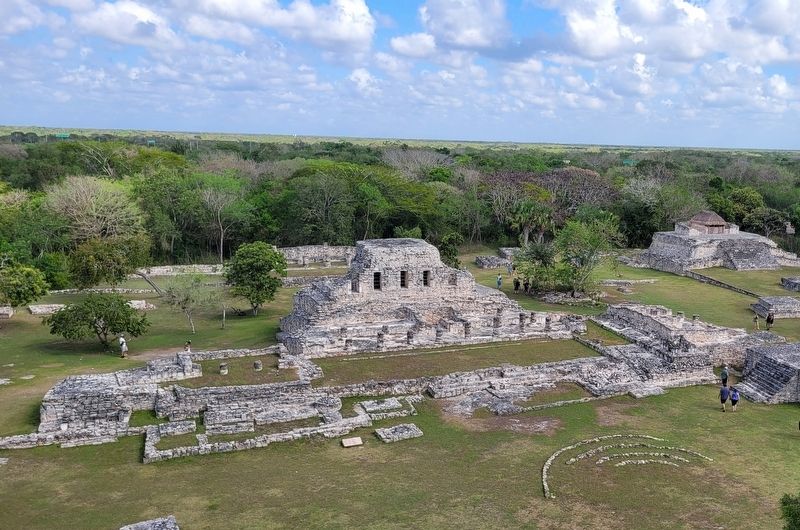
4. The view of the Temple of the Painted Niches from the top of the Castle
More about this marker. The Spanish and Mayan version of the marker were illegible and these versions were translated from the English version on the marker to the correct text with Google and Bing translate tools.
Credits. This page was last revised on February 11, 2023. It was originally submitted on February 3, 2023, by James Hulse of Medina, Texas. This page has been viewed 234 times since then and 16 times this year. Photos: 1, 2, 3, 4. submitted on February 4, 2023, by James Hulse of Medina, Texas.
