Oxford in Lafayette County, Mississippi — The American South (East South Central)
Lynching in America ⎯⎯⎯ Lynching in Lafayette County
Community Remembrance Project
Photographed by Duane and Tracy Marsteller, April 1, 2023
1. Lynching in America side of marker
Inscription.
Lynching in America, also, Lynching in Lafayette County. Community Remembrance Project.
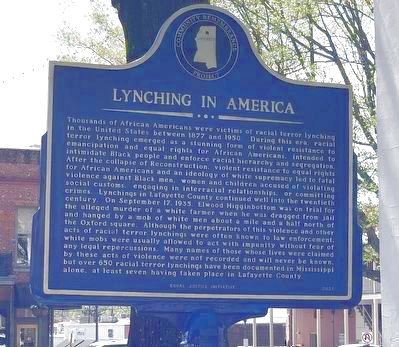
Lynching in America. Thousands of African Americans were victims of racial terror lynching in the United States between 1877 and 1950. During this era, racial terror lynching emerged as a stunning form of violent resistance to emancipation and equal rights for African Americans, intended to intimidate Black people and enforce racial hierarchy and segregation. After the collapse of Reconstruction, violent resistance to equal rights for African Americans and an ideology of white supremacy led to fatal violence against Black men, women and children accused of violating social customs, engaging in interracial relationships, or committing crimes. Lynchings in Lafayette County continued well into the twentieth century. On September 17, 1935. Elwood Higginbottom was on trial for the alleged murder of a white farmer when he was dragged from jail and hanged by a mob of white men about a mile and a half north of the Oxford square. Although the perpetrators of this violence and other acts of racial terror lynchings were often known to law enforcement, white mobs were usually allowed to act with impunity without fear of any legal repercussions. Many names of those whose lives were claimed by these acts of violence were not recorded and will never be known, but over 650 racial terror lynchings have been documented in Mississippi alone, at least seven having taken place in Lafayette County.,
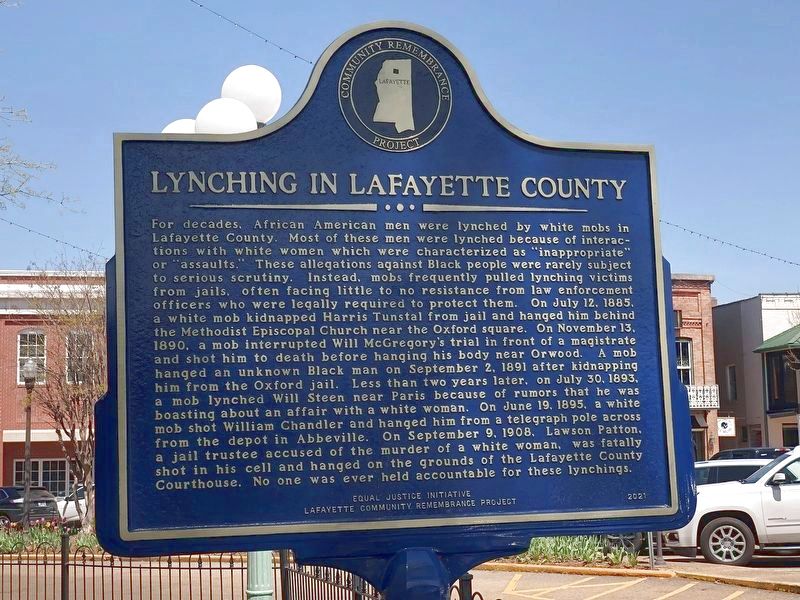
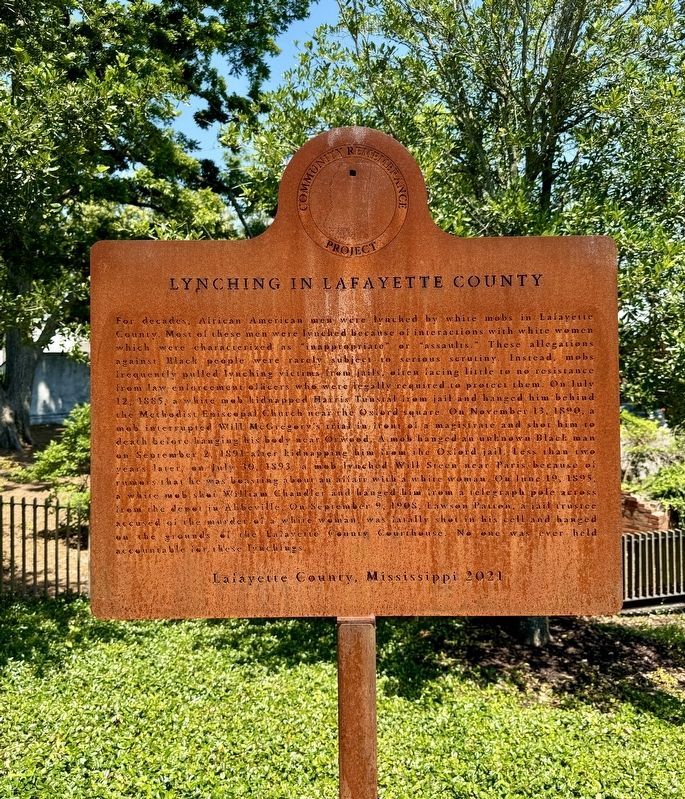
Lynching in Lafayette County. For decades, African American men were lynched by white mobs in Lafayette County. Most of these men were lynched because of interactions with white women which were characterized as inappropriate or assaults. These allegations against Black people were rarely subject to serious scrutiny. Instead, mobs frequently pulled lynching victims from jails, often facing little to no resistance from law enforcement officers who were legally required to protect them. On July 12, 1885, a white mob kidnapped Harris Tunstal from jail and hanged him behind the Methodist Episcopal Church near the Oxford square. On November 13, 1890, a mob interrupted Will McGregory's trial in front of a magistrate and shot him to death before hanging his body near Orwood. A mob hanged an unknown Black man on September 2, 1891 after kidnapping him from the Oxford jail. Less than two years later, on July 30, 1893, a mob lynched Will Steen near Paris because of rumors that he was boasting about an affair with a white woman. On June 19, 1895, a white mob shot William Chandler and hanged him from a telegraph pole across from the depot in Abbeville. On September 9, 1908, Lawson Patton, a jail trustee accused of the murder of a white woman, was fatally shot in his cell and hanged on the grounds of the Lafayette County Courthouse. No one was ever held accountable for these lynchings.
Lynching in America
Thousands of African Americans were victims of racial terror lynching in the United States between 1877 and 1950. During this era, racial terror lynching emerged as a stunning form of violent resistance to emancipation and equal rights for African Americans, intended to intimidate Black people and enforce racial hierarchy and segregation. After the collapse of Reconstruction, violent resistance to equal rights for African Americans and an ideology of white supremacy led to fatal violence against Black men, women and children accused of violating social customs, engaging in interracial relationships, or committing crimes. Lynchings in Lafayette County continued well into the twentieth century. On September 17, 1935. Elwood Higginbottom was on trial for the alleged murder of a white farmer when he was dragged from jail and hanged by a mob of white men about a mile and a half north of the Oxford square. Although the perpetrators of this violence and other acts of racial terror lynchings were often known to law enforcement, white mobs were usually allowed to act with impunity without fear of any legal repercussions. Many names of those whose lives were claimed by these acts of violence were not recorded and will never be known, but over 650 racial terror lynchings have been documented in Mississippi
Click or scan to see this page online
alone, at least seven having taken place in Lafayette County.
Lynching in Lafayette County
For decades, African American men were lynched by white mobs in Lafayette County. Most of these men were lynched because of interactions with white women which were characterized as inappropriate or assaults. These allegations against Black people were rarely subject to serious scrutiny. Instead, mobs frequently pulled lynching victims from jails, often facing little to no resistance from law enforcement officers who were legally required to protect them. On July 12, 1885, a white mob kidnapped Harris Tunstal from jail and hanged him behind the Methodist Episcopal Church near the Oxford square. On November 13, 1890, a mob interrupted Will McGregory's trial in front of a magistrate and shot him to death before hanging his body near Orwood. A mob hanged an unknown Black man on September 2, 1891 after kidnapping him from the Oxford jail. Less than two years later, on July 30, 1893, a mob lynched Will Steen near Paris because of rumors that he was boasting about an affair with a white woman. On June 19, 1895, a white mob shot William Chandler and hanged him from a telegraph pole across from the depot in Abbeville. On September 9, 1908, Lawson Patton, a jail trustee accused of the murder of a white woman, was fatally shot in his cell and hanged on the grounds
Photographed by Duane and Tracy Marsteller, April 1, 2023
2. Lynching in Lafayette County side of marker
of the Lafayette County Courthouse. No one was ever held accountable for these lynchings.
Erected 2021 by Equal Justice Initiative · Lafayette Community Remembrance Project.
Topics and series. This historical marker is listed in these topic lists: African Americans • Civil Rights • Law Enforcement. In addition, it is included in the Lynching in America series list. A significant historical date for this entry is July 12, 1885.
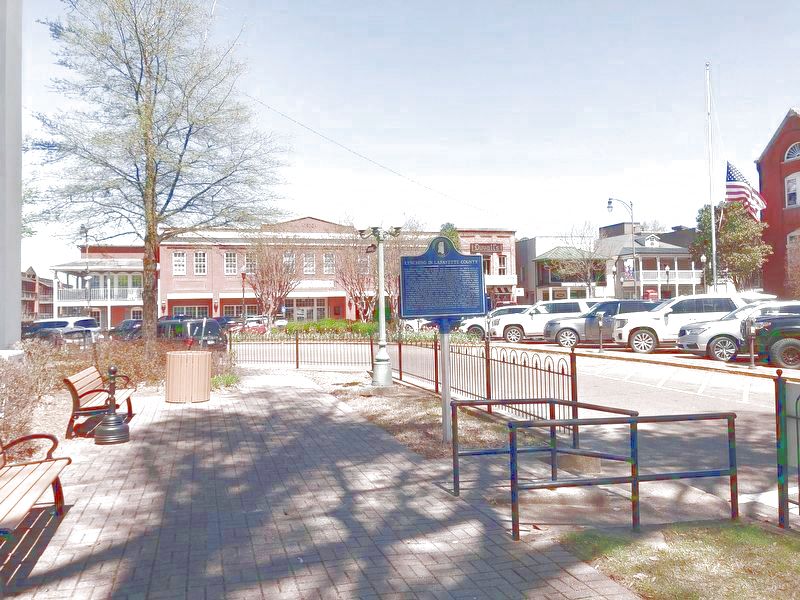
Location. 34° 21.982′ N, 89° 31.11′ W. Marker is in Oxford, Mississippi, in Lafayette County. It is at the intersection of North Lamar Boulevard and Courthouse Square, on the left when traveling north on North Lamar Boulevard. Marker is on the east side of the Lafayette County Courthouse. Touch for map. Marker is at or near this postal address: 1 Courthouse Sq, Oxford MS 38655, United States of America. Touch for directions.
Regionally, this marker is in the North Mississippi Hills. It is also in the American South and specifically in the Deep South. Globally, it is in North America, a Gulf of Mexico state, the Western Hemisphere, the Western World, and the Anglosphere. Historically, it finds itself in what was once the territory of the Mississippian Culture, one of the Confederate States of America, and the Antebellum South.
A Replica marker of one side is located at the Equal Justice Initiatives' National Memorial for Peace and Justice in Montgomery, Alabama. The Equal Justice Initiative supports efforts to locally memorialize documented victims of racial violence and to educate communities about the history of racial injustice. Mark Hilton
Credits. This page was last revised on October 16, 2024. It was originally submitted on April 6, 2023, by Duane and Tracy Marsteller of Murfreesboro, Tennessee. This page has been viewed 530 times since then and 28 times this year. Photos:1, 2, 3. submitted on April 6, 2023, by Duane and Tracy Marsteller of Murfreesboro, Tennessee. 4. submitted on October 15, 2024, by Brandon D Cross of Flagler Beach, Florida.