Christchurch in Dorset, England, United Kingdom — Northwestern Europe (the British Isles)
The Ducking Stool
Photographed by Stephen Palmer, April 28, 2023
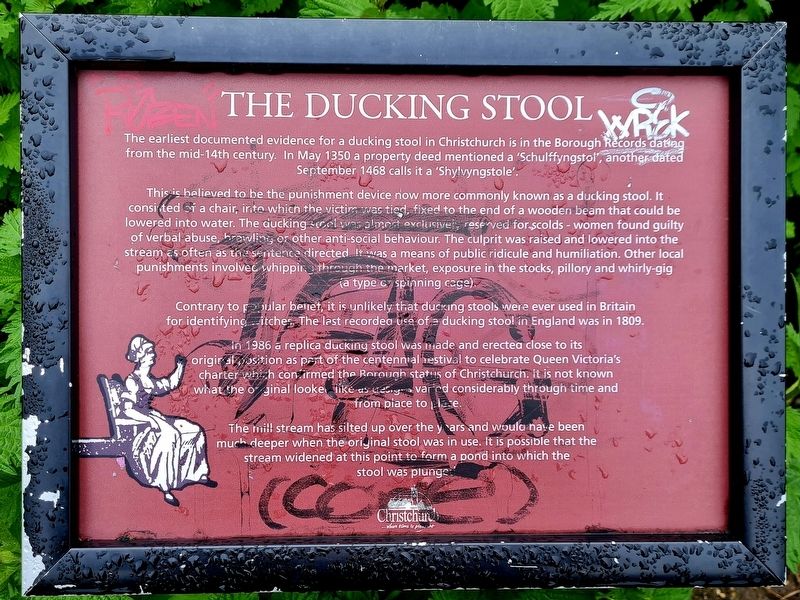
1. The Ducking Stool Marker
The earliest documented evidence for a ducking stool in Christchurch is in the Borough Records dating from the mid-14th century. In May 1350 a property deed mentioned a 'Schulffyngstol, another dated September 1468 calls it a 'Shylvyngstole'.
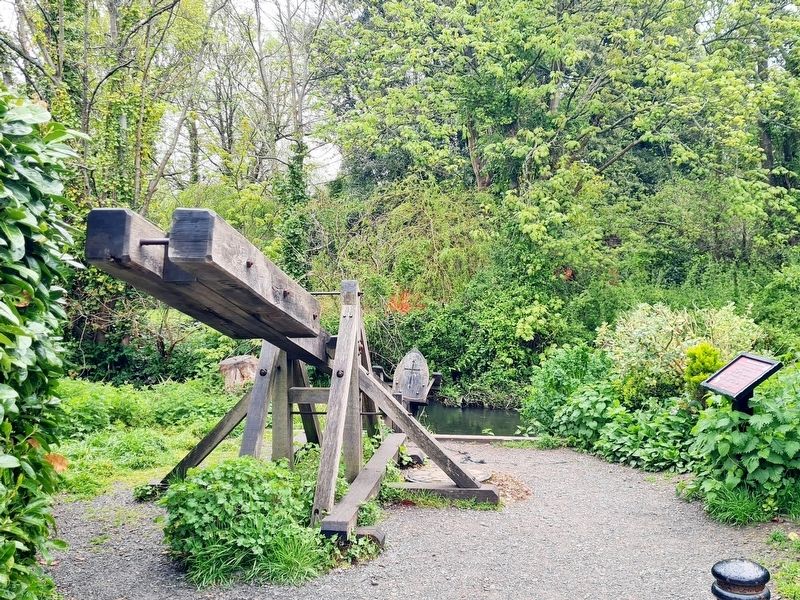
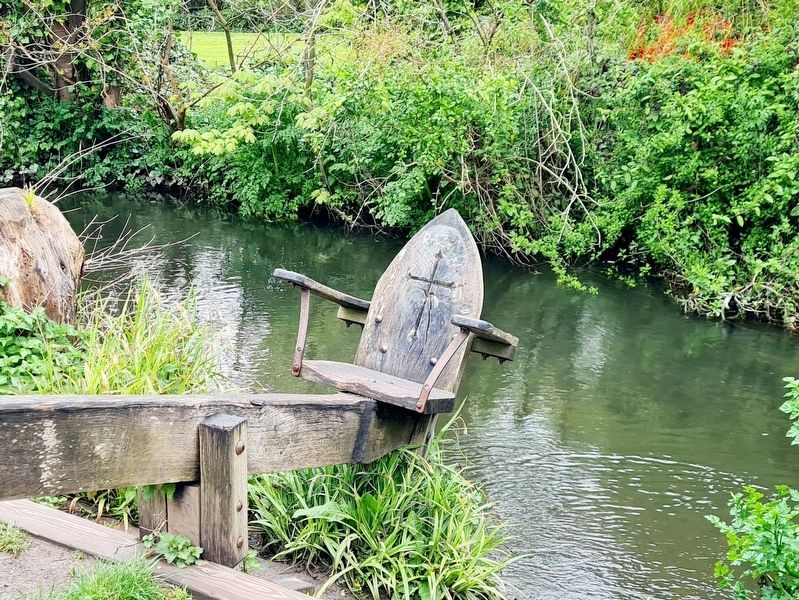
This is believed to be the punishment device now more commonly known as a ducking stool. It consisted of a chair, into which the victim was tied, fixed to the end of a wooden beam that could be lowered into water. The ducking stool was almost exclusively, reserved for scolds - women found guilty of verbal abuse, brawling or other anti-social behaviour. The culprit was raised and lowered into the stream as often as the sentence directed. It was a means of public ridicule and humiliation. Other local punishments involved whipping through the market, exposure in the stocks, pillory and whirly-gig (a type of spinning cage).
Contrary to popular belief, it is unlikely that ducking stools were ever used in Britain for identifying witches. The last recorded use of a ducking stool in England was in 1809.
In 1986 a replica ducking stool was made and erected close to its original position
this page online
The mill stream has silted up over the years and would have been much deeper when the original stool was in use. It is possible that the stream widened at this point to form a pond into which the stool was plunged.
Erected by Christchurch Council.
Topics. This historical marker is listed in these topic lists: Anthropology & Archaeology • Law Enforcement • Women. A significant historical month for this entry is May 1350.
Location. This marker has been replaced by another marker nearby. It was located near 50° 44.076′ N, 1° 46.481′ W. Marker was in Christchurch, England, in Dorset. It could be reached from Ducking Stool Lane. The marker is at the end of Ducking Stool Lane. Touch for map. Marker was at or near this postal address: 17 Ducking Stool Lane, Christchurch, England BH23 1DS, United Kingdom. Touch for directions.

Regionally, this marker was in South West England. Globally,
Photographed by Stephen Palmer, April 28, 2023
2. The Ducking Stool
Other nearby markers. At least 8 other markers are within walking distance of this location: A different marker also named The Ducking Stool (within shouting distance of this marker); Christchurch Castle and Norman House (about 90 meters away, measured in a direct line); The Old Court House (about 90 meters away); The Town of Christchurch-Twynham (about 90 meters away); Clingan's Trust (about 150 meters away); The Old Tolsey (about 150 meters away); The Town Hall (about 210 meters away); Priory Church (about 210 meters away). Touch for a list and map of all markers in Christchurch.
Also see . . . When Authorities Dunked Outspoken Women in Water. 2022 Article by Katie Dancey-Downs in the Smithsonian Magazine
Excerpt: "Between the mid-16th and early 19th centuries, an untold number of women in England (as well as Scotland and colonial America) underwent ducking as a punishment for speaking
Photographed by Stephen Palmer, April 28, 2023
3. The Ducking Stool
Credits. This page was last revised on August 20, 2025. It was originally submitted on April 29, 2023, by Stephen Palmer of Ascot, England. This page has been viewed 1,245 times since then and 265 times this year. Photos: 1, 2, 3. submitted on April 29, 2023, by Stephen Palmer of Ascot, England. • Andrew Ruppenstein was the editor who published this page.
