Near Alto in Cherokee County, Texas — The American South (West South Central)
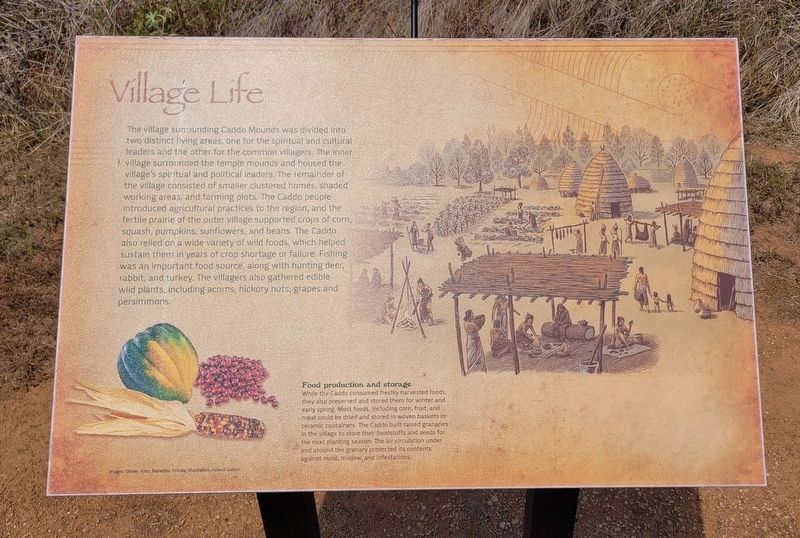
Village Life
Photographed by James Hulse, September 1, 2023
1. Village Life Marker
Caption
Food production and storage
While the Caddo consumed freshly harvested foods, they also preserved and stored them for winter and early spring. Most foods, including corn, fruit, and meat could be dried and stored in woven baskets or ceramic containers. The Caddo built raised granaries in the village to store their foodstuffs and seeds for the next planting season. The air circulation under and around the granary protected its contents against mold, mildew, and infestations.
Images: Olivier, Emu, Banariou, Fotolla; illustration, Howell Golson
Erected by Caddo
this page online
Topics. This historical marker is listed in these topic lists: Agriculture • Anthropology & Archaeology • Indigenous Peoples and Communities.
Location. 31° 35.721′ N, 95° 9.028′ W. Marker is near Alto, Texas, in Cherokee County. It is at the intersection of State Highway 21 and Farm to Market Road 2907 on State Highway 21. The marker is located in the southeast section of the Caddo Mounds State Historic Site. . Touch for map. Marker is at or near this postal address: 1649 TX-21, Alto TX 75925, United States of America. Touch for directions.

Regionally, this marker is in the American South, specifically in the Deep South, and in the Piney Woods. Globally, it is in North America, a Gulf of Mexico state, the Western Hemisphere, the Western World, and the Anglosphere. Historically, it finds itself in what was once New Spain, the Republic of Texas, one of the Confederate States of America, and the Antebellum South.
Other nearby markers. At least 8 other markers are within walking distance of this marker: Natural Spring (about
Photographed by James Hulse, September 1, 2023
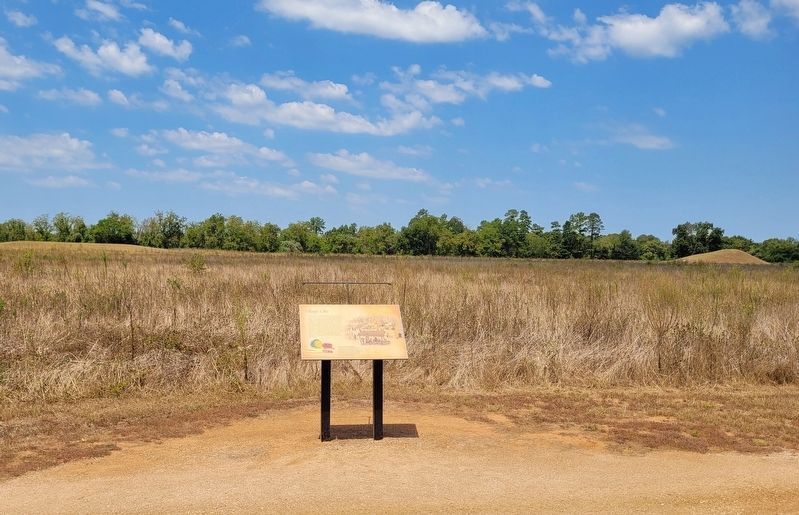
2. Village Life Marker
Other markers no longer nearby. Site of Neches Indian Village (was approx. 0.2 miles away but has been permanently removed); Mound Prairie (was approx. 0.2 miles away but has been confirmed missing).
More about this marker. The marker is located in the Caddo Mounds State Historic Site and it does require a small entry fee to visit.
Also see . . . Caddo Mounds State Historic Site. Texas State Historical Association (TSHA)
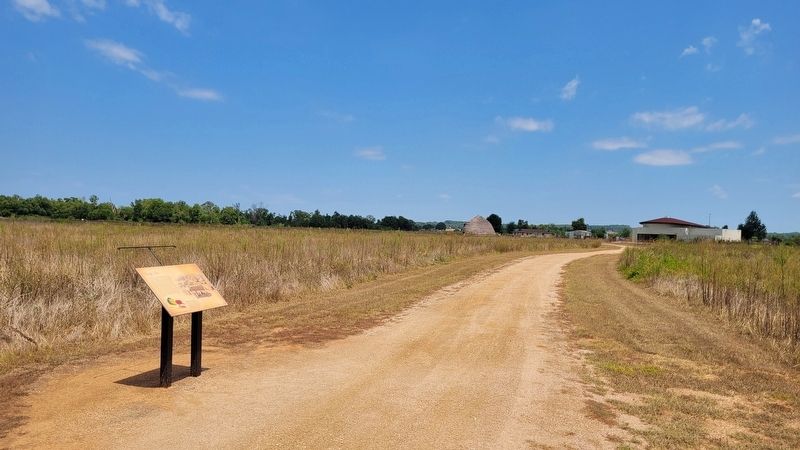
Caddo Mounds State Historic Site, one of the best known and intensively investigated Indian sites in Texas, is on State Highway 21 about six miles southwest of Alto in southern Cherokee County. It comprises much of what is known to archeologists as the George C. Davis Site, the southwesternmost ceremonial(Submitted on September 8, 2023, by James Hulse of Medina, Texas.)center of the Caddoan peoples who flourished on the western edge of the woodlands of eastern North America between 1000 B.C. and A.D. 1550. Caddo Mounds consists of three large earthen mounds, as well as a large portion of a prehistoric village.Photographed by James Hulse, September 1, 20233. The Village Life Marker looking toward the Visitor’s Center and the Caddo House
Photographed by James Hulse, September 1, 2023
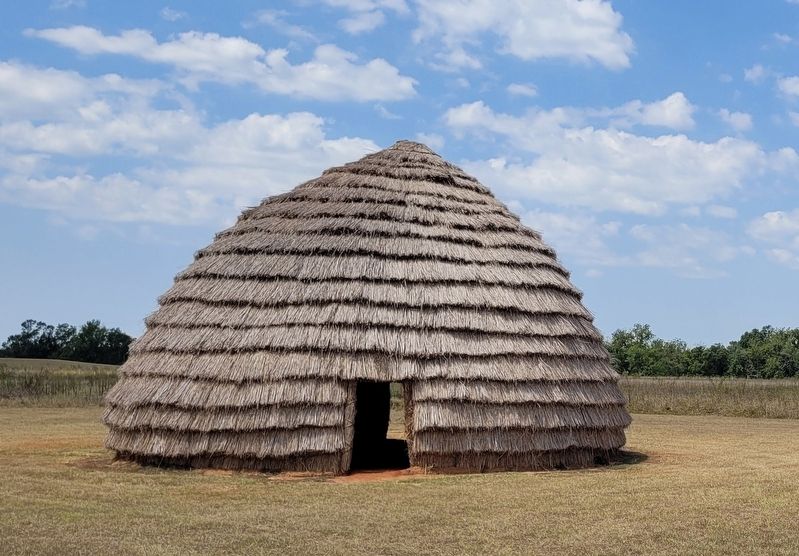
4. Caddo House reproduction
Credits. This page was last revised on September 8, 2023. It was originally submitted on September 8, 2023, by James Hulse of Medina, Texas. This page has been viewed 316 times since then and 43 times this year. Photos: 1, 2, 3, 4. submitted on September 8, 2023, by James Hulse of Medina, Texas.
