
Grimsby in Niagara Region, Ontario — Central Canada (North America)
History of the Biggar Lagoons
Photographed by Tim Boyd, September 28, 2023
1. History of the Biggar Lagoons Marker
History of the Biggar Lagoons
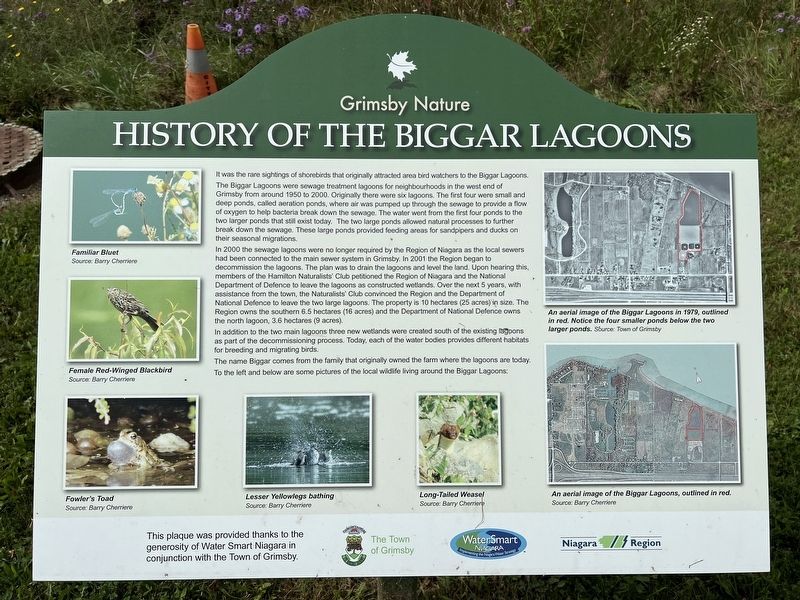
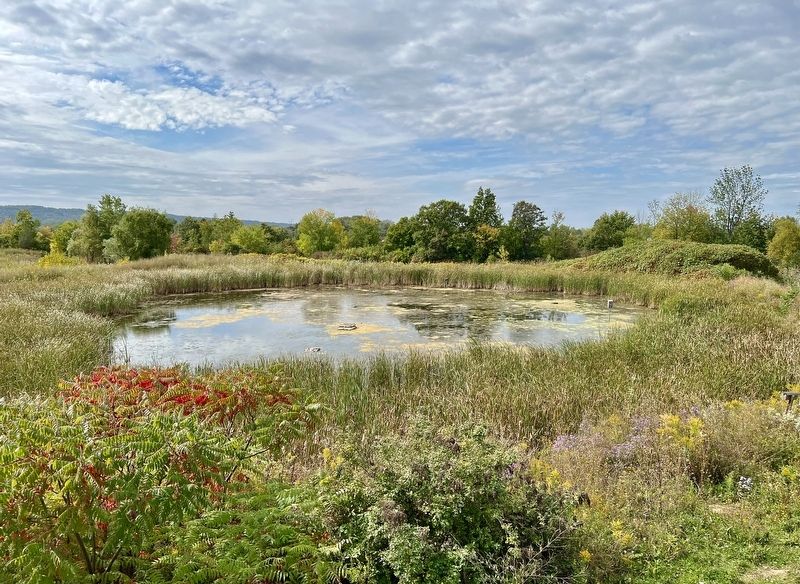
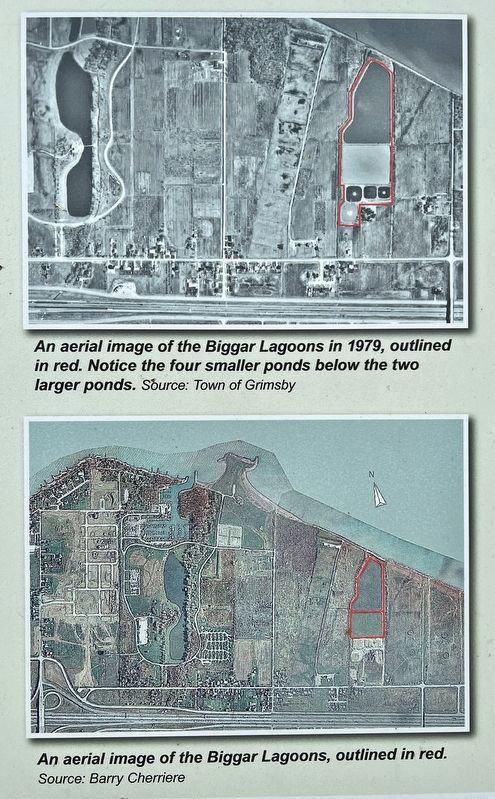
It was the rare sightings of shorebirds that originally attracted area bird watchers to the Biggar Lagoons. The Biggar Lagoons were sewage treatment lagoons for neighbourhoods in the west end of Grimsby from around 1950 to 2000. Originally there were six lagoons. The first four were small and deep ponds, called aeration ponds, where air was pumped up through the sewage to provide a flow of oxygen to help bacteria break down the sewage. The water went from the first four ponds to the two larger ponds that still exist today. The two large ponds allowed natural processes to further break down the sewage. These large ponds provided feeding areas for sandpipers and ducks on their seasonal migrations.
In 2000 the sewage lagoons were no longer required by the Region of Niagara as the local sewers had been connected to the main sewer system in Grimsby. In 2001 the Region began to decommission the lagoons. The plan was to drain the lagoons and level the land. Upon hearing this, members of the Hamilton Naturalists' Club petitioned the Region of Niagara and the National Department of Defence to leave
this page online
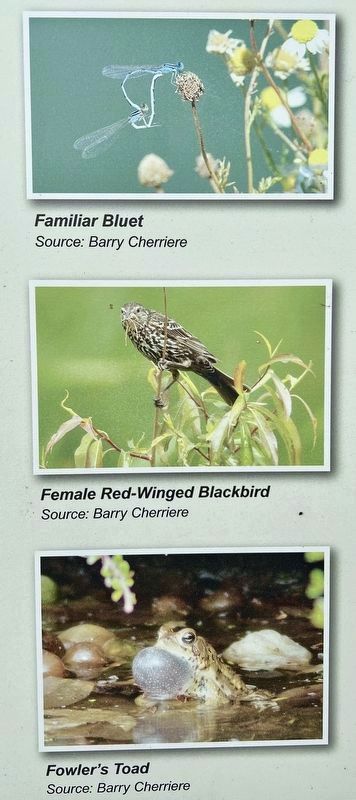
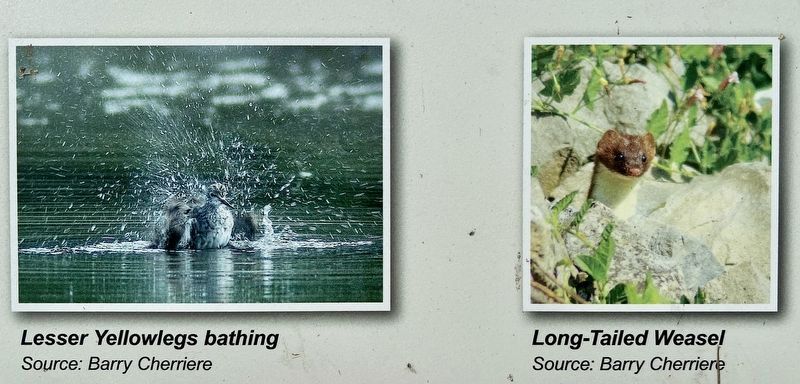
In addition to the two main lagoons three new wetlands were created south of the existing lagoons as part of the decommissioning process. Today, each of the water bodies provides different habitats for breeding and migrating birds. The name Biggar comes from the family that originally owned the farm where the lagoons are today. To the left and below are some pictures of the local wildlife living around the Biggar Lagoons:
This plaque was provided thanks to the generosity of Water Smart Niagara in conjunction with the Town of Grimsby.
Erected by Town of Grimsby.
Topics. This historical marker is listed in these topic lists: Animals • Environment • Parks & Recreational Areas. A significant historical year for this entry is 1950.
Location. 43° 12.814′ N,
Photographed by Tim Boyd, September 28, 2023
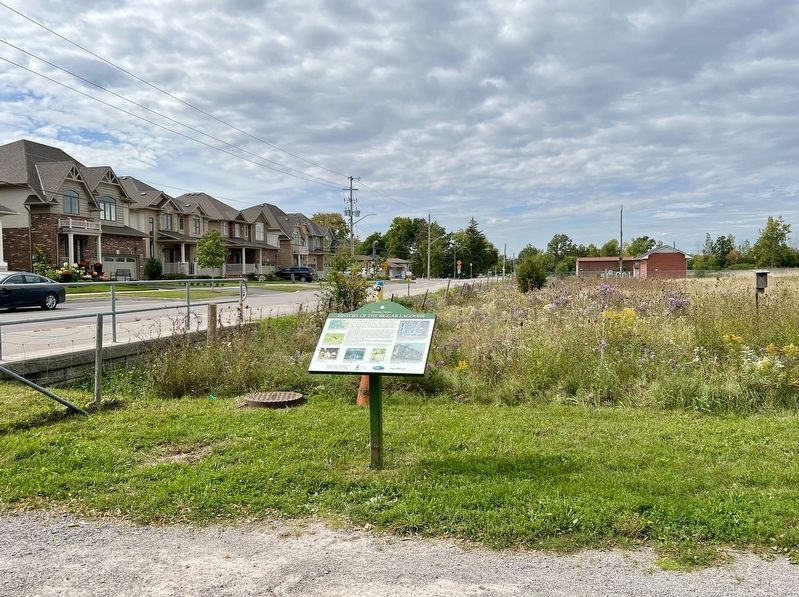
2. History of the Biggar Lagoons marker, facing west

Regionally, this marker is on Ontario’s Golden Horseshoe and in Niagara Canada. It is also in Central Canada. Globally, it is in North America, on the Great Lakes, in the Western Hemisphere, in the Western World, and in the Anglosphere. Historically, it finds itself in what was once a British colony, the Viceroyalty of New France, the Haudenosaunee (Iroquois) Confederacy, and Rupert’s Land.
Other nearby markers. At least 8 other markers are within 5 kilometers of this marker, measured as the crow flies: The Biggar Farm Through Time (within shouting distance of this marker); Echo Hall 1850 (approx. 2.5 kilometers away); Pettit House Replica 2007 Original circa 1880 (approx. 2.8 kilometers away); The Stone Shop 1800 (approx. 3.4 kilometers away); Avonlea - Edwardian Architectural Style - Circa 1922 (approx. 3.4 kilometers away);
Photographed by Tim Boyd, September 28, 2023
3. The Biggar Lagoons
4. History of the Biggar Lagoons marker detail (left side)
5. History of the Biggar Lagoons marker detail (bottom)
6. History of the Biggar Lagoons marker detail (right side)
Credits. This page was last revised on October 8, 2023. It was originally submitted on October 6, 2023, by Tim Boyd of Hamilton, Ontario. This page has been viewed 314 times since then and 34 times this year. Photos: 1, 2, 3, 4, 5, 6. submitted on October 6, 2023, by Tim Boyd of Hamilton, Ontario. • Andrew Ruppenstein was the editor who published this page.
