Charlotte center city in Mecklenburg County, North Carolina — The American South (South Atlantic)
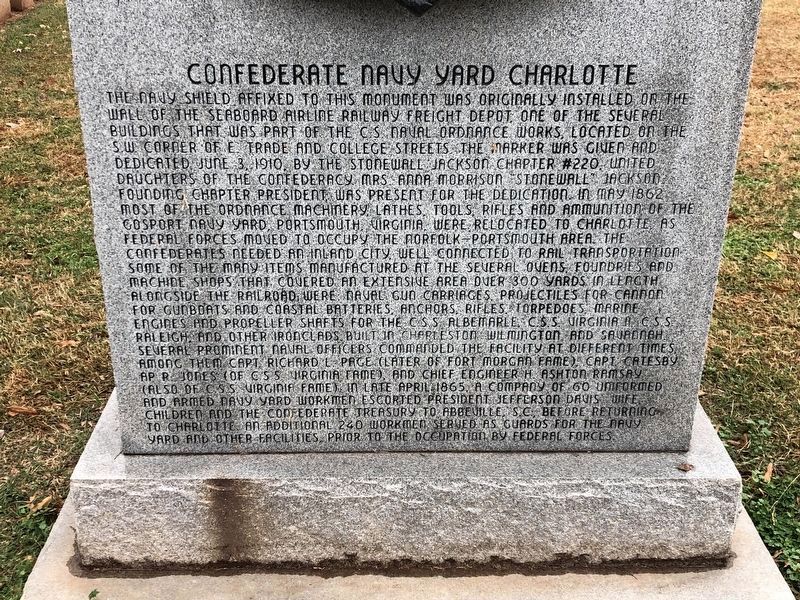
Confederate Navy Yard Charlotte
Photographed by Duane and Tracy Marsteller, November 11, 2023
1. Confederate Navy Yard Charlotte Marker (front)
this page online
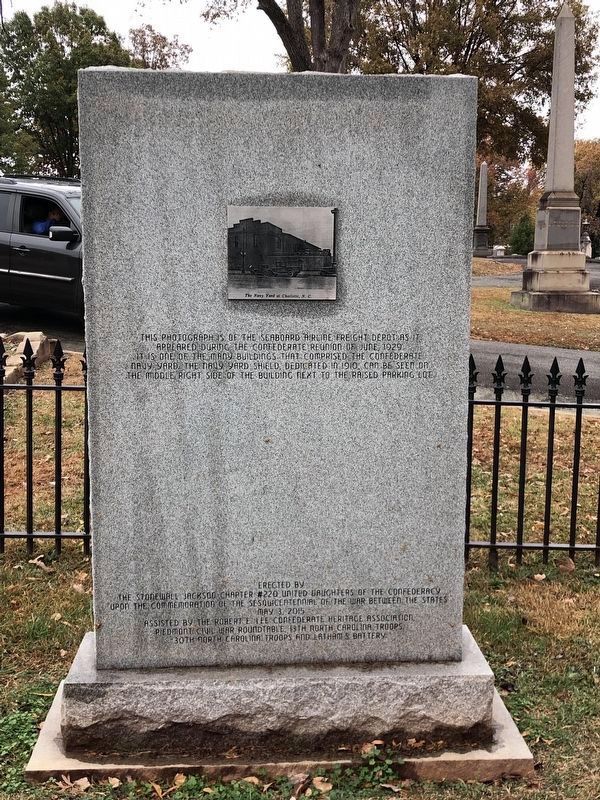
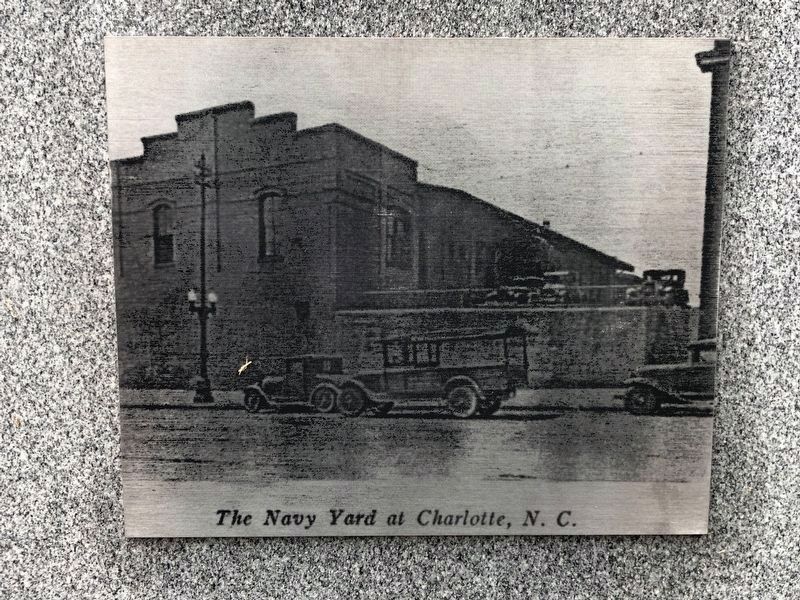
[Back] This photograph is of the Seaboard Airline freight depot as it appeared during the Confederate reunion of June, 1929. It is one of the many buildings the comprised the ld= Confederate Navy Yard. The Navy Yard shield, dedicated in 1910, can be seen on the middle right side of the building next to the raised parking lot.
Topics. This historical marker is listed in these topic lists: War, US Civil • Waterways & Vessels. A significant historical month for this entry is April 1865.
Location. 35° 14.12′ N,
Photographed by Duane and Tracy Marsteller, November 11, 2023
2. Confederate Navy Yard Charlotte Marker (back)

Regionally, this marker is in North Carolina’s Piedmont. It is also in the American South and specifically in the Upper South. Globally, it is in North America, the Western Hemisphere, the Western World, and the Anglosphere. Historically, it finds itself in what was once the territory of the Mississippian Culture, one of the original Thirteen Colonies, one of the Confederate States of America, and the Antebellum South.
Other nearby markers. At least 8 other markers are within walking distance of this marker: The Charlotte Grays (here, next to this marker); Charlotte Confederate Cemetery (here, next to this marker); Mecklenburg Beauregards (a few steps from this marker); Mecklenburg County Confederate Monument
Photographed by Duane and Tracy Marsteller, November 11, 2023
3. Confederate Navy Yard Charlotte Marker detail (back)
Also see . . .
1. Charlotte Navy Yard. Charlotte became one of the Confederate navy's most important manufacturing centers during the Civil War. The incongruity of a landlocked city housing a navy yard is explained by its location in North Carolina, where it was relatively safe from potential Federal activity. (By Dan Blair, Encyclopedia of North Carolina, 2006; via NCpedia) (Submitted on December 9, 2023, by Duane and Tracy Marsteller of Murfreesboro, Tennessee.)
2. The Confederate States Naval Yard at Charlotte 1862-1865. A history of the facility by Violet G. Alexander, a United Daughters of the Confederacy member, that originally appeared in the Charlotte News on June 5, 1910, just after the U.D.C. unveiled the naval yard marker. (reprinted

Photographed by Duane and Tracy Marsteller, November 11, 2023
4. Confederate Navy Yard Charlotte Marker
Credits. This page was last revised on December 9, 2023. It was originally submitted on December 7, 2023, by Duane and Tracy Marsteller of Murfreesboro, Tennessee. This page has been viewed 492 times since then and 74 times this year. Photos: 1. submitted on December 7, 2023, by Duane and Tracy Marsteller of Murfreesboro, Tennessee. 2, 3. submitted on December 9, 2023, by Duane and Tracy Marsteller of Murfreesboro, Tennessee. 4. submitted on December 7, 2023, by Duane and Tracy Marsteller of Murfreesboro, Tennessee.
