Hyde Park in Chicago in Cook County, Illinois — The American Midwest (Great Lakes)
Museum of Science and Industry
Charles B. Atwood, architect; 1891-93
| — | Chicago Landmark | — |

Photographed by Sean Flynn, December 27, 2023
1. Museum of Science and Industry Marker
Designated on November 1, 1995
Richard M. Daley, Mayor
Erected 1995 by Commission on Chicago Landmarks; City of Chicago.
Topics and series. This historical marker is listed in these topic lists: Architecture • Industry & Commerce • Notable Events • Science & Medicine. In addition, it is included in the Illinois, Chicago Landmarks Commission series list. A significant historical year for this entry is 1891.
Location. Marker has been reported missing. It was located near 41° 47.462′ N, 87° 34.965′ W. Marker was in Chicago, Illinois, in Cook County. It was in Hyde Park. It was on 57th Drive near DuSable Lake Shore Drive (U.S. 41), on the right. The marker is to the left of the exterior steps that lead up to the (usually closed) north exterior entrance of the Museum of Science and Industry. It is accessible
this page online

Regionally, this marker was on Chicago’s South Side. It was also in the American Midwest. Globally, it was in North America, on the Great Lakes, in the Western Hemisphere, in the Western World, and in the Anglosphere. Historically, it found itself in what was once the Viceroyalty of New France, the territory of the Mississippian Culture, and the Northwest Territory.
Other nearby markers. At least 8 other markers are within walking distance of this location: The Norway Building (approx. 0.2 miles away); Jackson Park Improvements (approx. 0.2 miles away); a different marker also named Jackson Park Improvements (approx. ¼ mile away); Rain, Snow, Flush, Grow (approx. 0.3 miles away); 35th Anniversary of Chicago-Osaka Sister City Relationship (approx. 0.3 miles away); Osaka Garden (approx. 0.3 miles away); a different marker also named Osaka Garden (approx. 0.3 miles away); History of Jackson Park (approx. 0.3 miles away). Touch for a list and map of all markers in Chicago.
Another marker is no longer nearby. Garden of the Phoenix

Photographed by Sean Flynn, December 27, 2023
2. Museum of Science and Industry
The building's Chicago Landmark plaque is the small square marker to the left of the columned entrance into the museum.
More about this marker. The marker was removed sometime during 2024, when the museum was rebranded as the Kenneth Griffin Museum of Science and Industry. A sign with that revised name is now in the spot where the Chicago Landmark plaque once was. It is not known if the landmark plaque was moved to a different location.
Regarding Museum of Science and Industry. Of the 200 buildings that covered the 1893 Columbian Exposition's 690 acres, what was originally the Palace of Fine Arts is the only one left standing—although it was completely rebuilt in the 1930s out of more permanent materials. The only other building related to the 1893 fair still standing is the Art Institute of Chicago downtown, which was partially funded by the Exposition for use as an auxiliary building during the event before becoming the Art Institute's new permanent home.
Also see . . .
1. Museum of Science and Industry (Chicago). Wikipedia entry (Submitted on October 19, 2025, by Larry Gertner of New York, New York.)
2. Griffin Museum of Science and Industry. Website homepage (Submitted on January 1, 2024, by Sean P. Flynn of Oak Park, Illinois.)

Photographed by Sean Flynn, December 27, 2023
3. Museum of Science and Industry Marker

Photographed by Sean Flynn, December 27, 2023
4. Museum of Science and Industry Marker
East-facing view
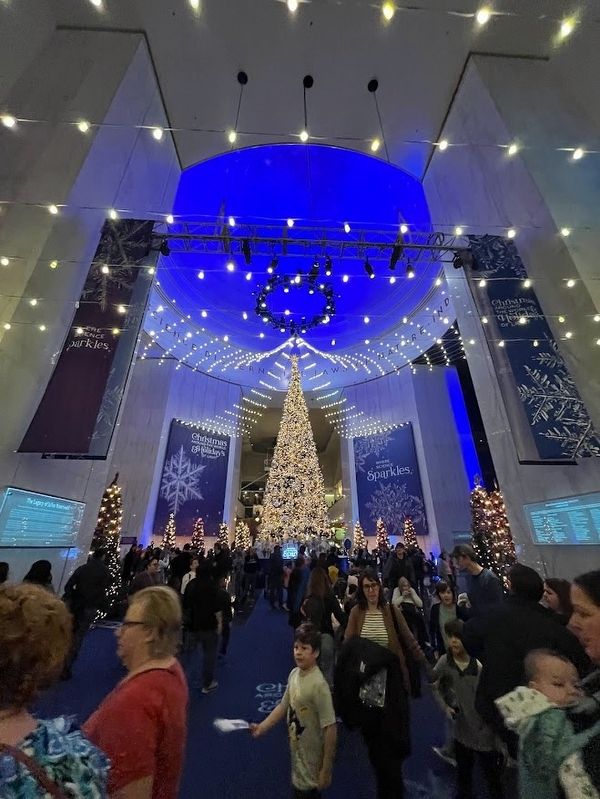
Photographed by Sean Flynn, December 27, 2023
5. Museum of Science and Industry
The interior of the museum centers around the dome, which is decorated for the Christmas season in this photo.
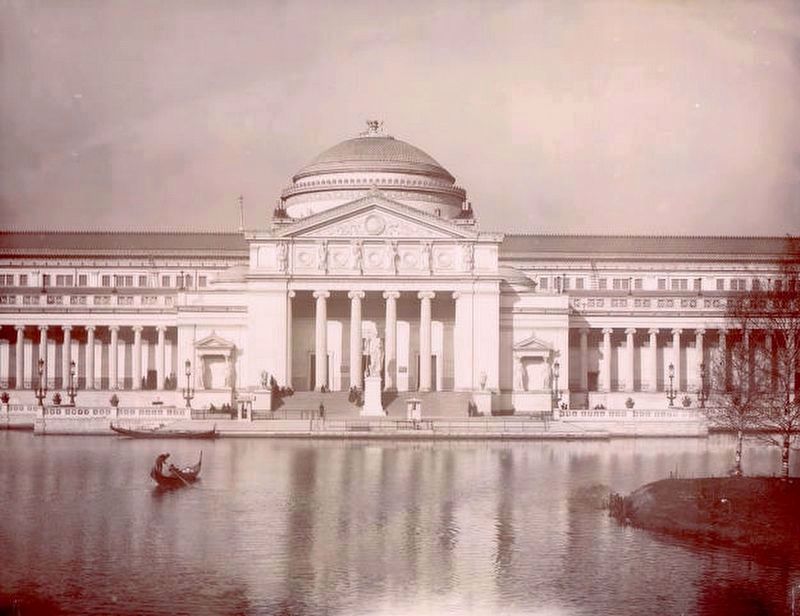
Courtesy of Denver Public Library's W.H. Jackson folio, 1893
6. "Palace of Fine Arts Chicago World's Fair"
An 1893 photo of the museum's south entrance (opposite the side of the historical marker) while it served as the Palace of Fine Arts at the World's Columbian Exposition.

Photographed by Sean P. Flynn, December 6, 2024
7. Museum of Science and Industry (2024)
The marker, which had been on the left side of the grand stairwell into the building, was replaced by a new one sometime in 2024, when the museum was rebranded as the Kenneth Griffin Museum of Science and Industry.
Credits. This page was last revised on October 19, 2025. It was originally submitted on January 1, 2024, by Sean P. Flynn of Oak Park, Illinois. This page has been viewed 644 times since then and 117 times this year. Photos: 1, 2, 3, 4, 5, 6. submitted on January 1, 2024, by Sean P. Flynn of Oak Park, Illinois. 7. submitted on December 6, 2024, by Sean P. Flynn of Oak Park, Illinois. • Andrew Ruppenstein was the editor who published this page.
