
Corona in Queens in Queens County, New York — The American Northeast (Mid-Atlantic)
Coyote
Coyote
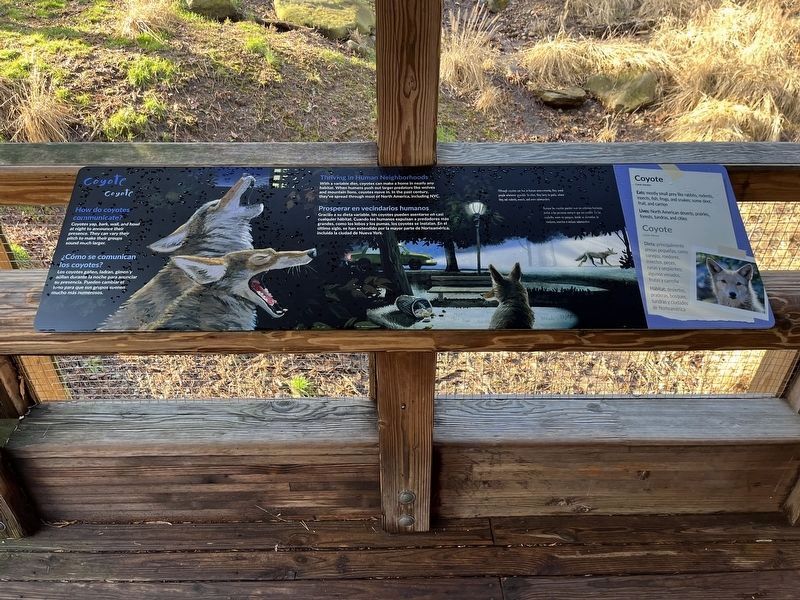

How do coyotes communicate?
Coyotes yap, bark, wail, and howl at night to announce their presence. They can vary their pitch to make their groups sound much larger.
Los coyotes gañen, ladran, gimen y aúllan durante la noche para anunciar su presencia. Pueden cambiar el tono para que sus grupos suenen mucho más numerosos.
With a variable diet, coyotes can make a home in nearly any habitat. When humans push out larger predators like wolves and mountain lions, coyotes move in. In the past century, they've spread through most of North America, including NYC.
Gracias a su dieta variable, los coyotes pueden asentarse en casi cualquier hábitat. Cuando los humanos expulsan a predadores más grandes, como los lobos y los pumas, los coyotes se instalan. En el último siglo, se han extendido por la maoyr parte de de Norteamérica, includida la ciudad de Nueva York.
this page online
Eats: mostly small prey like rabbits, rodents, insects, fish, frogs, and snakes; some deer, fruit, and carrion.
Lives: North American deserts, prairies, forests, tundras, and cities
Dieta: principalmente presas pequeñas, como conejos, roedores, insectos, peces, ranas y serpientes; algunos venados, frutas y carroña
Hábitat: desiertos, praderas, bosques, tundras y ciudades de Norteamérica
Erected by Wildlife Conservation Society.
Topics. This historical marker is listed in these topic lists: Animals • Environment • Parks & Recreational Areas.
Location. 40° 44.764′ N, 73° 50.919′ W. Marker is in Queens, New York, in Queens County. It is in Corona. It can be reached from Zoo Path south of United Nations Avenue North, on the right when traveling north. The marker is on the grounds of the Queens
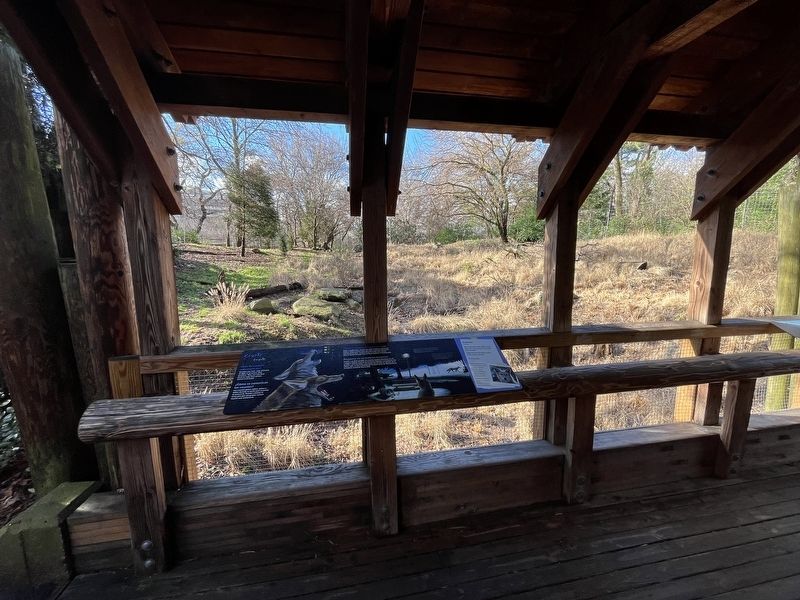

Regionally, this marker is in New York City and on Long Island. It is also in the American Northeast, in the Mid-Atlantic, and on the Eastern Seaboard. Globally, it is in the North Atlantic Region, North America, the Western Hemisphere, the Western World, and the Anglosphere. Historically, it finds itself in what was once New Netherland and also one of the original Thirteen Colonies.
Other nearby markers. At least 8 other markers are within walking distance of this marker: Monk Parakeet (within shouting distance of this marker); What's Amazing about this Aviary? (about 300 feet away, measured in a direct line); Bison: An American Icon Saved (about 300 feet away); Black, Trans & Alive (Qweens Song), 2021 (about 400 feet away); Pronghorn: Masters of Migration (about 400 feet away); Our Rescued Eagles (about 500 feet away); Animals of the Americas (about 700 feet away); NYC Bomb and Forgery Squad Explosion Memorial (about 700 feet away). Touch for a list and map of all markers in Queens.
Other markers no longer nearby. The Life and Times of the Coyote (was here, next to this marker but has been permanently removed); a different marker also named Coyote (has been replaced with this marker); Puma: The Hunted (was about 400 feet away but has been permanently removed); Puma (was about 400 feet away but has been permanently removed); Our rescued pumas (was about 400 feet away but has been permanently removed); Canadian Lynx (was about 400 feet away but has been permanently removed); WCS In Action: Big Cat Conservation (was about 400 feet away but has been permanently removed).
Related marker. Click here for another marker that is related to this marker. This marker has replaced the linked marker.
Additional commentary.
1. About the marker
This sign qualifies as a historical marker because it shares how human activity has affected the population of the coyote.
— Submitted January 16, 2024, by Devry Becker Jones of Washington, District of Columbia.
Credits. This page was last revised on January 16, 2024. It was originally submitted on January 16, 2024, by Devry Becker Jones of Washington, District of Columbia. This page has been viewed 217 times since then and 14 times this year. Photos: 1, 2. submitted on January 16, 2024, by Devry Becker Jones of Washington, District of Columbia.
