West Dallas in Dallas County, Texas — The American South (West South Central)
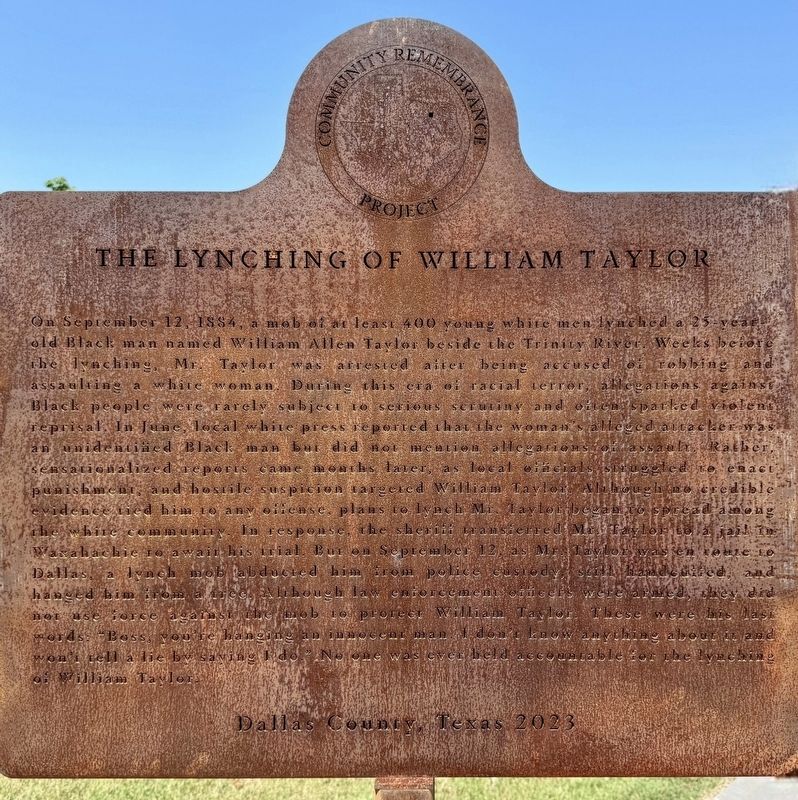
Lynching in America ⎯⎯⎯ The Lynching of William Taylor
Community Remembrance Project
Photographed by Craig Baker, April 5, 2024
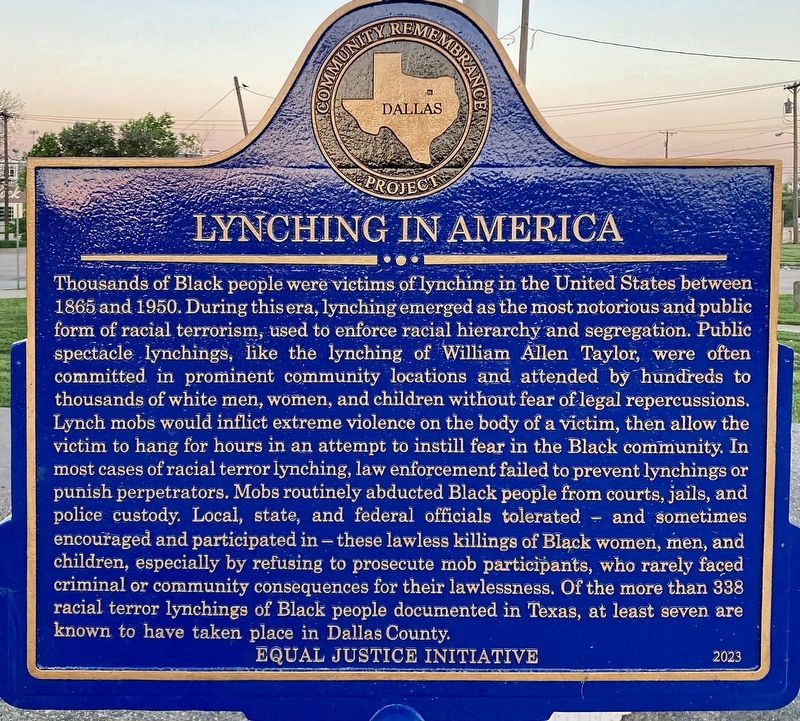
1. Lynching in America Marker
Inscription.
Lynching in America
Thousands of Black people were victims of lynching in the United States between
1865 and 1950. During this era, lynching emerged as the most notorious and public
form of racial terrorism, used to enforce racial hierarchy and segregation. Public
spectacle lynchings, like the lynching of William Allen Taylor, were often
committed in prominent community locations and attended by hundreds to
thousands of white men, women, and children without fear of legal repercussions.
Lynch mobs would inflict extreme violence on the body of a victim, then allow the
victim to hang for hours in an attempt to instill fear in the Black community. In
most cases of racial terror lynching, law enforcement failed to prevent lynchings or
punish perpetrators. Mobs routinely abducted Black people from courts, jails, and
police custody. Local, state, and federal officials tolerated and sometimes
encouraged and participated in - these lawless killings of Black women, men, and
children, especially by refusing to prosecute mob participants, who rarely faced
criminal or community consequences for their lawlessness.
Click or scan to see this page online
Of the more than 338
racial terror lynchings of Black people documented in Texas, at least seven are
known to have taken place in Dallas County.
The Lynching of William Taylor
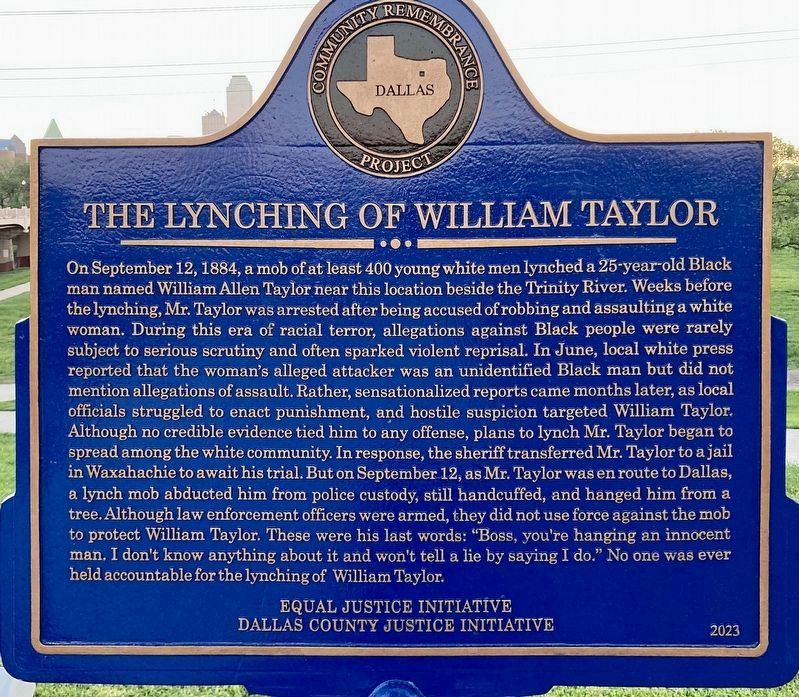
On September 12, 1884, a mob of at least 400 young white men lynched a 25-year-old Black
man named William Allen Taylor near this location beside the Trinity River. Weeks before
the lynching, Mr. Taylor was arrested after being accused of robbing and assaulting a white
woman. During this era of racial terror, allegations against Black people were rarely
subject to serious scrutiny and often sparked violent reprisal. In June, local white press
reported that the woman's alleged attacker was an unidentified Black man but did not
mention allegations of assault. Rather, sensationalized reports came months later, as local
officials struggled to enact punishment, and hostile suspicion targeted William Taylor.
Although no credible evidence tied him to any offense, plans to lynch Mr. Taylor began to
spread among the white community. In response, the sheriff transferred Mr. Taylor to a jail
in Waxahachie to await his trial. But on September 12, as Mr.
Photographed by Craig Baker, April 5, 2024
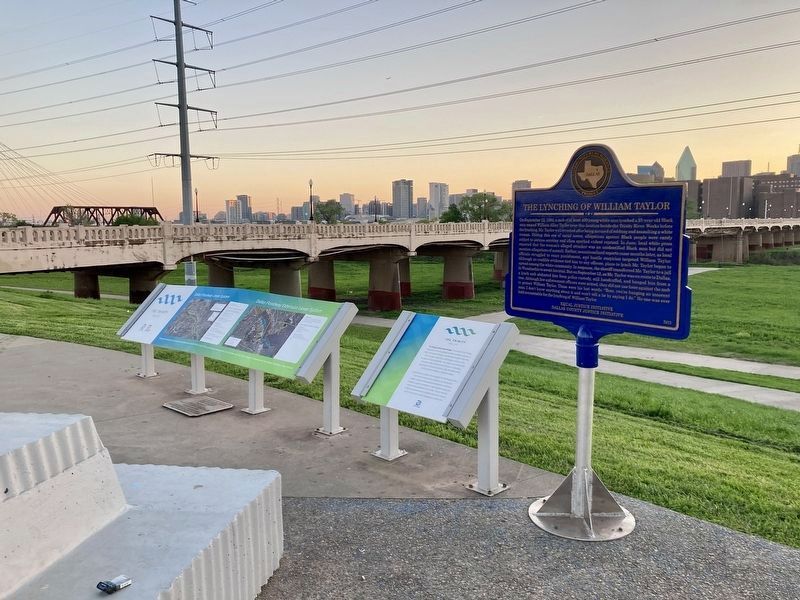
2. The Lynching of William Taylor Marker
Taylor was en route to Dallas,
a lynch mob abducted him from police custody, still handcuffed, and hanged him from a
tree. Although law enforcement officers were armed, they did not use force against the mob
to protect William Taylor. These were his last words: "Boss, you're hanging an innocent man.
I don't know anything about it and won't tell a lie by saying I do." No one was ever
held accountable for the lynching of William Taylor.
Erected 2023 by Equal Justice Initiative; Dallas County Justice Initiative; and Dallas Community Remembrance Project.
Location. 32° 46.468′ N, 96° 49.323′ W. Marker is in Dallas, Texas, in Dallas County. It is in West Dallas. It is on Beckley Avenue near Commerce Avenue, on the right when traveling north. Touch for map. Marker is at or near this postal address: 114 W Commerce St, Dallas TX 75208, United States of America. Touch for directions.
Regionally,
Photographed by Craig Baker, April 5, 2024
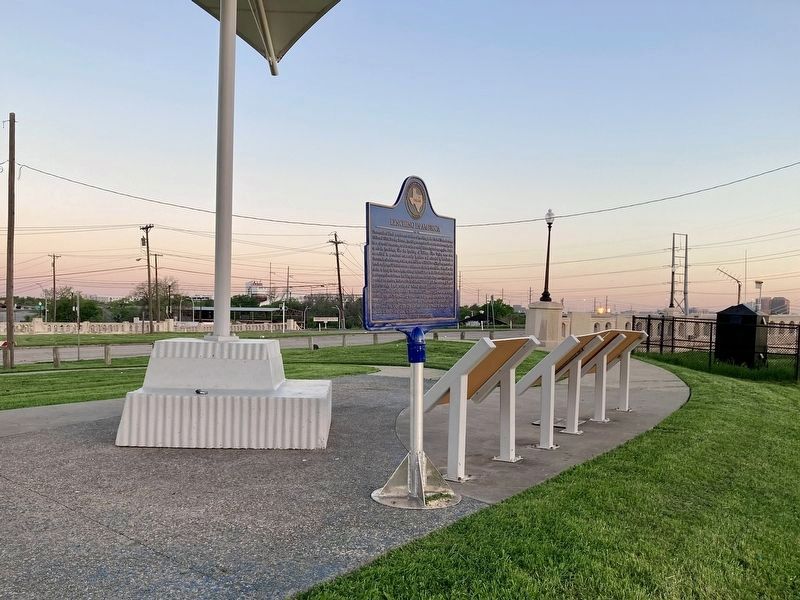
3. The Lynching of William Taylor Marker
this marker is in the Prairies & Lakes Region. Globally, it is in North America, a Gulf of Mexico state, the Western Hemisphere, the Western World, and the Anglosphere. Historically, it finds itself in what was once New Spain, the Republic of Texas, one of the Confederate States of America, and the Antebellum South.
“A Replica marker of one side is located at the Equal Justice Initiatives' National Memorial for Peace and Justice in Montgomery, Alabama. The Equal Justice Initiative supports efforts to locally memorialize documented victims of racial violence and to educate communities about the history of racial injustice.” Mark Hilton
Credits. This page was last revised on March 14, 2026. It was originally submitted on April 6, 2024, by Craig Baker of Sylmar, California. This page has been viewed 820 times since then and 49 times this year. Photos:1, 2, 3, 4. submitted on April 6, 2024, by Craig Baker of Sylmar, California. 5. submitted on October 16, 2024, by Brandon D Cross of Flagler Beach, Florida.