William Penn Annex West in Philadelphia in Philadelphia County, Pennsylvania — The American Northeast (Mid-Atlantic)
St. Stephens Episcopal Church
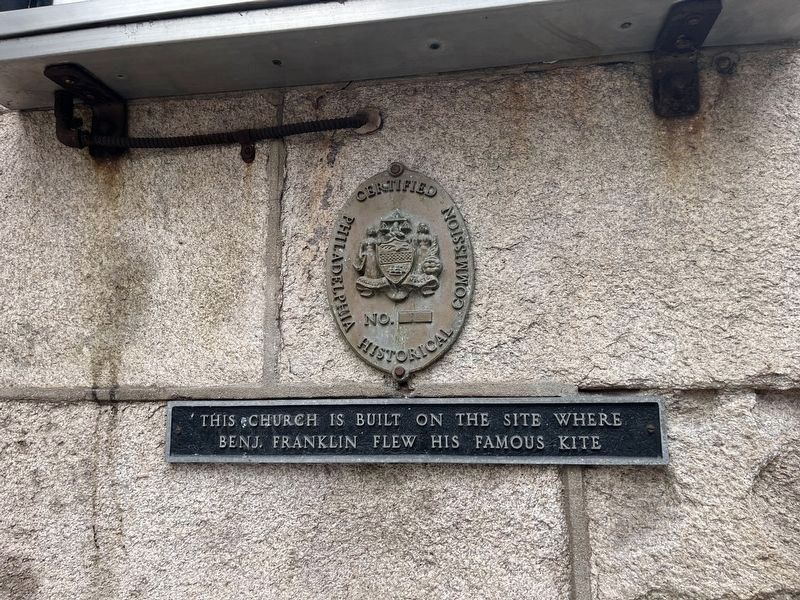
Topics. This historical marker is listed in these topic lists: Colonial Era • Notable Events • Science & Medicine. A significant historical date for this entry is June 10, 1752.
Location. 39° 57.058′ N, 75° 9.407′ W. Marker is in Philadelphia, Pennsylvania, in Philadelphia County. It is in William Penn Annex West. It is on South 10th Street close to De Gray Street, on the left when traveling south. Touch for map. Marker is at or near this postal address: 10 S 10th St, Philadelphia PA 19107, United States of America. Touch for directions.

Regionally, this marker is in Southeast Pennsylvania. It is also in the American Northeast and in the Mid-Atlantic. Globally, it is in North America, the Western Hemisphere, the Western World, and the Anglosphere. Historically, it finds itself in what was once the Haudenosaunee (Iroquois) Confederacy, New Netherland, and one of the original Thirteen Colonies.
Other nearby markers. At least 8 other markers are within walking distance of this marker: 10th & Market (within shouting distance of this marker);
this page online
Additional keywords. Benjamin Franklin
Photographed by Devry Becker Jones (CC0), April 19, 2024
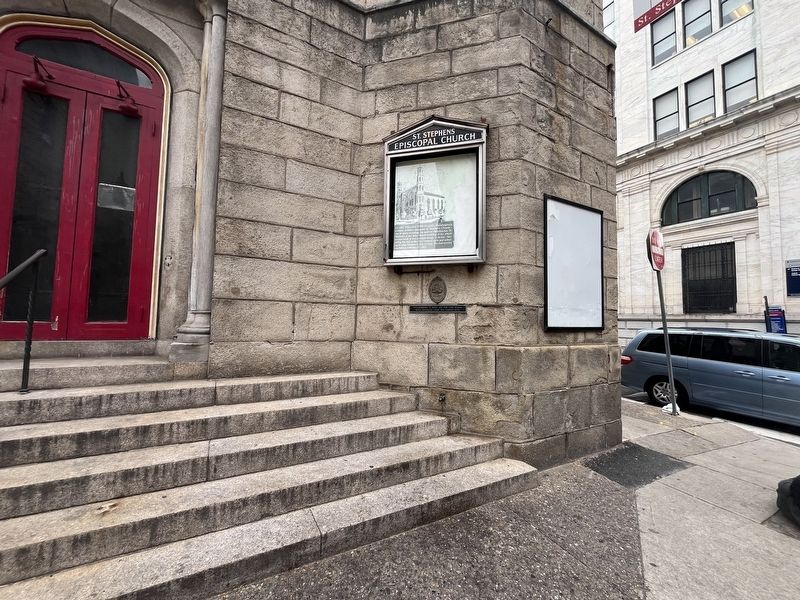
2. The plaque is affixed to St. Stephens Episcopal Church
Photographed by Devry Becker Jones (CC0), April 19, 2024
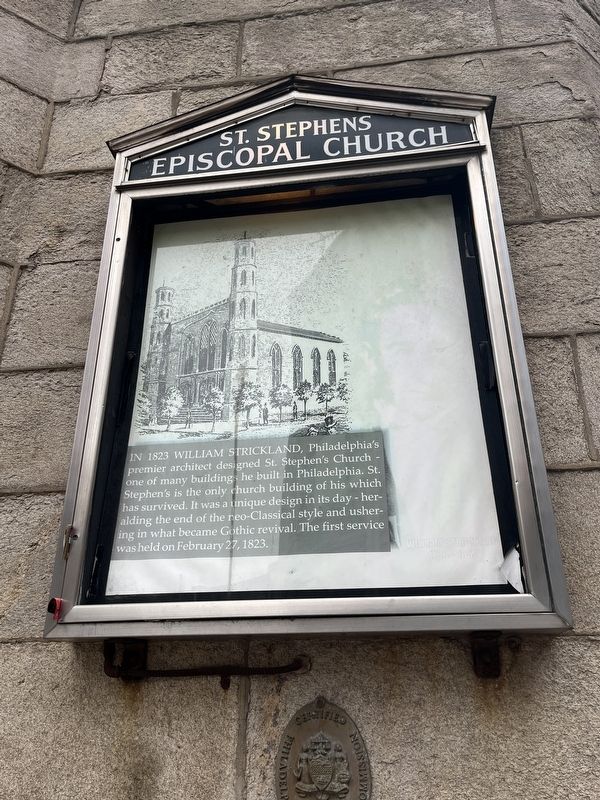
3. Signage above the plaque
In 1823 William Strickland, Philadelphia's premier architect designed St. Stephen's Church — of many buildings he built in Philadelphia. St. Stephen's is the only church building of his which has survived. It was a unique design in its day — heralding the end of the neo-Classical style and ushering in what became Gothic revival. The first service was held on February 27, 1823.
Credits. This page was last revised on April 20, 2024. It was originally submitted on April 20, 2024, by Devry Becker Jones of Washington, District of Columbia. This page has been viewed 163 times since then and 28 times this year. Photos: 1, 2, 3. submitted on April 20, 2024, by Devry Becker Jones of Washington, District of Columbia.
