Crieve Hall in Nashville in Davidson County, Tennessee — The American South (East South Central)
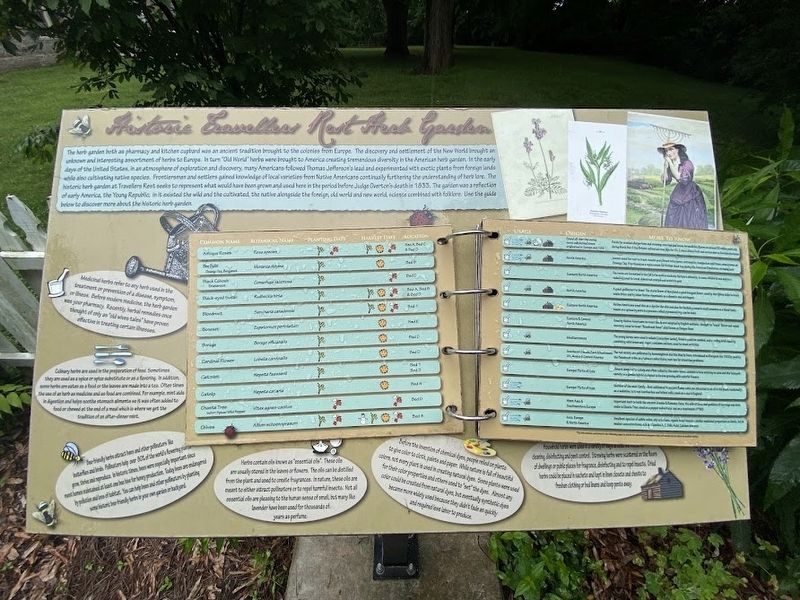
Historic Travellers Rest Herb Garden
Photographed by Darren Jefferson Clay, June 1, 2024
1. Historic Travellers Rest herb Garden Marker
Medicinal
this page online
Culinary herbs are used in the preparation of food. Sometimes they are used as a spice or spice substitute or as a flavoring. In addition, some herbs are eaten as a food or the leaves are made into a tea. Often times the use of an herb as medicine and as food are combined. For example, mint aids in digestion and helps soothe stomach ailments so it was often added to food or chewed at the end of a meal which is where we get the tradition of an after-dinner mint.
Bee-friendly herbs attract bees and other pollinators like butterflies and birds. Pollinators help over 80% of the world's flowering plants grow, thrive and reproduce. In historic times, bees were especially important since most homes maintained at least one bee hive for honey production. Today bees are endangered by pollution and loss of habitat. You can help bees and other pollinators by planting some
Photographed by Darren Jefferson Clay, June 1, 2024
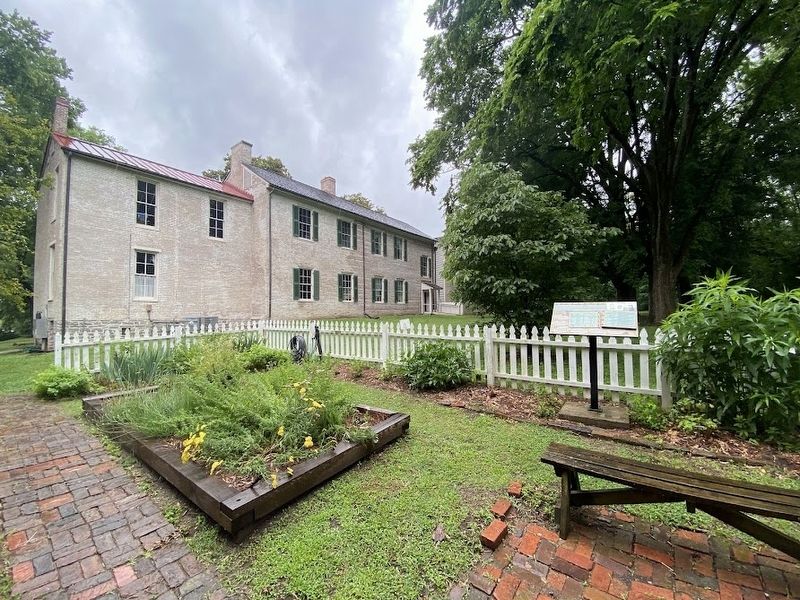
2. Historic Travellers Rest herb Garden Marker
Herbs contain oils known as "essential oils". These oils are usually stored in the leaves or flowers. The oils can be distilled from the plant and used to create fragrances. In nature, these oils are meant to either attract pollinators or to repel harmful insects. Not all essential oils are pleasing to the human sense of smell, but many like lavender have been used for thousands of years as perfume.
Before the invention of chemical dyes, people relied on plants to give color to cloth, paints and paper. While nature is full of beautiful colors, not every plant is used in creating natural dyes. Some plants were used for their color properties and others used to "set" the dyes. Almost any color could be created from natural dyes, but eventually synthetic dyes became more widely used because they didn't fade as quickly and required less labor to produce.
Household herbs were used in a variety of ways around the house for cleaning, disinfecting and pest control. Strewing herbs were scattered on the floors of dwellings or public places for fragrance, disinfecting and to repel insects. Dried herbs could be placed in sachets and kept in linen closets and chests to freshen clothing or bed linens and keep pests away.
Topics. This historical marker is listed in these topic lists: Environment • Science & Medicine.
Location. 36° 4.633′ N, 86° 45.822′ W. Marker is in Nashville, Tennessee, in Davidson County. It is in Crieve Hall. It can be reached from Farrell Parkway west of Regent Drive. Touch for map. Marker is in this post office area: Nashville TN 37220, United States of America. Touch for directions.

Regionally, this marker is in Middle Tennessee. It is also in the American South and specifically in the Upper South. Globally, it is in North America, the Western Hemisphere, the Western World, and the Anglosphere. Historically, it finds itself in what was once the territory of the Mississippian Culture, one of the Confederate States of America, and the Antebellum South.
Other nearby markers. At least 8 other markers are within walking distance of this marker: Herb Garden (a few steps from this marker); Arabian Horses (within shouting distance of this marker); Smokehouse (within shouting distance of this marker); Battle of Nashville / Peach Orchard Hill (about 400 feet away, measured in a direct line); Travellers Rest (about 500 feet away); From Enslavement to Freedom (about 500 feet away); Earliest Residents of Travellers Rest (about 500 feet away); a different marker also named Travellers' Rest (approx. ¼ mile away). Touch for a list and map of all markers in Nashville.
Another marker is no longer nearby. Travellers Rest (was about 500 feet away but has been replaced with another marker now near it).
Credits. This page was last revised on June 3, 2024. It was originally submitted on June 2, 2024, by Darren Jefferson Clay of Duluth, Georgia. This page has been viewed 223 times since then and 27 times this year. Photos: 1, 2. submitted on June 2, 2024, by Darren Jefferson Clay of Duluth, Georgia. • James Hulse was the editor who published this page.
