Clarkdale in Yavapai County, Arizona — The American Mountains (Southwest)
From Rubble to Reconstruction
Tuzigoot National Monument
| — | National Park Service, U.S. Department of the Interior | — |
Photographed by James Hulse, June 20, 2024
1. From Rubble to Reconstruction Marker
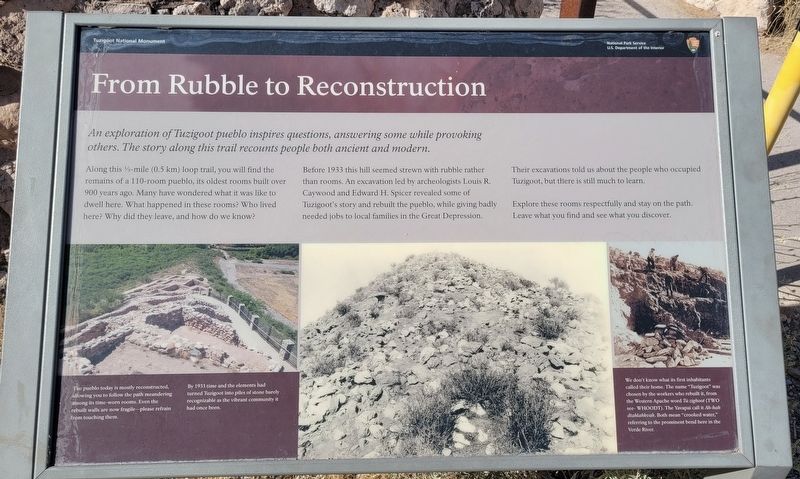
An exploration of Tuzigoot pueblo inspires questions, answering some while provoking others. The story along this trail recounts people both ancient and modern.
Along this 1⁄3-mile (0.5 km) loop trail, you will find the remains of a 110-room pueblo, its oldest rooms built over 900 years ago. Many have wondered what it was like to dwell here. What happened in these rooms? Who lived here? Why did they leave, and how do we know?
Before 1933 this hill seemed strewn with rubble rather than rooms. An excavation led by archeologists Louis R. Caywood and Edward H. Spicer revealed some of Tuzigoot's story and rebuilt the pueblo, while giving badly needed jobs to local families in the Great Depression.
Their excavations told us about the people who occupied Tuzigoot, but there is still much to learn.
Explore these rooms respectfully and stay on the path. Leave what you find and see what you discover.
Captions
The pueblo today is mostly reconstructed, allowing you to follow the path meandering among its time-worn rooms. Even the rebuilt walls are now fragile-please refrain from touching them.
By 1933 time and the elements had turned Tuzigoot into piles of stone barely recognizable as the vibrant community it had once been.
We don't know what its first inhabitants called their home. The name "Tuzigoot" was chosen by the workers who rebuilt it, from the Western Apache word Tú zighoot (TWO see-WHOODT). The Yavapai call it Ah-hah dtahlahkvah. Both mean "crooked water," referring to the prominent bend here in the Verde River.
Erected by National
this page online
Topics. This historical marker is listed in these topic lists: Anthropology & Archaeology • Indigenous Peoples and Communities • Settlements & Settlers. A significant historical year for this entry is 1933.
Location. 34° 46.199′ N, 112° 1.588′ W. Marker is in Clarkdale, Arizona, in Yavapai County. It is on Tuzigoot Road east of Sycamore Canyon Road. The marker is located in the Tuzigoot National Monument along the hiking loop trail. Touch for map. Marker is at or near this postal address: 25 Tuzigoot Rd, Clarkdale AZ 86324, United States of America. Touch for directions.

Regionally, this marker is in Arizona’s Verde Valley and in the Yavapai-Apache Nation. It is also in the American Southwest and in the Mountain West. Globally, it is in North America, the Western Hemisphere, the Western World, and the Anglosphere. Historically, it finds itself in what was once New Spain and also Mexico’s Alta California.
Other nearby markers. At least 8 other markers are within walking distance of this marker: People of the Verde (within shouting distance of this marker); An Evolving Village
Photographed by James Hulse, June 20, 2024
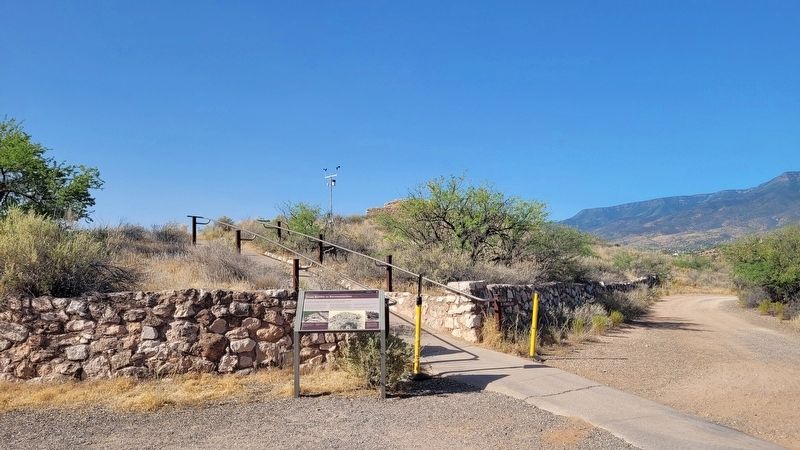
2. The beginning of the trail to the Tuzigoot ruins.
More about this marker. The marker is located in the Tuzigoot National Monument along the hiking loop trail. There is a small entrance fee to visit the archeological ruins.
Also see . . . Tuzigoot Human History. Tuzigoot National Monument
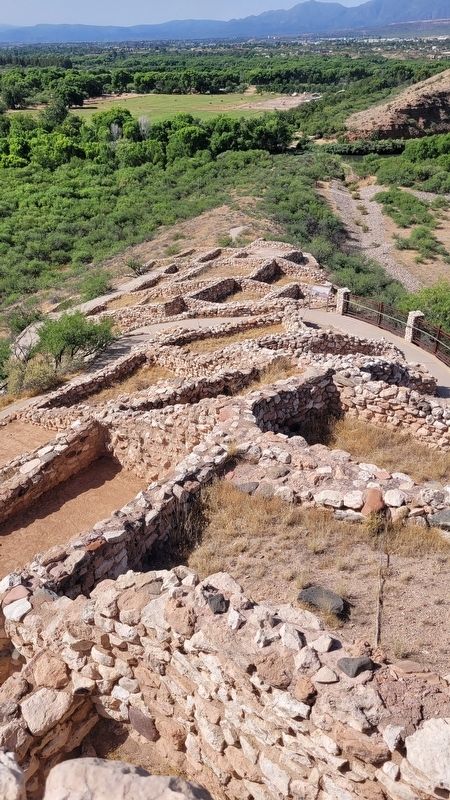
The first people - The human history of the Verde Valley begins around ten thousand years ago, when the southwest was cooler and wetter than it is today. Paleolithic hunter-gatherers traveled through a greener, woodier Verde Valley, filled with pinyon pine, shrub live oak, and juniper. Today we know of their presence from a handful of Clovis points - distinctive stone points that were probably used with spears - that have been found in and near the valley. Clovis points are found all across North America and parts of South(Submitted on July 4, 2024, by James Hulse of Medina, Texas.)America, indicating that these ancient people traveled widely across the continents, probably following game animals, the growth of edible plants, and other resources.Photographed by James Hulse, June 20, 20243. A view of the top of Tuzigoot ruins
Photographed by James Hulse, June 20, 2024
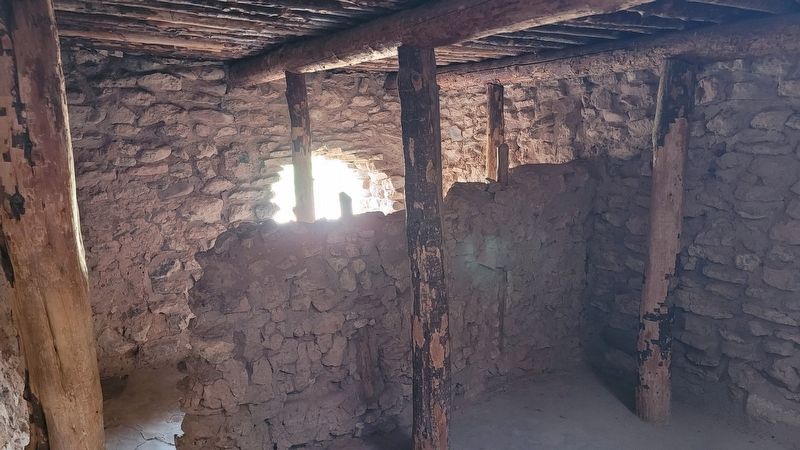
4. Inside view of a reconstructed room
Credits. This page was last revised on June 28, 2025. It was originally submitted on July 3, 2024, by James Hulse of Medina, Texas. This page has been viewed 468 times since then and 95 times this year. Photos: 1, 2, 3, 4. submitted on July 4, 2024, by James Hulse of Medina, Texas.
