Winfield Township in Butler County, Pennsylvania — The American Northeast (Mid-Atlantic)
Influenza Epidemic Victims
| — | The Black Cross | — |
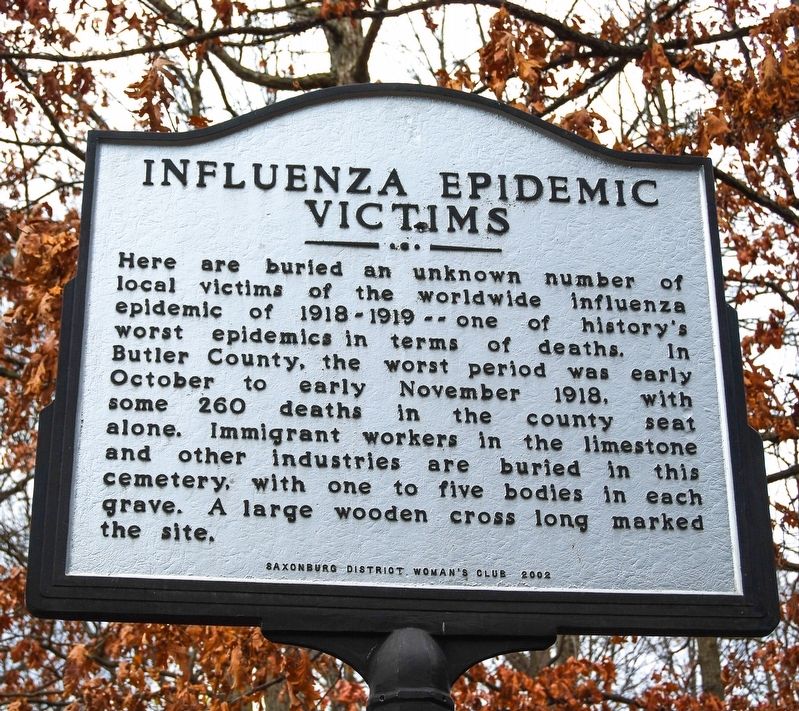
Photographed by Mike Wintermantel, November 12, 2014
1. Influenza Epidemic Victims Marker
Erected 2002 by Saxonburg District Woman's Club.
Topics. This historical marker is listed in these topic lists: Cemeteries & Burial Sites • Science & Medicine. A significant historical year for this entry is 1918.
Location. 40° 48.681′ N, 79° 42.54′ W. Marker is in Winfield Township, Pennsylvania, in Butler County. It is at the intersection of Cornetti Road and Sasse Road, on the right when traveling north on Cornetti Road. Touch for map. Marker is in this post office area: Cabot PA 16023, United States of America. Touch for directions.

Regionally, this marker is in Northwestern Pennsylvania and in Greater Pittsburgh. It is also in the American Northeast, in the Mid-Atlantic,
this page online
Other nearby markers. At least 8 other markers are within 6 miles of this marker, measured as the crow flies: Reverend Richard C. Christy (approx. 2.8 miles away); Cooper Cabin (approx. 4.6 miles away); Slate Lick (approx. 4.8 miles away); William A. Smith (approx. 5.1 miles away); Worthington Area Veterans Memorial (approx. 5.1 miles away); Saxonburg Legion Veterans Memorial (approx. 5.1 miles away); Sarver Veterans Club Memorial (approx. 5.6 miles away); Veterans Memorial (approx. 5.8 miles away).
Also see . . .
1. Wooden Cross Cemetery. Excerpt:
Just north of West Winfield Township in Butler County, is a silent and sobering place known as the Wooden Cross (or Black Cross) Cemetery, although the title of cemetery is a bit of a stretch. In the early 1900s, many Polish and Slovak immigrants moved into the area to work in the expanding(Submitted on November 12, 2014, by Mike Wintermantel of Pittsburgh, Pennsylvania.)industries such as the limestone mine, sand plant, brickyard, salt works, or tile works that were in the area. However, in 1918, many of these workers became exposed to the influenza virus, a disease that was quickly turning into an international epidemic.Photographed by Mike Wintermantel, November 12, 20142. Influenza Epidemic Victims Marker
The virus proved to be a deadly encounter for many of these people, and many died without a church, organization, or family that would ensure they received a proper burial. Like many immigrant laborers in the early 20th century, most of these men were single, having left their families to earn money and get established in the United States. At the time the county, state, and federal governments refused to provide a burial for the massive amount of people who had succumbed to the flu without anyone to take care of post-mortem affairs.

2. Wikipedia entry. Excerpts:
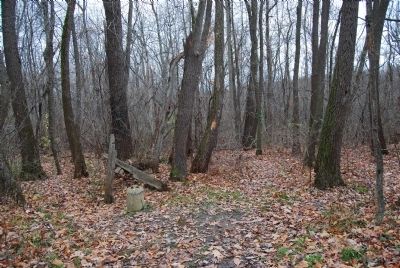
... Lasting from January 1918 to December 1920, it infected 500 million people—about a quarter of the world's population at the time The death toll is estimated to have been anywhere from 17 million to 50 million, and possibly(Submitted on April 3, 2020.)as high as 100 million, making it one of the deadliest pandemics in human history. ...Photographed by Mike Wintermantel, November 12, 20143. Influenza Epidemic Victims MarkerSite of former cross mentioned on marker
There are various theories of why the Spanish flu was “forgotten.” The rapid pace of the pandemic, which, for example, killed most of its victims in the United States within less than nine months, resulted in limited media coverage. The general population was familiar with patterns of pandemic disease in the late 19th and early 20th centuries: typhoid, yellow fever, diphtheria and cholera all occurred near the same time. These outbreaks probably lessened the significance of the influenza pandemic for the public. In some areas, the flu was not reported on, the only mention being that of advertisements for medicines claiming to cure it.
3. Virus kills 50 Million - The Flu Pandemic of 1918. 4:18 minute YouTube video.
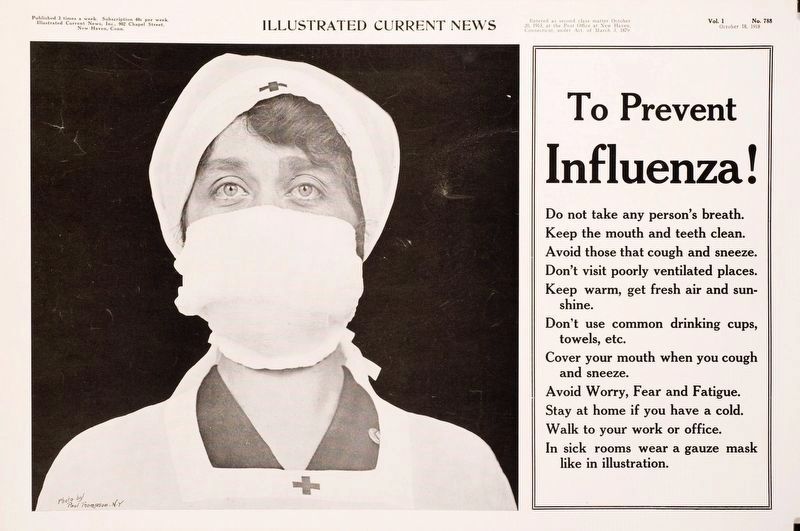
On September 28, 1918, around 200,000 people crammed the streets of Philadelphia to watch the two mile Liberty Loan Parade, meant to raise funds for the war effort. Unfortunately, Director of Public Health, Dr. Wilmer Krusen, ignored the advice of medical professionals(Submitted on May 12, 2020.)who urged him to cancel the parade or risk an epidemic. Krusen downplayed the danger of spreading the disease, knowing that the parade would raise millions of dollars in war bonds. Within a week, every bed in Philadelphia’s 31 hospitals was filled with 45,000 citizens afflicted with influenza.Photographed by Illustrated Current News Vol. 1 No. 788, October 18, 19184. To Prevent Influenza!Do not take any person’s breath.
Keep the mouth and teeth clean.
Avoid those that cough and sneeze.
Don’t visit poorly ventilated places.
Keep warm, get fresh air and sunshine.
Don’t use common drinking cups, towels, etc.
Cover your mouth when you cough or sneeze.
Avoid Worry, Fear and Fatigue.
Stay at home if you have a cold.
Walk to your work or office.
In sick rooms wear a gauze mask like in illustration.
4. US CDC 1918 Influenza Pandemic 1½ minute video.
Credits. This page was last revised on June 24, 2026. It was originally submitted on November 12, 2014, by Mike Wintermantel of Pittsburgh, Pennsylvania. This page has been viewed 5,933 times since then and 98 times this year. Last updated on July 7, 2024, by Sam Skeen of State College, Pennsylvania. Photos: 1, 2, 3. submitted on November 12, 2014, by Mike Wintermantel of Pittsburgh, Pennsylvania. 4. submitted on April 3, 2020, by J. J. Prats of Powell, Ohio. • J. Makali Bruton was the editor who published this page.
