Grand Canyon National Park in Coconino County, Arizona — The American Mountains (Southwest)
Tribal Connections

Photographed by James Hulse, June 21, 2024
1. Tribal Connections Marker
From Navajo Point, your view includes Grand Canyon and extends across the surrounding plateaus into modern-day Indian Country. Several tribes still live in and around the canyon, honoring their ancient connection to this place. Grand Canyon is their ancestral homeland, a sacred place, and a source of knowledge for many native people. Their history was not recorded in books, but lives in their traditions and oral accounts. Their ties to Grand Canyon are born of intimate knowledge and wisdom gained over thousands of years. The canyon's teachings are handed down generation to generation. Many of the traditions remain private, but their continued use enriches the ongoing, human connection with Grand Canyon.
photo captions:
Grand Canyon offers spiritual and material sustenance to tribes throughout the Southwest. The National Park Service works with the tribes to understand their concerns, accommodate their needs, and learn from their unique ties to the canyon.
Tribal lands
Erected by National Park Service, U.S. Department of the Interior.
Topics. This historical marker is listed in these topic lists:
this page online
Location. 36° 2.315′ N, 111° 50.233′ W. Marker is in Grand Canyon National Park, Arizona, in Coconino County. It is on Desert View Drive. The marker is located north of the Navajo Point Parking Lot along the viewing trail. Touch for map. Marker is in this post office area: Grand Canyon AZ 86023, United States of America. Touch for directions.

Regionally, this marker is in Flagstaff & High Country and in Hopi. It is also in the American Southwest, in the Mountain West, on the Colorado Plateau, and at the Four Corners. Globally, it is in North America, the Western Hemisphere, the Western World, and the Anglosphere. Historically, it finds itself in what was once New Spain and also Mexico’s Alta California.
Other nearby markers. At least 8 other markers are within walking distance of this marker: Grand Canyon's Gateway (a few steps from this marker); Like Nowhere Else (approx. 0.6 miles away); Ancient Illusion (approx. 0.7 miles away); 1956 Grand Canyon TWA-United Airlines Aviation Accident Site

Photographed by James Hulse, June 21, 2024
2. Tribal Connections Marker
Also see . . . Associated Tribes. National Park Service, U.S. Department of the Interior
The Grand Canyon region has been home to Native people since time immemorial.(Submitted on July 8, 2024, by James Hulse of Medina, Texas.)
The Grand Canyon is a place of immeasurable importance to Native people in the Southwest. The park shares boundaries with three federally recognized tribes; a total of 11 federally recognized tribes are traditionally associated with what is now Grand Canyon National Park. Park staff have been working with tribal people for more than 40 years, developing numerous innovative and collaborative tribal partnerships during that time.
We gratefully acknowledge the Native peoples on whose ancestral homelands we gather, as well as the diverse and vibrant Native communities who make their home here today.
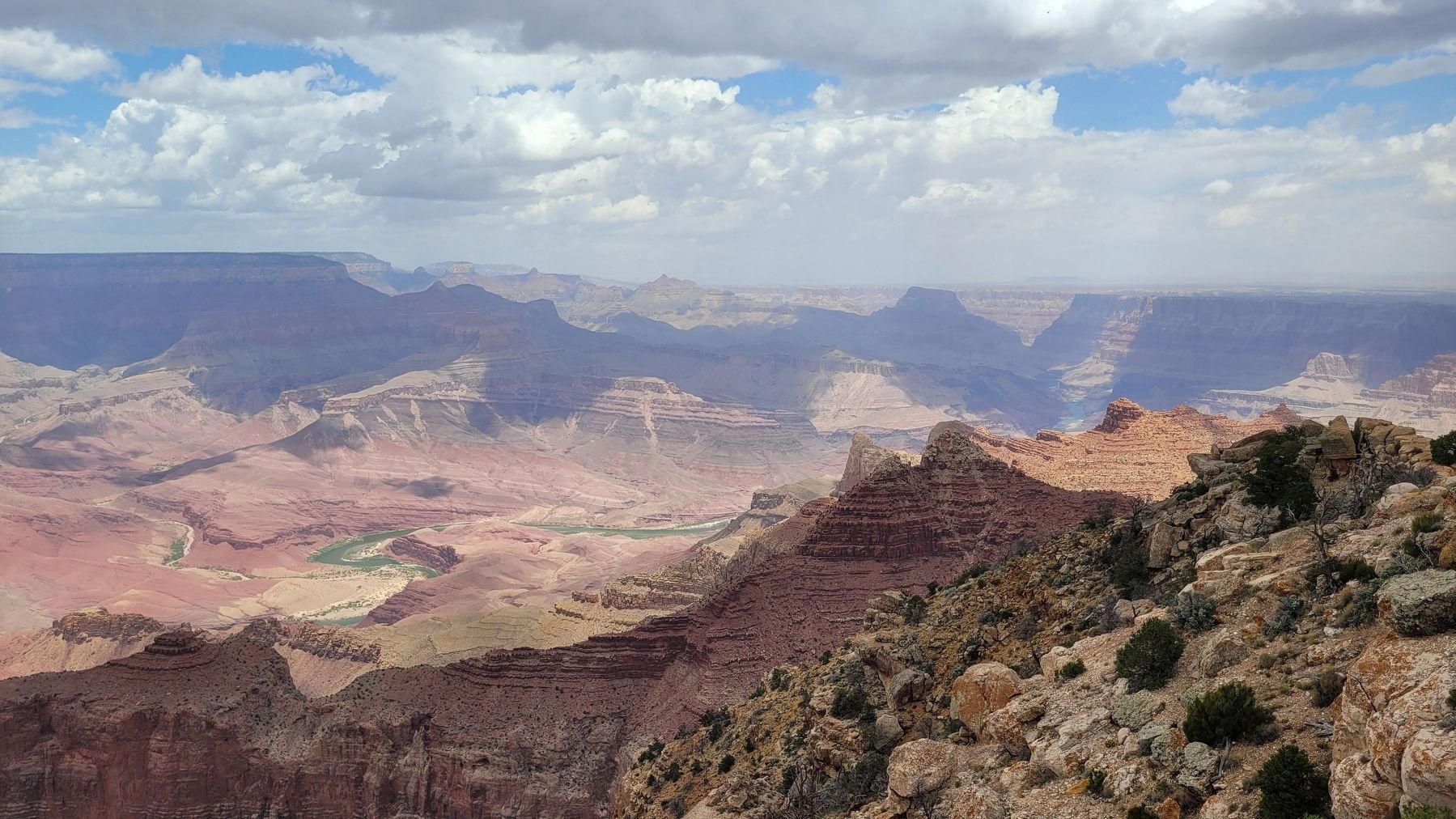
Photographed by James Hulse, June 21, 2024
3. Grand Canyon
Credits. This page was last revised on September 11, 2026. It was originally submitted on July 7, 2024, by James Hulse of Medina, Texas. This page has been viewed 270 times since then and 27 times this year. Photos: 1, 2, 3. submitted on July 8, 2024, by James Hulse of Medina, Texas.
