Near Camp Verde in Yavapai County, Arizona — The American Mountains (Southwest)
On the Move
Photographed by James Hulse, June 19, 2024
1. On the Move Marker
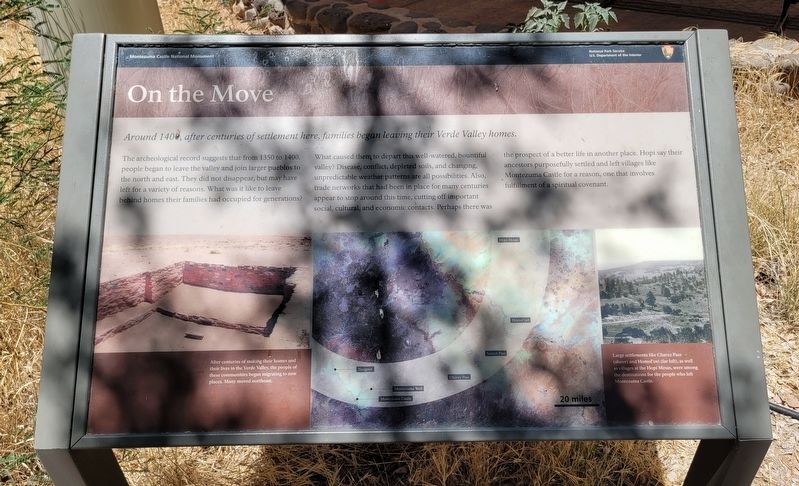
The archeological record suggests that from 1350 to 1400, people began to leave the valley and join larger pueblos to the north and east. They did not disappear, but may have left for a variety of reasons. What was it like to leave behind homes their families had occupied for generations?
What caused them to depart this well-watered, bountiful valley? Disease, conflict, depleted soils, and changing, unpredictable weather patterns are all possibilities. Also, trade networks that had been in place for many centuries appear to stop around this time, cutting off important social, cultural, and economic contacts. Perhaps there was the prospect of a better life in another place. Hopi say their ancestors purposefully settled and left villages like Montezuma Castle for a reason, one that involves fulfillment of a spiritual covenant.
Captions
After centuries of making their homes and their lives in the Verde Valley, the people of these communities began migrating to new places. Many moved northeast.
Large settlements like Chavez Pass (above) and Homol'ovi (far left), as well as villages at the Hopi Mesas, were among the destinations for the people who left Montezuma Castle.
Erected by Montezuma
this page online
Topics. This historical marker is listed in these topic lists: Anthropology & Archaeology • Indigenous Peoples and Communities. A significant historical year for this entry is 1400.
Location. 34° 36.705′ N, 111° 50.52′ W. Marker is near Camp Verde, Arizona, in Yavapai County. It is on Montezuma Castle Road one mile east of Beaver Creek Estates Road. The marker is located along the loop hiking trail at the Montezuma Castle National Monument. Touch for map. Marker is at or near this postal address: 2800 Montezuma Castle Rd, Camp Verde AZ 86322, United States of America. Touch for directions.

Regionally, this marker is in Verde Valley and in the Yavapai-Apache Nation. It is also in the American Southwest and in the Mountain West. Globally, it is in North America, the Western Hemisphere, the Western World, and the Anglosphere. Historically, it finds itself in what was once New Spain and also Mexico’s Alta California.
Other nearby markers. At least 8 other markers are within walking distance of this marker: A Piece of Modern Monument History (within shouting distance of this marker); Aloft but not Alone
Photographed by James Hulse, June 19, 2024
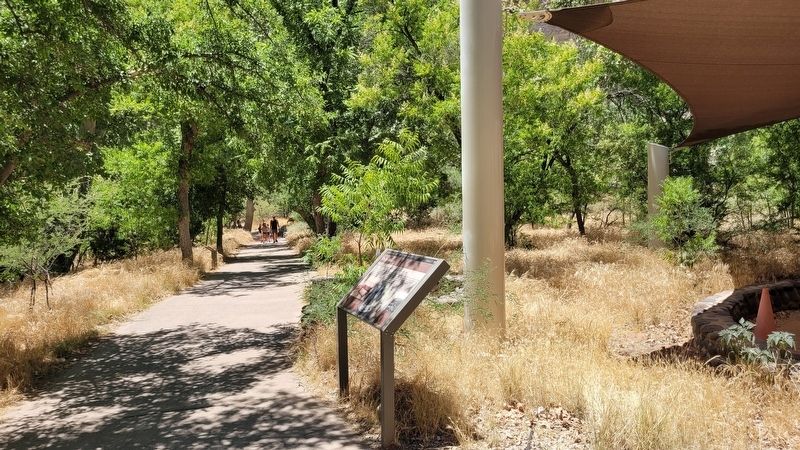
2. The view of the On the Move Marker along the trail
Other markers no longer nearby. The Way Up / Construction Sequence (was a few steps from this marker but has been permanently removed); The Neighborhood / Mysterious Departures (was within shouting distance of this marker but has been permanently removed); The Community (was within shouting distance of this marker but has been permanently removed); The People Next Door (was within shouting distance of this marker but has been permanently removed).
Also see . . . Montezuma Castle - History & Culture. National Park Service
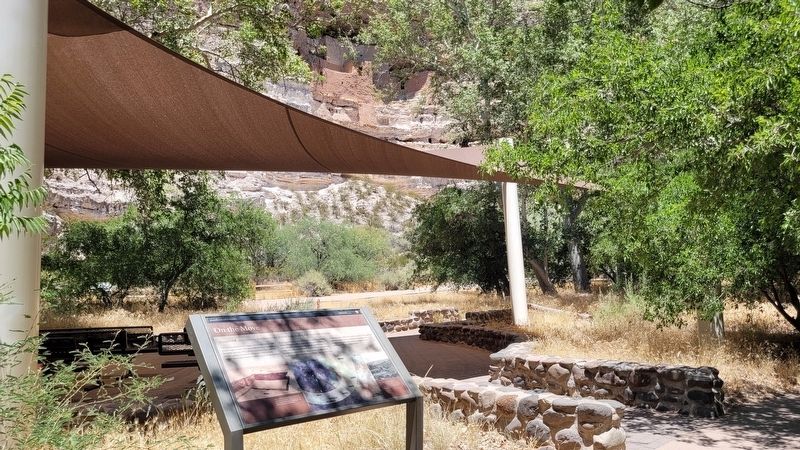
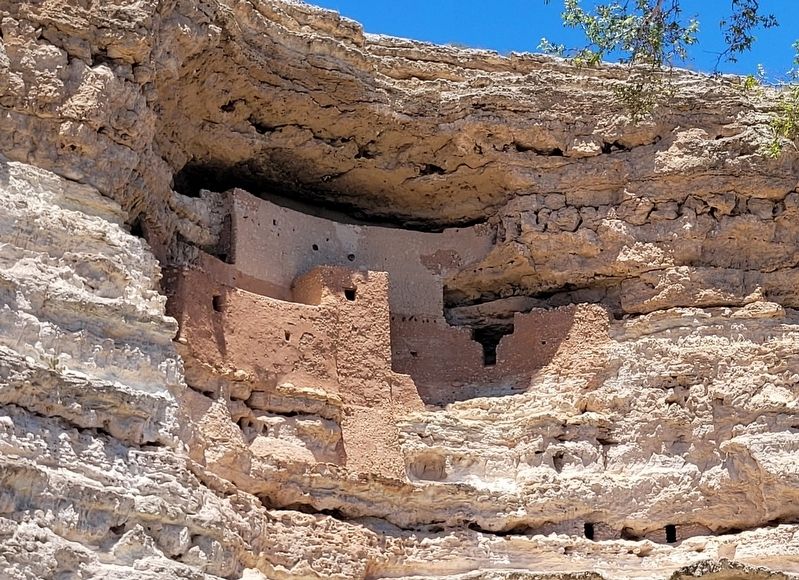
On December 8, 1906, President Theodore Roosevelt celebrated the passage of the Antiquities Act by declaring four sites of historic and cultural(Submitted on July 18, 2024, by James Hulse of Medina, Texas.)significance as our nation's first National Monuments. Among these was Montezuma Castle, which the President identified as a place "of the greatest ethnological value and scientific interest." Although very few original artifacts remained in the structure due to intensive looting of the site, Roosevelt's decision assured the continued protection of one of the best preserved prehistoric cliff dwellings in North America.Photographed by James Hulse, June 19, 20243. The view of Montezuma Castle behind the marker
Photographed by James Hulse, June 19, 2024
4. Montezuma Castle
Credits. This page was last revised on July 19, 2024. It was originally submitted on July 18, 2024, by James Hulse of Medina, Texas. This page has been viewed 162 times since then and 17 times this year. Photos: 1, 2, 3, 4. submitted on July 18, 2024, by James Hulse of Medina, Texas.
