
Florence in Lauderdale County, Alabama — The American South (East South Central)
The Florence Mound

Photographed by Sandra Hughes Tidwell, July 20, 2024
1. The Florence Mound Marker
this page online
Erected 2023 by Florence Arts and Mousems and History Revealed a program of the Alabama Historical Association.
Topics. This historical marker is listed in these topic lists: Anthropology & Archaeology • Indigenous Peoples and Communities.
Location. 34° 47.445′ N, 87° 40.191′ W. Marker is in Florence, Alabama, in Lauderdale County. It is at the intersection of South Court Street and Canal Street, on the right when traveling south on South Court Street. The marker is at the entrance to the Indian Mound & Museum. Touch for map. Marker is at or near this postal address: 1028 S Court St, Florence AL 35630, United States of America. Touch for directions.

Regionally, this marker is in North Alabama and in the Shoals. It is also in the American South, specifically in the Deep South, in Appalachia, and specifically in Southern Appalachia. Globally, it is in North America, a Gulf of Mexico state, the Western Hemisphere, the Western World, and the Anglosphere. Historically, it finds itself in what
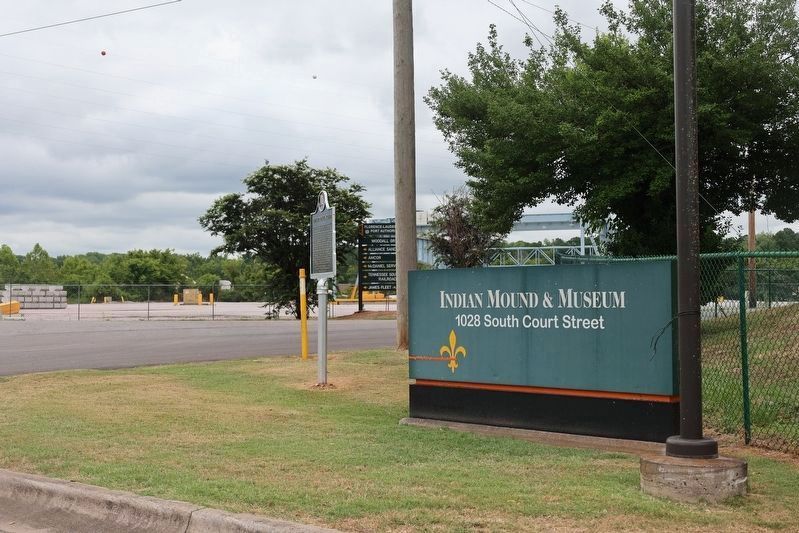
Photographed by Sandra Hughes Tidwell, July 20, 2024
2. The Florence Mound Marker
Other nearby markers. At least 8 other markers are within walking distance of this marker: Continuity (within shouting distance of this marker); Adaptation (within shouting distance of this marker); Culture (within shouting distance of this marker); Removal (within shouting distance of this marker); Florence Indian Mound (within shouting distance of this marker); Florence Little League Baseball (1951) (approx. 0.3 miles away); Constellium (approx. 0.3 miles away); The Singing River Sculpture (approx. 0.3 miles away). Touch for a list and map of all markers in Florence.
Another marker is no longer nearby. Prehistoric Mound (was here, next to this marker but has been replaced with another marker now near it).
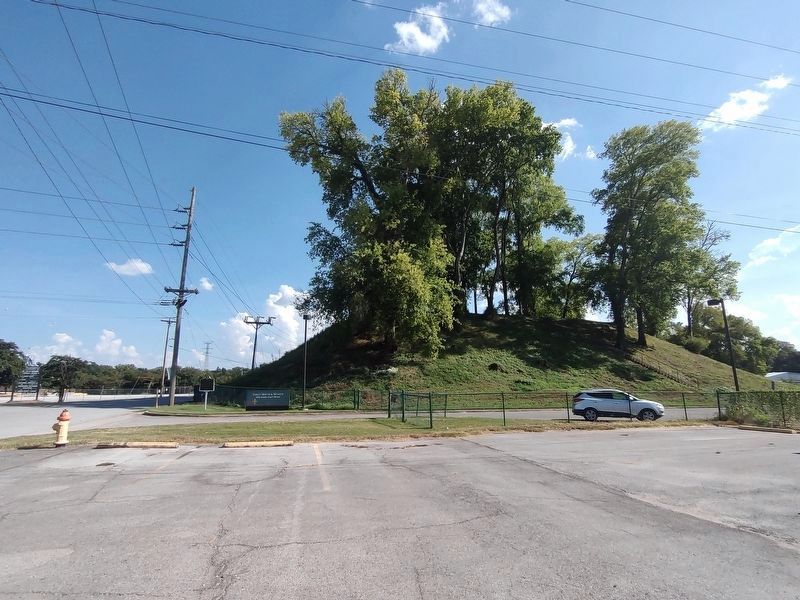
Photographed by Jimmy Emerson, September 6, 2026
3. The Florence Mound & Marker
Credits. This page was last revised on September 7, 2026. It was originally submitted on July 20, 2024, by Sandra Hughes Tidwell of Killen, Alabama, USA. This page has been viewed 239 times since then and 46 times this year. Photos: 1. submitted on July 29, 2026. 2. submitted on July 20, 2024, by Sandra Hughes Tidwell of Killen, Alabama, USA. 3. submitted on September 6, 2026, by Jimmy Emerson of Dalton, Georgia. • James Hulse was the editor who published this page.
