Florence in Lauderdale County, Alabama — The American South (East South Central)
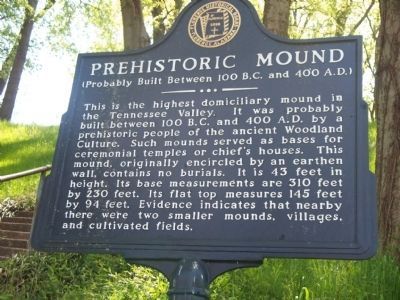
Prehistoric Mound
(Probably Built Between 100 B.C and 400 A.D.)
Photographed by Sandra Hughes, April 13, 2010
1. Prehistoric Mound Marker
Erected by Florence Historical Board Florence Alabama.
Topics. This historical marker is listed in these topic lists: Anthropology & Archaeology • Indigenous Peoples and Communities • Settlements & Settlers. A significant historical year for this entry is 100 BCE.
Location. This marker has been replaced by another marker nearby. It was located near 34° 47.448′ N, 87° 40.192′ W. Marker was in Florence, Alabama, in Lauderdale County. It was on South Court Street. Located across the road from & facing the Indian Mound Museum. Located on left next to steps of Indian Mound. Touch for map. Marker was
this page online

Regionally, this marker was in North Alabama and in the Shoals. It was also in the American South, specifically in the Deep South, in Appalachia, and specifically in Southern Appalachia. Globally, it was in North America, a Gulf of Mexico state, the Western Hemisphere, the Western World, and the Anglosphere. Historically, it found itself in what was once the territory of the Mississippian Culture, one of the Confederate States of America, and the Antebellum South.
Other nearby markers. At least 8 other markers are within walking distance of this location: The Florence Mound (here, next to this marker); Continuity (within shouting distance of this marker); Adaptation (within shouting distance of this marker); Culture (within shouting distance of this marker); Removal (within shouting distance of this marker); Florence Indian Mound (within shouting distance of this marker); Florence Little League Baseball (1951) (approx. 0.3 miles away); Constellium (approx. 0.3 miles away). Touch for a list and map of all
Photographed by Sandra Hughes, March 17, 2008
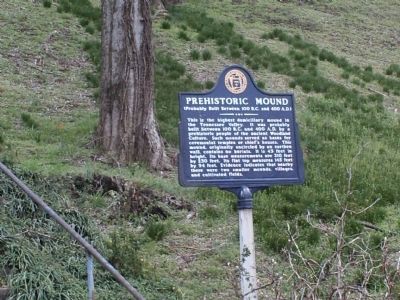
2. Prehistoric Mounds Marker
Also see . . . Mound. A mound is a general term for an artificial heaped pile of earth, gravel, sand, rocks, or debris. The most common use is in reference to natural earthen formation such as hills and mountains, particularly if they appear artificial. The term may also be applied to any rounded area of topographically higher elevation on any surface. Artificial mounds have been created for a variety of reasons throughout history, including ceremonial (platform mound), burial (tumulus), and commemorative purposes (e.g. Kościuszko Mound). (Submitted on March 10, 2010, by Sandra Hughes Tidwell of Killen, Alabama, USA.)
Photographed by Sandra Hughes, March 17, 2008
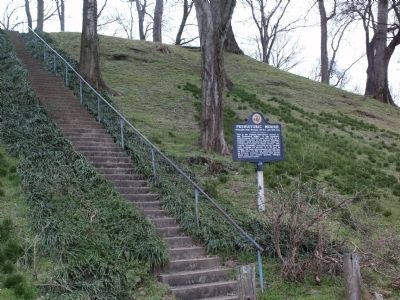
3. Prehistoric Mounds Marker
Photographed by Sandra Hughes, April 13, 2010
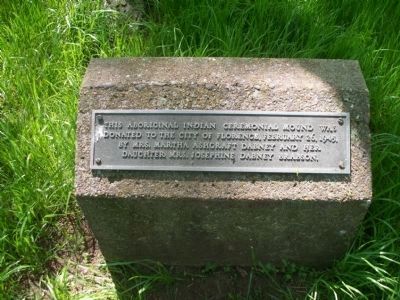
4. Marker on top of Mount
This Aboriginal Indian Ceremonial Mound was donated to the City of Florence, February 26, 1945, by Mrs. Martha Ashcraft Dabney and her daughter Mrs. Josephine Dabney Brabson.
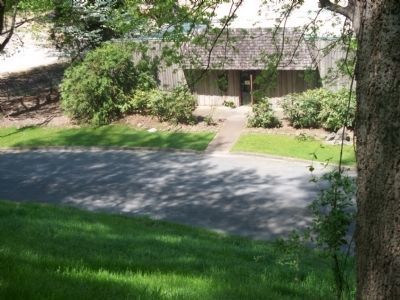
Photographed by Sandra Hughes, April 13, 2010
5. Indian Mount Museum
Credits. This page was last revised on July 23, 2024. It was originally submitted on March 10, 2010, by Sandra Hughes Tidwell of Killen, Alabama, USA. This page has been viewed 2,275 times since then and 48 times this year. Last updated on July 20, 2024, by Sandra Hughes Tidwell of Killen, Alabama, USA. Photos: 1. submitted on September 7, 2010, by Sandra Hughes Tidwell of Killen, Alabama, USA. 2, 3. submitted on March 10, 2010, by Sandra Hughes Tidwell of Killen, Alabama, USA. 4, 5. submitted on September 7, 2010, by Sandra Hughes Tidwell of Killen, Alabama, USA. • Devry Becker Jones was the editor who published this page.
