
Clermont in Thimister-Clermont in Liège, Wallonia, Belgium — Northwestern Europe
Le Paysage du Pays de Herve
⎯⎯⎯
The Landscape of the Pays de Herve
| — | Promenades à Thimister-Clermont | — |

Photographed by Andrew Ruppenstein, July 13, 2024
1. Le Paysage du Pays de Herve / The Landscape of the Pays de Herve Marker

Avant le XIIème siècle, notre région était entièrement couverte de forêts. On estime que le territoire correspondant à la Belgique comptait à l'époque environ 100.000 habitants. C'est après les invasions barbares, le calme une fois retrouvé, que la population s'est mise à croitre.
Il existait déjà une route reliant Liège à Aix-la-Chapelle. Elle passait tout près d'ici sur la crête. Les voyageurs devaient connaître l'endroit pour y faire une halte à mi-parcours. La population augmentant, de nouveaux villages se créèrent, près des sources et à l'abri des collines.
Jusqu'au début du XVIème siècle, les habitants de Clermont et de Thimister cultivalent dans leurs champs, tout autour des villages, différentes sortes de céréales (seigle, froment, épeautre, blé...).
Au XVIème siècle, en pleine guerre des Religions, Charles Quint interdit à nos agriculteurs d'exporter leurs céréales vers les pays du Nord (les Protestants). De plus, les taxes (la dime) n'existaient pas pour les prairies. En moins de 50 ans, notre région va se reconvertir avec succès dans la culture herbagère et fruitière. C'est l'apparition du bétail, des fermes, des haies, des arbres fruitiers: le paysage typique du Pays de Herve est né ! L'économie locale s'oriente vers de nouveaux produits : le lait, le fromage, le cidre et le sirop.
The Landscape of the Pays de Herve
Before the 12th century, our region was entirely covered with forests. It is estimated that the territory corresponding to Belgium was home to around 100,000 inhabitants. After the Barbarian invasion, once peace was restored, the population began to grow.
A road already existed between Liège and Aix-la-Chapelle. It passed just nearby, on the crest. Travellers had to be familiar with the road to know when to stop off at its halfway point. With the rising population, new villages were built near natural springs and sheltered by the hills.
Until the early 16th century, the inhabitants of Clermont and Thimister grew various types of cereal in their fields all around the villages (rye, durum wheat, spelt and wheat).
In the 16th century, during the Wars of Religion, Charles the Fifth prohibited our farmers from exporting their cereals to northern countries (the Protestants). In addition, there was no tax (tithe) on meadows. In less than 50 years, the region successfully converted to pasture and fruit farming, and livestock, farms, hedges and fruit trees - the typical landscapes of Pays de Herve - appeared. The local economy focused on new produce, such as milk, cheese, cider and fruit syrup.
Topics.
this page online
Location. 50° 39.547′ N, 5° 52.96′ E. Marker is in Thimister-Clermont, Région Wallonne (Wallonia), in Liège. It is in Clermont. It can be reached from Rue du Bac. The marker is behind the Église Saint-Jacques-le-Majeur, reachable by circling the church either from the left or right. Touch for map. Marker is at or near this postal address: Rue du Bac 4, Thimister-Clermont, Région Wallonne 4890, Belgium. Touch for directions.

Regionally, it is in Europe, the European Union, Atlantic Europe, the Benelux Low Countries, the Schengen Area, Western Europe, and the Western World. Historically, it finds itself in what was once the Roman Empire and specifically also the Holy Roman Empire.
Other nearby markers. At least 8 other markers are within 11 kilometers of this marker, measured as the crow flies: Patrimoine Funéraire / Funerary Heritage (within shouting distance of this marker); Pirenne House / La Maison Pirenne / Het Huis Pirenne / Das Haus Pirenne (within shouting distance of this marker); Clermont-sur-Berwinne (within shouting distance of this marker); Clermont WWI and WWII Memorial (within shouting distance of
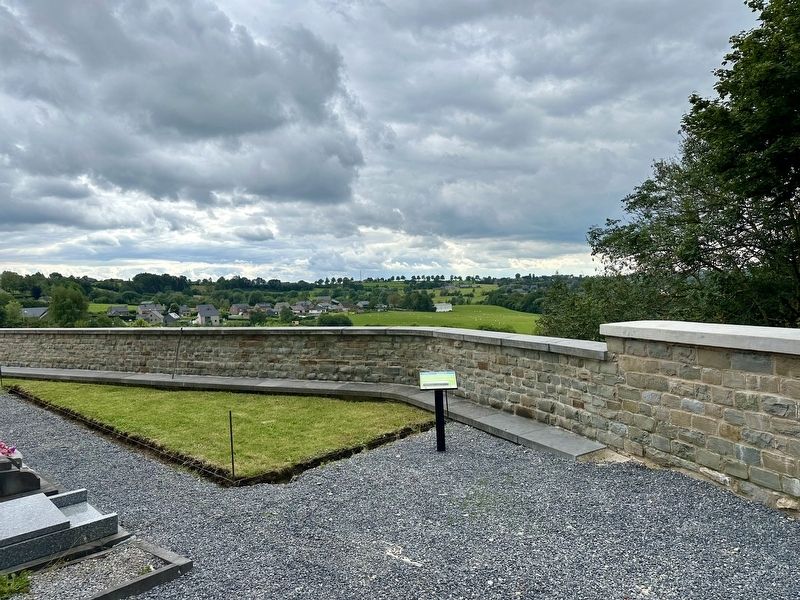
Photographed by Andrew Ruppenstein, July 24, 2024
2. Le Paysage du Pays de Herve / The Landscape of the Pays de Herve Marker - wide view
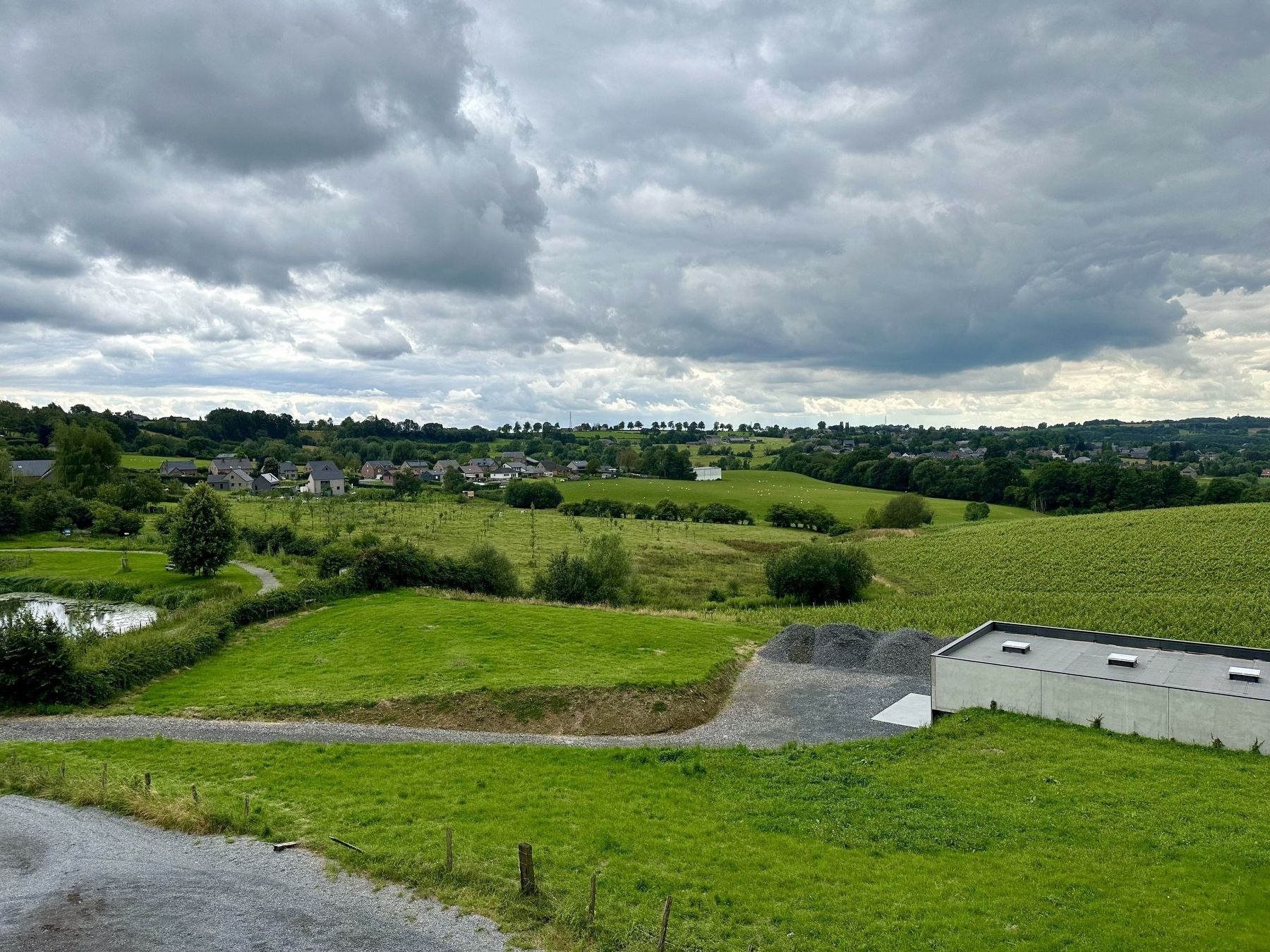
Photographed by Andrew Ruppenstein, July 13, 2024
3. The Landscape of the Pays de Herve, as seen from the marker
Credits. This page was last revised on July 25, 2024. It was originally submitted on July 24, 2024, by Andrew Ruppenstein of Lamorinda, California. This page has been viewed 134 times since then and 21 times this year. Photos: 1, 2, 3. submitted on July 24, 2024, by Andrew Ruppenstein of Lamorinda, California.
