Near San Antonio in Socorro County, New Mexico — The American Mountains (Southwest)
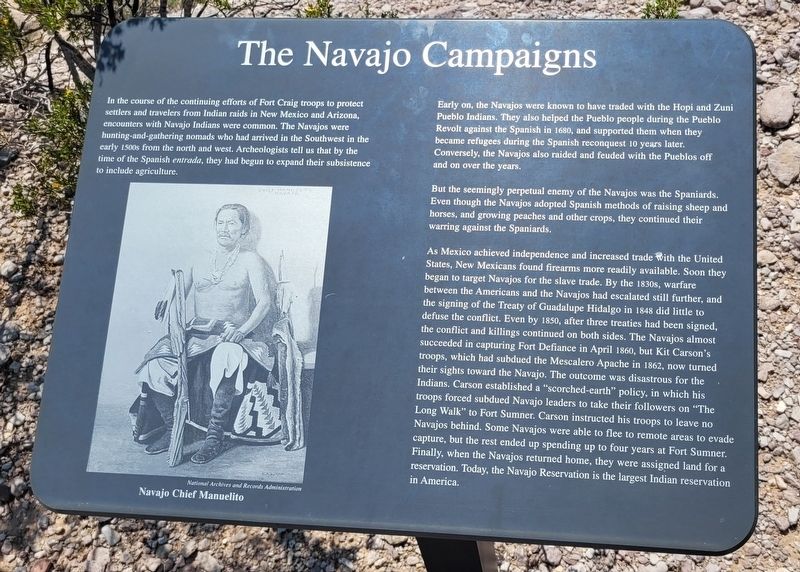
The Navajo Campaigns
Photographed by James Hulse, July 23, 2024
1. The Navajo Campaigns Marker
Early on, the Navajos were known to have traded with the Hopi and Zuni Pueblo Indians. They also helped the Pueblo people during the Pueblo Revolt against the Spanish in 1680, and supported them when they became refugees during the Spanish reconquest 10 years later. Conversely, the Navajos also raided and feuded with the Pueblos off and on over the years.
But the seemingly perpetual enemy of the Navajos was the Spaniards. Even though the Navajos adopted Spanish methods of raising sheep and horses, and growing peaches and other crops, they continued their warring against the Spaniards.
As Mexico achieved independence and increased trade with the United States, New Mexicans found firearms
this page online
Captions
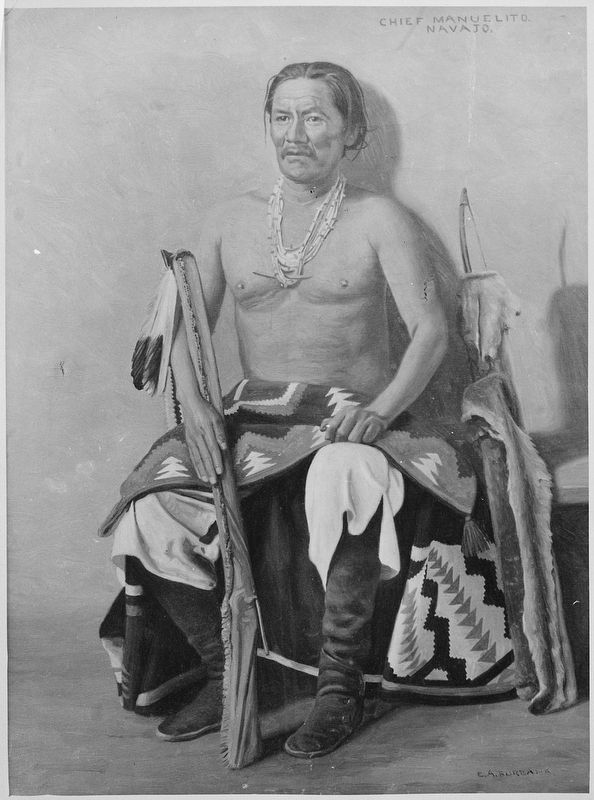
Navajo Chief Manuelito
National Archives and Records Administration
Topics.
Photographed by James Hulse, July 23, 2024
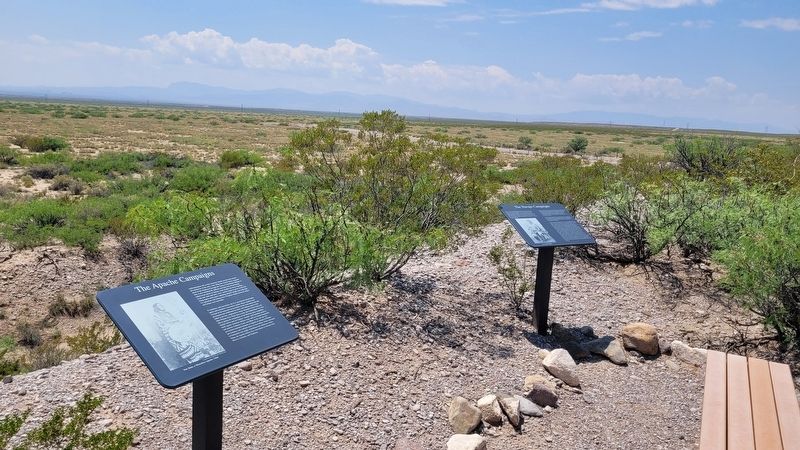
2. The Navajo Campaigns Marker (right side)
Location. 33° 38.027′ N, 107° 0.903′ W. Marker is near San Antonio, New Mexico, in Socorro County. It is on Fort Craig Road 4½ miles south of Old US Hwy 85 (New Mexico Road 1). The marker is located at the Fort Craig Historic Site along the visitor trail. Touch for map. Marker is at or near this postal address: 457 Ft Craig Rd, Socorro NM 87801, United States of America. Touch for directions.

Regionally, this marker is in Southwest New Mexico and in the Rio Grande Valley. It is also in the American Southwest. Globally, it is in North America, the Western Hemisphere, the Western World, and the Anglosphere. Historically, it finds itself in what was once New Spain and also the Republic of Texas.
Other nearby markers. At least 8 other markers are within walking distance of this marker: The Apache Campaigns (here, next to this marker); Defensive Bastions (here, next to this marker); The Indian Wars (a few steps from this marker); Store Houses
Public Domain - National Archives and Records Administration, circa 1890s
3. Artwork of Manuelito, a Navajo chief, full-length, seated
More about this marker. At Fort Craig Historic Site, an ADA accessible, self-guided interpretive trail is open seven days a week, from 8:00 a.m. to one-hour before sunset. The visitor’s center is open Thursday through Monday from 8:00 a.m. to 5:00 p.m.
Also see . . .
1. Fort Craig Historic Site. blm.gov
Fort Craig, established in 1854, was one of the largest and most important frontier forts in the West. Set in the rugged beauty of Socorro County, N.M., it was one of the eight forts situated along the primary north-south road in the Rio Grande Valley. Fort Craig played a crucial role in Indian campaigns and the Civil War.(Submitted on August 5, 2024, by James Hulse of Medina, Texas.)
2. Navajo. Wikipedia
The Navajo are a Native American people of the Southwestern United States.(Submitted on August 6, 2024, by James Hulse of Medina, Texas.)
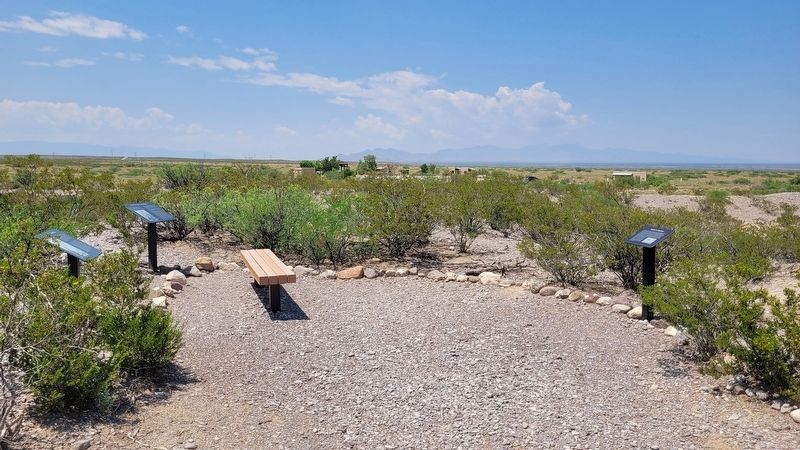
With more than 399,494 enrolled tribal members as of 2021, the NavajoNation is the largest federally recognized tribe in the United States; additionally, the Navajo Nation has the largest reservation in the country. The reservation straddles the Four Corners region and covers more than 27,325 square miles (70,770 square kilometers) of land in Arizona, Utah, and New Mexico. The Navajo Reservation is slightly larger than the state of West Virginia. The Navajo language is spoken throughout the region, and most Navajo also speak English.Photographed by James Hulse, July 23, 20244. The Navajo Campaigns Marker (middle)
Credits. This page was last revised on August 6, 2024. It was originally submitted on August 4, 2024, by James Hulse of Medina, Texas. This page has been viewed 227 times since then and 62 times this year. Photos: 1, 2, 3, 4. submitted on August 6, 2024, by James Hulse of Medina, Texas.
