Albin in Frederick County, Virginia — The American South (Mid-Atlantic)
Second Battle of Winchester
Louisiana Tigers Capture West Fort
| — | Gettysburg Campaign | — |
Photographed by Craig Swain, August 26, 2007
1. Second Battle of Winchester Marker
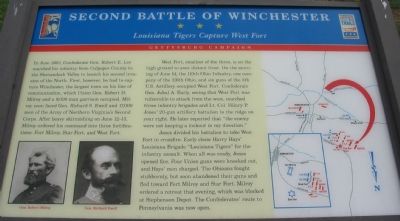
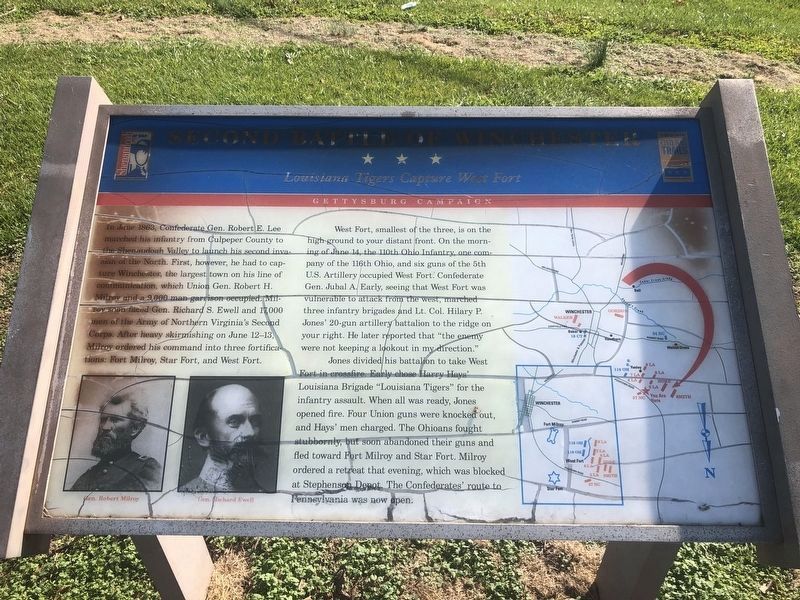
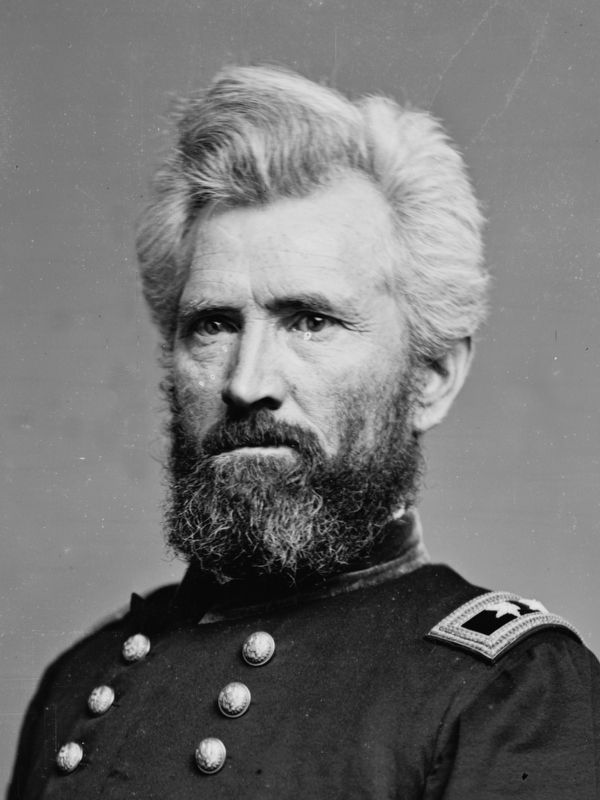
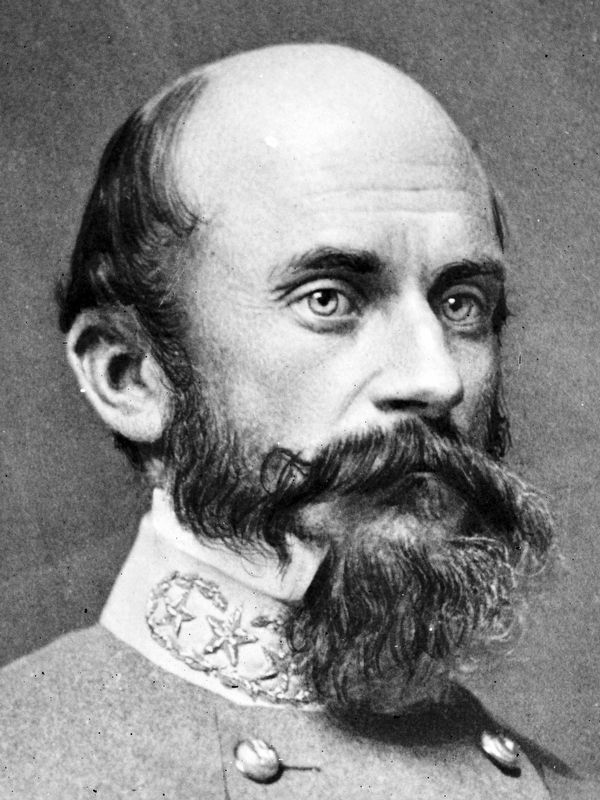
In June 1863, Confederate Gen. Robert E. Lee marched his infantry from Culpeper County to the Shenandoah Valley to launch his second invasion of the North. First, however, he had to capture Winchester, the largest town on his line of communication, which Union Gen. Robert H. Milroy and a 9,000 man garrison occupied. Milroy soon faced Gen. Richard S. Ewell and 17,000 men of the Army of Northern Virginia’s Second Corps. After heavy skirmishing on June 12-13, Milroy ordered his command into three fortifications: Fort Milroy, Star Fort, and West Fort.
West Fort, smallest of the three, is on the high ground to your distant front. On the morning of June 14, the 110th Ohio Infantry, one company of the 116th Ohio, and six guns of the 5th U.S. Artillery occupied West Fort. Confederate Gen. Jubal A. Early, seeing that West Fort was vulnerable to attack from the west, marched three infantry brigades and Lt. Col. Hilary P. Jones’ 20-gun artillery battalion to the ridge on your right. He later reported that "the enemy were not keeping a lookout in my direction."
Jones divided his battalion to take West Fort in crossfire. Early chose
this page online
Erected by Virginia Civil War Trails.
Topics and series. This historical marker is listed in this topic list: War, US Civil. In addition, it is included in the Virginia Civil War Trails series list. A significant historical date for this entry is June 14, 1863.
Location. This marker has been replaced by another marker nearby. It was located near 39° 12.897′ N, 78° 11.494′ W. Marker was in Albin, Virginia, in Frederick County. It was at the intersection of Indian Hollow Road (Virginia Route 679) and North Frederick Pike (U.S. 522), on the right when traveling west on Indian Hollow Road. Touch for map. Marker was at or near this postal address: 104 Indian Hollow Road, Winchester VA 22603, United States of America. Touch for directions.

Regionally,
Photographed by Devry Becker Jones (CC0), November 6, 2020
2. Second Battle of Winchester Marker
Unfortunately the marker has weathered significantly.
Other nearby markers. At least 8 other markers are within 2 miles of this location, measured as the crow flies: A different marker also named Second Battle of Winchester (here, next to this marker); Lord Fairfax (approx. 1.4 miles away); Duel of the Forts (approx. 1.6 miles away); a different marker also named Constructing Star Fort (approx. 1.6 miles away); The Retreat (approx. 1.6 miles away); The Civilian's War (approx. 1.6 miles away); A Place of Refuge (approx. 1.6 miles away); a different marker also named Second Battle of Winchester (approx. 2 miles away).
Other markers no longer nearby. Star Fort (was approx. 1.6 miles away but has been permanently removed); Constructing Star Fort
Photographed by Craig Swain, August 26, 2007
3. Louisiana Brigade's Left Flank
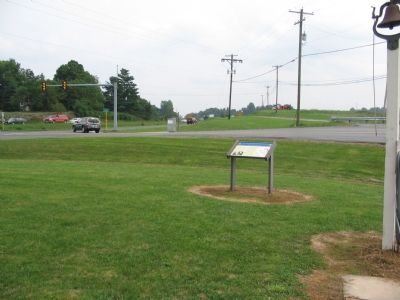
The Louisiana Brigade formed with their left flank along what is today the North Frederick Pike (US Highway 522, on the left), on the high ground on the other side of Indian Hollow Road (foreground). Their line of march was to the west, away from the marker's position, toward West Fort.
More about this marker. The marker displays portraits of Gens. Milroy and Ewell, as well as a map showing the unit maneuvers described in the text.
Related marker. Click here for another marker that is related to this marker. New Replacement CWT Marker At This Location also titled "Second Battle of Winchester".
Also see . . .
1. Second Battle of Winchester. National Parks Service summary of the battle. (Submitted on September 23, 2007, by Craig Swain of Leesburg, Virginia.)
2. Louisiana Tigers. Wikipedia entry (Submitted on July 3, 2022, by Larry Gertner of New York, New York.)
Photographed by Craig Swain, September 15, 2007
4. Early's Flank March
Early's Brigade and Jones' artillery passed through this valley and up Indian Hollow Road (on the left side of view) on their flanking march. Notice how the hills in the background block any view of (or from) Winchester. Thus Early was able to move undetected into a flanking position.
Photographed by Craig Swain, September 15, 2007
5. West Fort
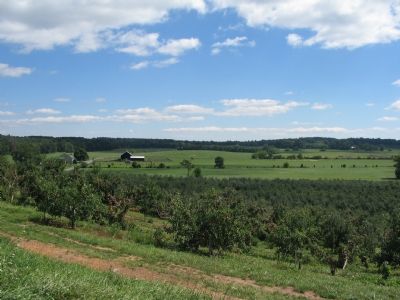
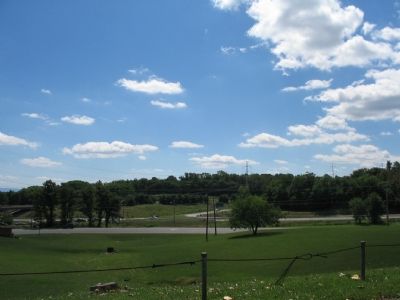
The location of West Fort is not accessible, and very little of the site remains for investigation. A series of earthwork forts stood in the trees along present day Virginia Highway 37 bypass. This picture was taken from Apple Pie Ridge, near the James Wood High School, looking at the intersection of U.S. Highway 522 and Highway 37 Bypass.
West Fort was also named "Battery Number 5" and located between modern Fox Drive and Highway 37. "Battery Number 6" stood in the vicinity of the intersection (center of this photo). "Battery Number 7" was located what is now the high school grounds.
West Fort was also named "Battery Number 5" and located between modern Fox Drive and Highway 37. "Battery Number 6" stood in the vicinity of the intersection (center of this photo). "Battery Number 7" was located what is now the high school grounds.
Library of Congress
6. Gen. Robert H. Milroy
Library of Congress
7. Gen. Richard S. Ewell
Credits. This page was last revised on October 14, 2024. It was originally submitted on September 23, 2007, by Craig Swain of Leesburg, Virginia. This page has been viewed 3,177 times since then and 73 times this year. Last updated on September 9, 2024, by Carl Gordon Moore Jr. of North East, Maryland. Photos: 1. submitted on September 23, 2007, by Craig Swain of Leesburg, Virginia. 2. submitted on November 7, 2020, by Devry Becker Jones of Washington, District of Columbia. 3, 4, 5. submitted on September 23, 2007, by Craig Swain of Leesburg, Virginia. 6, 7. submitted on September 18, 2020, by Allen C. Browne of Silver Spring, Maryland. • Devry Becker Jones was the editor who published this page.
