North Rim in Coconino County, Arizona — The American Mountains (Southwest)
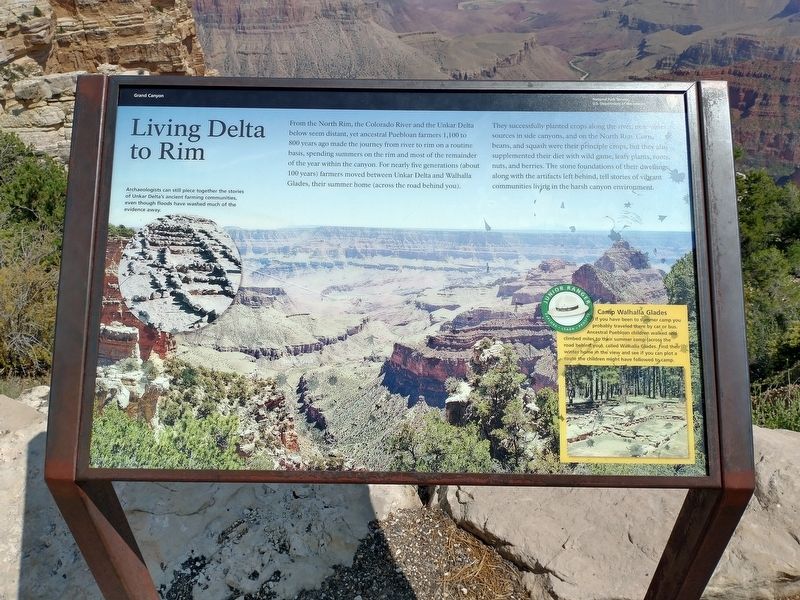
Living Delta to Rim
Photographed by Tom Bosse, July 24, 2024
1. Living Delta to Rim Marker
[Caption]: Archaeologists can still piece together the stories of Unkar Delta's ancient farming communities, even though floods have washed much of the evidence away.
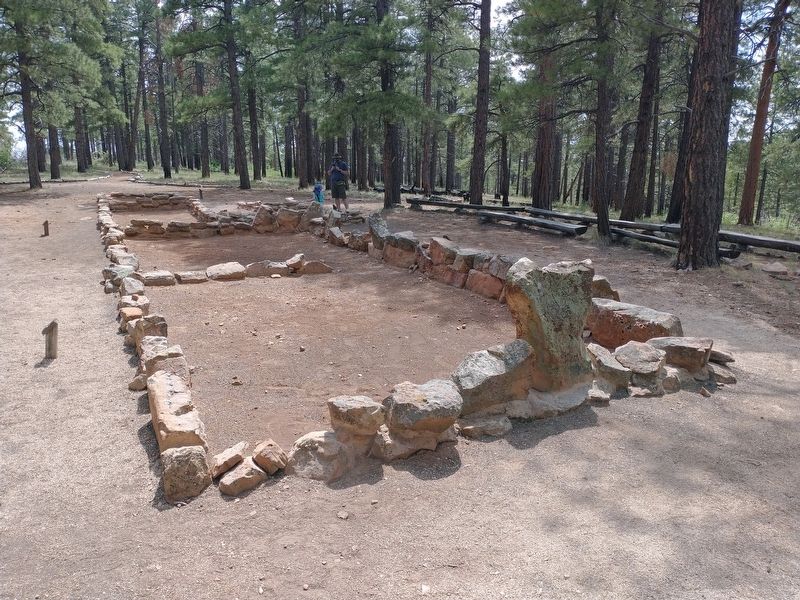
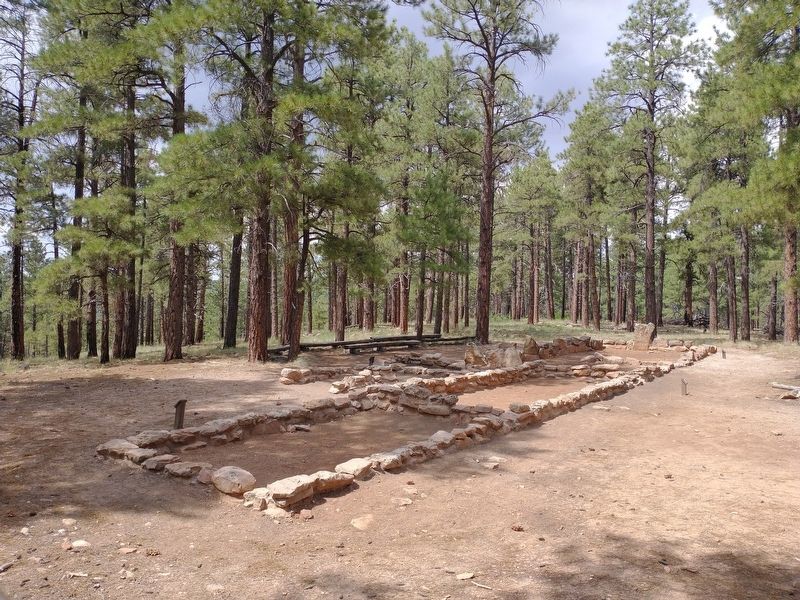
[Caption]: Camp Walhalla Glades. If you have been to summer camp you probably traveled there by car or bus. Ancestral Puebloan children
this page online
Erected by National Park Service, U.S. Department of the Interior.
Topics. This historical marker is listed in these topic lists: Agriculture • Indigenous Peoples and Communities.
Location. 36° 7.966′ N, 111° 56.488′ W. Marker is in North Rim, Arizona, in Coconino County. It is on Cape Royal Road, on the right when traveling south. Marker located at the Walhalla Overlook Parking Lot. Touch for map. Marker is in this post office area: North Rim AZ 86052, United States of America. Touch for directions.

Regionally, this marker is in Flagstaff & High Country and in Hopi. It is also in the American Southwest, in the Mountain West, on the Colorado Plateau, and at the Four Corners. Globally, it is in North America, the Western Hemisphere, the Western World, and the Anglosphere. Historically, it finds itself in what was once New Spain and also Mexico’s Alta California.
Photographed by Tom Bosse, July 24, 2024
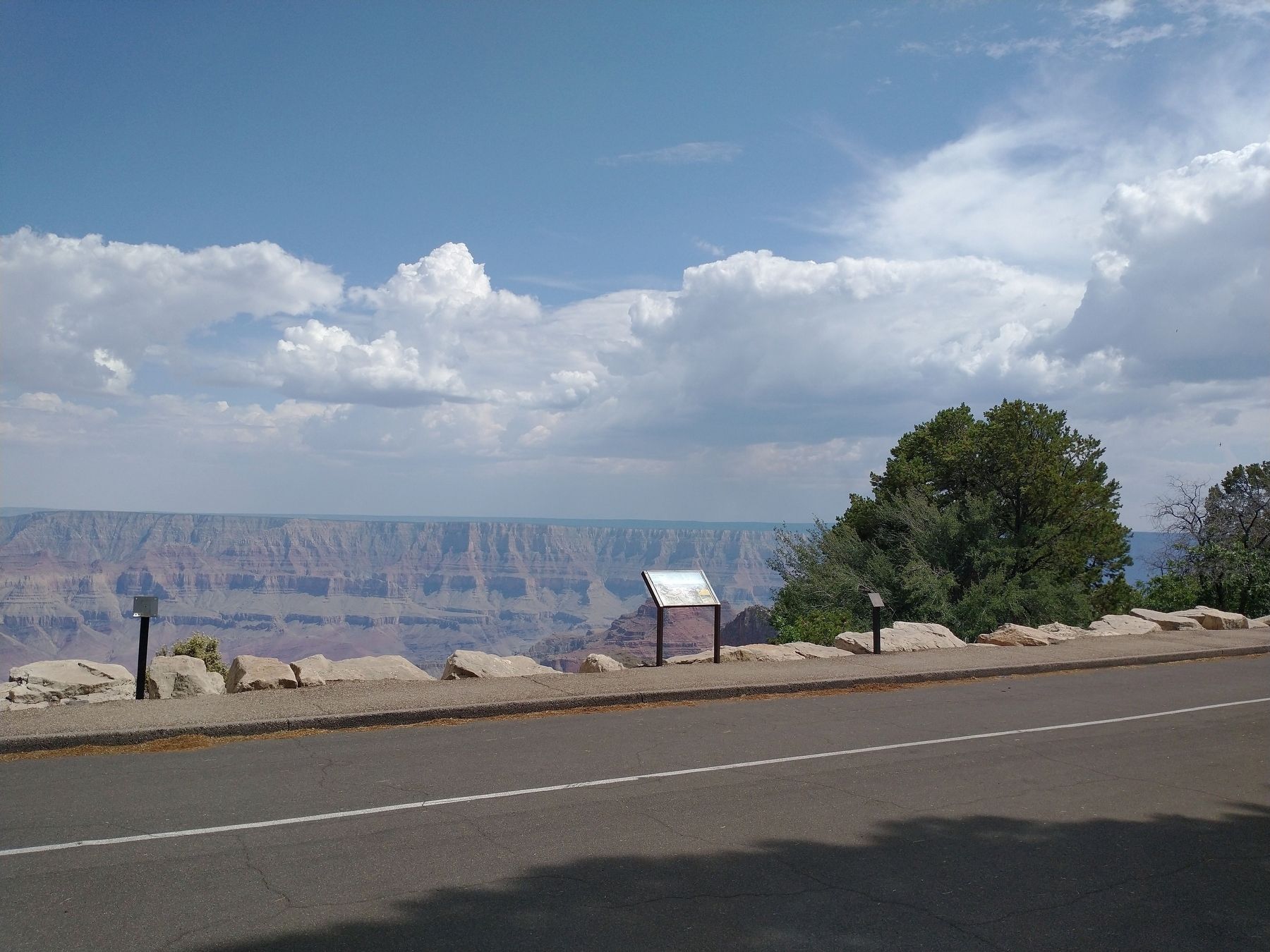
2. Living Delta to Rim Marker
Other nearby markers. At least 8 other markers are within 9 miles of this marker, measured as the crow flies: Grand Canyon Lodge (approx. 7.7 miles away); From Canvas to Castles (approx. 7.7 miles away); Grand Canyon Lodge, 1928-1932 (approx. 7.7 miles away); Grand Canyon Lodge, A Legacy Rebuilt (approx. 7.7 miles away); Summer Home (approx. 7.9 miles away); Greenland Lake (approx. 8.1 miles away); Delta Farmers (approx. 8½ miles away); Hance Rapid (approx. 8½ miles away). Touch for a list and map of all markers in North Rim.
Photographed by Tom Bosse, July 24, 2024
3. Walhalla Glades Pueblo
Photographed by Tom Bosse, July 24, 2024
4. Walhalla Glades Pueblo
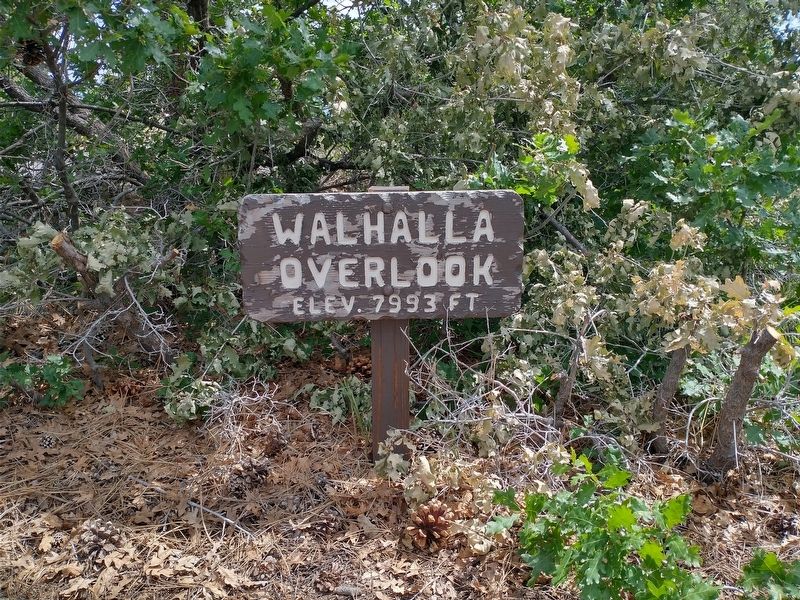
Photographed by Tom Bosse, July 24, 2024
5. Walhalla Overlook
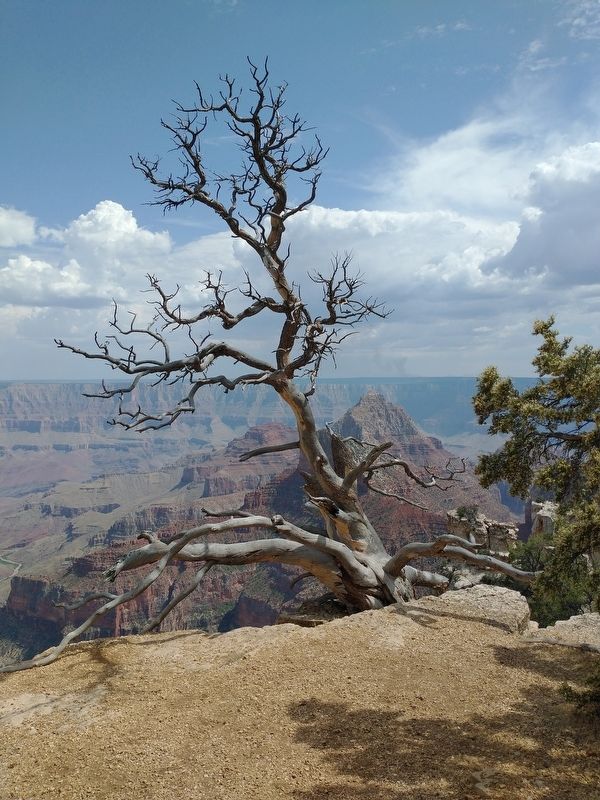
Photographed by Tom Bosse, July 24, 2024
6. Walhalla Overlook
Credits. This page was last revised on October 7, 2024. It was originally submitted on October 7, 2024, by Tom Bosse of Jefferson City, Tennessee. This page has been viewed 122 times since then and 17 times this year. Photos: 1, 2, 3, 4, 5, 6. submitted on October 7, 2024, by Tom Bosse of Jefferson City, Tennessee. • Andrew Ruppenstein was the editor who published this page.
