Fairmead near Chowchilla in Madera County, California — The American West (Pacific Coastal)
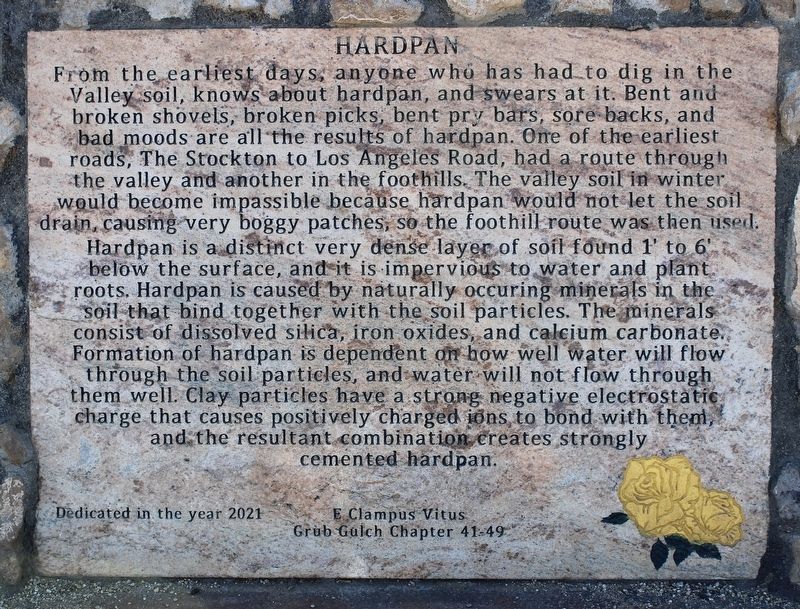
Hardpan
Photographed by Joseph Alvarado, October 12, 2024
1. Hardpan Marker
Dedicated in the year 2021
Grub Gulch Chapter 41-49
Erected 2021
this page online
Topics and series. This historical marker is listed in these topic lists: Environment • Roads & Vehicles. In addition, it is included in the E Clampus Vitus series list.
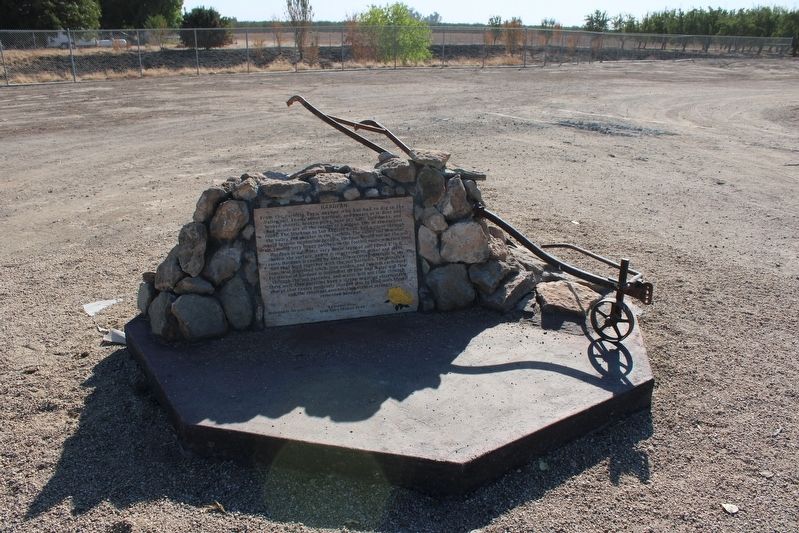
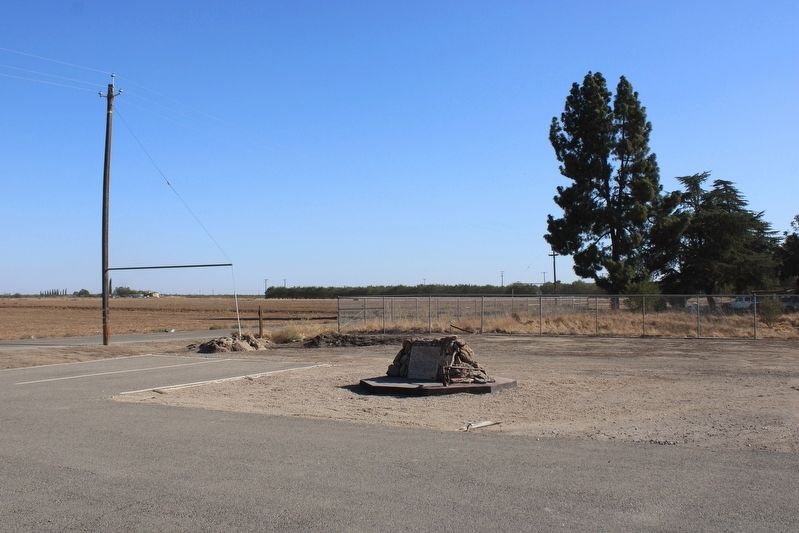
Location. 37° 3.637′ N, 120° 11.622′ W. Marker is near Chowchilla, California, in Madera County. It is in Fairmead. It is at the intersection of Road 19 1/2 and Avenue 21 1/2, on the right when traveling south on Road 19 1/2. The plaque is mounted in a stone masonry foundation in the parking lot of the Fossil Discovery Center of Madera County. Touch for map. Marker is at or near this postal address: 19450 Avenue 21 1/2, Chowchilla CA 93610, United States of America. Touch for directions.

Regionally, this marker is in the San Joaquin Valley, specifically in the Central Valley, and in the Sierra Nevada. It is also on the American Pacific Coast. Globally, it is in North America, on the Ring of Fire, on the Pacific Rim, in the Western Hemisphere, in the Western World, and in the Anglosphere. Historically, it finds itself in what was once New Spain and also
Photographed by Joseph Alvarado, October 12, 2024
2. Hardpan Marker
Other nearby markers. At least 8 other markers are within 10 miles of this marker, measured as the crow flies: Mammoth Orange (within shouting distance of this marker); Berenda (approx. 2.7 miles away); Dixieland School (approx. 3 miles away); Chowchilla Union High School (approx. 5.4 miles away); Railroads of Chowchilla (approx. 5½ miles away); a different marker also named Railroads of Chowchilla (approx. 5½ miles away); Dairyland School (approx. 7.1 miles away); Madera County Library Service (approx. 10.1 miles away). Touch for a list and map of all markers in Chowchilla.
Photographed by Joseph Alvarado, October 12, 2024
3. Hardpan Marker
Credits. This page was last revised on November 1, 2024. It was originally submitted on October 27, 2024, by Joseph Alvarado of Livermore, California. This page has been viewed 271 times since then and 40 times this year. Photos: 1, 2, 3. submitted on October 27, 2024, by Joseph Alvarado of Livermore, California.
