Penetanguishene in Simcoe County, Ontario — Central Canada (North America)
Métis Dwelling
⎯⎯⎯
Demeure Métis
Photographed by Cosmos Mariner, June 7, 2024
1. Métis Dwelling / Demeure Métis Marker

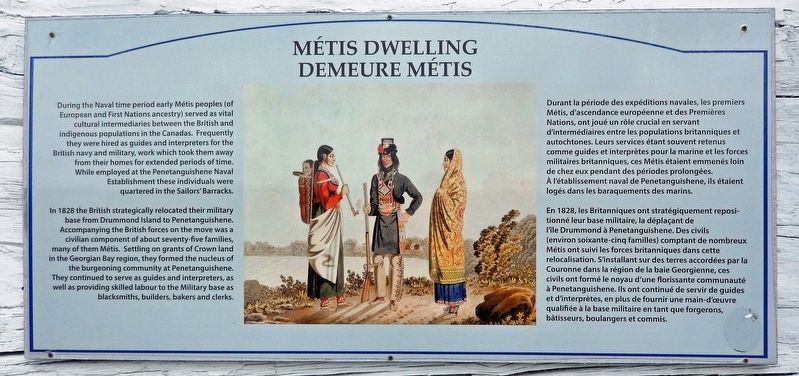
In 1828 the British strategically relocated their military base from Drummond Island to Penetanguishene. Accompanying the British forces on the move was a civilian component of about seventy-five families, many of them Métis. Settling on grants of Crown land in the Georgian Bay region, they formed the nucleus of the burgeoning community at Penetanguishene. They continued to serve as guides and interpreters, as well as providing skilled labour to the Military base as blacksmiths, builders, bakers and clerks.
this page online
En 1828, les Britanniques ont stratégiquement repositionné leur base militaire, la déplaçant de l'île Drummond à Penetanguishene. Des civils (environ soixante-cinq familles) comptant de nombreux Métis ont suivi les forces britanniques dans cette relocalisation. S'installant sur des terres accordées par la Couronne dans la région de la baie Georgienne, ces civils ont formé le noyau d'une florissante communauté à Penetanguishene. Ils ont continué de servir de guides et d'interprètes, en plus de fournir une main d'oeuvre qualifiée à la base militaire en tant que forgerons, bâtisseurs, boulangers et commis.
Topics. This historical marker is listed in these topic lists: Colonial Era • Indigenous Peoples and Communities • Settlements & Settlers. A significant historical year for this entry is 1828.
Location. 44° 48.046′ N,
Photographed by Cosmos Mariner, June 7, 2024
2. Métis Dwelling / Demeure Métis
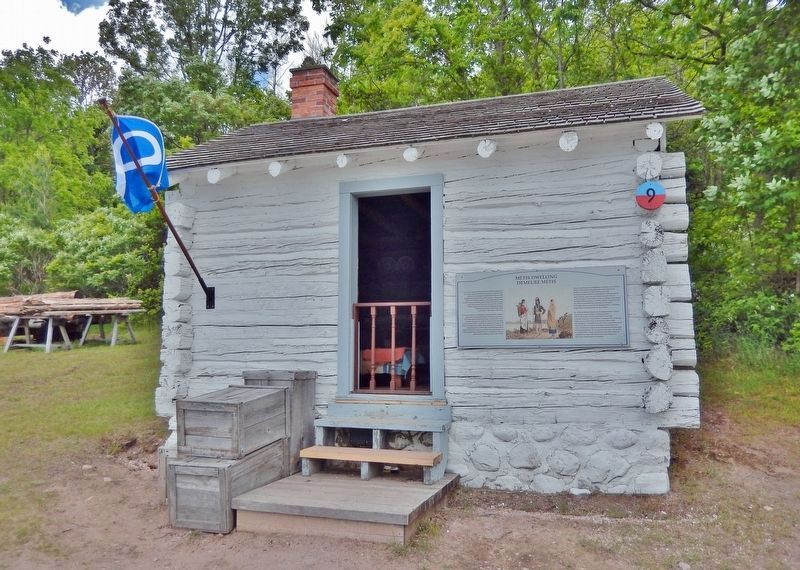
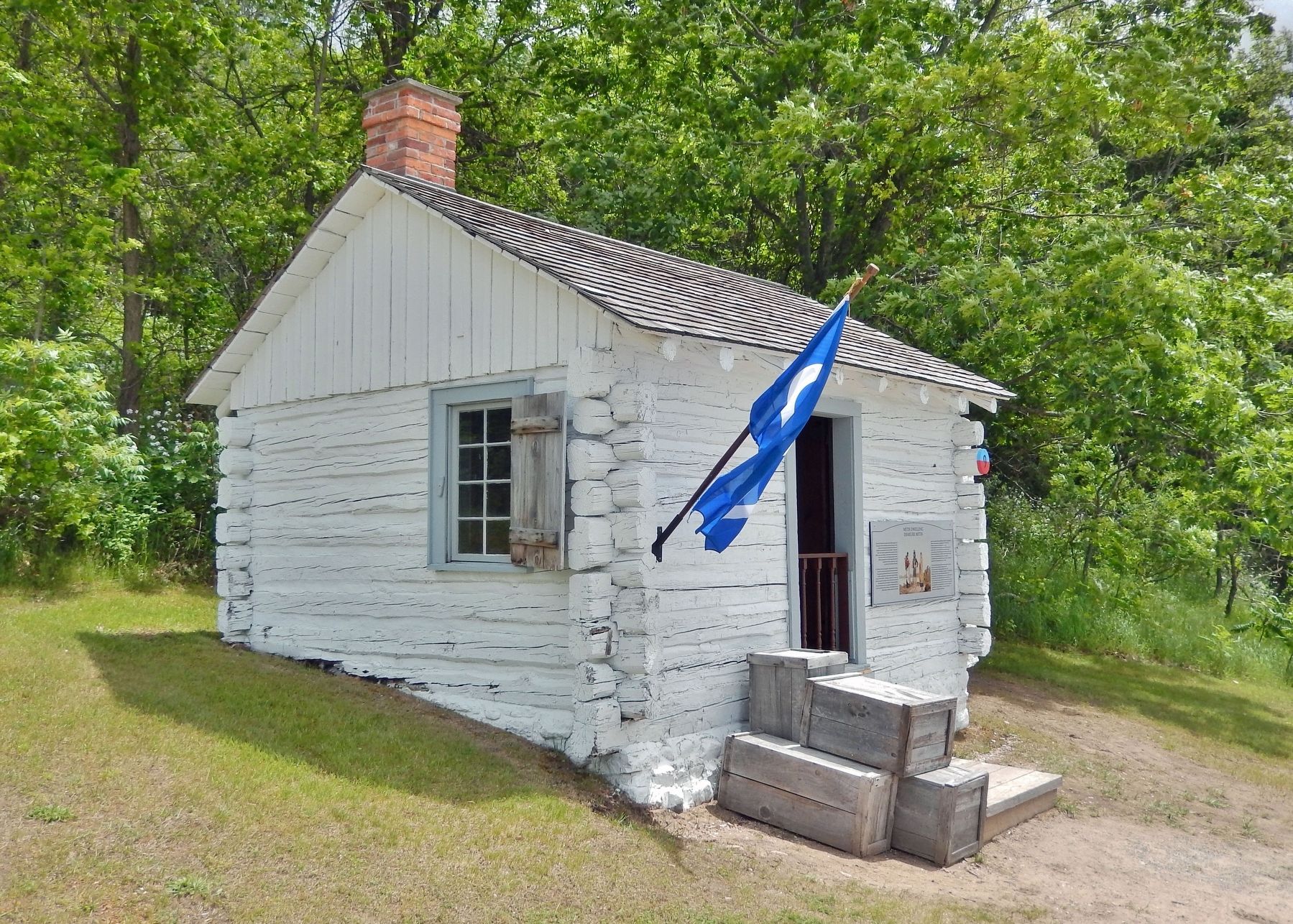
The marker is mounted at eye-level on the front facade of the dwelling — on the right side of the entrance.

Regionally, this marker is in Central Ontario Cottage Country and specifically in Georgian Bay Country. It is also in Central Canada. Globally, it is in North America, on the Great Lakes, in the Western Hemisphere, in the Western World, and in the Anglosphere. Historically, it finds itself in what was once a British colony, the Viceroyalty of New France, the Haudenosaunee (Iroquois) Confederacy, and Rupert’s Land.
Other nearby markers. At least 8 other markers are within 3 kilometers of this marker, measured as the crow flies: Naval and Military Establishments on Lake Huron / Établissements navals et militaires du lac Huron (about 90 meters away, measured in a direct line); Henry Wolsey Bayfield (about
Photographed by Cosmos Mariner, June 7, 2024
3. Métis Dwelling / Demeure Métis
More about this marker. There is a Discovery Harbour entrance fee to access the interpretive trail and this historical marker.
Also see . . .
1. Métis (Wikipedia).
Excerpt: The Métis are an Indigenous people whose historical homelands include Canada's three Prairie Provinces extending into parts of Ontario, British Columbia, the Northwest Territories and the northwest United States. They have a shared history and culture, deriving from specific mixed European (primarily French, Scottish, and English) and Indigenous ancestry (primarily Cree with strong kinship to Cree people and communities), which became distinct through ethnogenesis by the mid-18th century, during the early years of the North American fur trade.(Submitted on November 9, 2024, by Cosmos Mariner of Cape Canaveral, Florida.)
2. Métis Recognition at Penetanguishene.
Excerpt: Ever since their relocation from Drummond Island, Penetanguishene has been the well-documented as the home to Métis in the Upper Great Lakes. Historical records from as early as the mid-1800s show that many visitors to the area recognized the Métis community at Penetanguishene as distinct from both their First Nations and non-Indigenous neighbours. An 1857 guidebook, Upper Lakes of North America, noted that Penetanguishene had about 500 residents and a distinct Métis population: “Here may be seen the native Indian, the half-breed, and the Canadian voyageur, with the full-blooded Englishman or Scotchman.” Penetanguishene remains home to a large and vibrant Métis community today.(Submitted on November 9, 2024, by Cosmos Mariner of Cape Canaveral, Florida.)
Credits. This page was last revised on November 9, 2024. It was originally submitted on November 8, 2024, by Cosmos Mariner of Cape Canaveral, Florida. This page has been viewed 126 times since then and 25 times this year. Photos: 1, 2, 3. submitted on November 9, 2024, by Cosmos Mariner of Cape Canaveral, Florida.
