
Near Tropic in Garfield County, Utah — The American Mountains (Southwest)
Water Canyon
Photographed by Tom Bosse, July 26, 2024
1. Water Canyon Marker
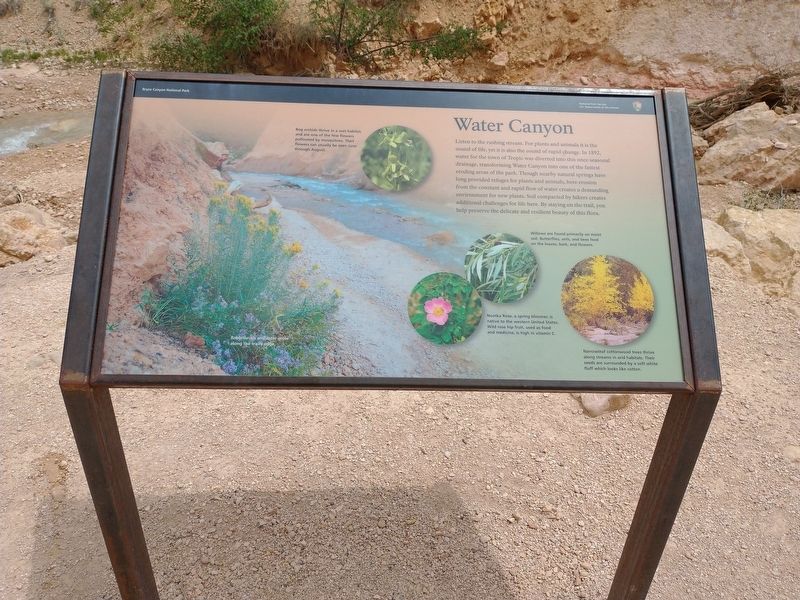
Listen to the rushing stream. For plants and animals it is the sound of life, yet it is also the sound of rapid change. In 1892, water for the town of Tropic was diverted into this once seasonal drainage, transforming Water Canyon into one of the fastest eroding areas of the park. Though nearby natural springs have long provided refuges for plants and animals, here erosion from the constant and rapid flow of water creates a demanding environment for new plants. Soil compacted by hikers creates additional challenges for life here. By staying on the trail, you help preserve the delicate and resilient beauty of this flora.
[Caption]: Bog orchids thrive in a wet habitat, and are one of the few flowers pollinated by mosquitoes. Their flowers can usually be seen June through August.
[Caption]: Rabbitbrush and aster grow along the trail’s edge.
[Caption]: Willows are found primarily on moist soil. Butterflies, ants, and bees feed on the leaves, bark, and flowers.
[Caption]: Nootka Rose, a spring bloomer, is native to the western United States. Wild rose hip fruit, used as food and medicine, is high in vitamin C.
[Caption]:
this page online
Erected by National Park Service, U.S. Department of the Interior.
Topics. This historical marker is listed in these topic lists: Natural Features • Parks & Recreational Areas. A significant historical year for this entry is 1892.
Location. 37° 39.856′ N, 112° 6.759′ W. Marker is near Tropic, Utah, in Garfield County. It is on Mossy Creek Trail, on the left when traveling west. Touch for map. Marker is in this post office area: Tropic UT 84776, United States of America. Touch for directions.

Regionally, this marker is in Canyon Country and specifically in Color Country. It is also in the American Mountain West, on the Colorado Plateau, and at the Four Corners. Globally, it is in North America, the Western Hemisphere, the Western World, and the Anglosphere. Historically, it finds itself in what was once New Spain and also Mexico’s Alta California.

Other nearby markers. At least 8 other markers are within 4 miles of this marker, measured as the crow flies: Hike the Hoodoos (about

Photographed by Tom Bosse, July 26, 2024
2. Water Canyon Marker
Also see . . .
1. Tropic Ditch wayside. (Submitted on November 9, 2024, by Tom Bosse of Jefferson City, Tennessee.)
2. A Pioneer Story. (Submitted on November 9, 2024, by Tom Bosse of Jefferson City, Tennessee.)
Photographed by Tom Bosse, July 26, 2024
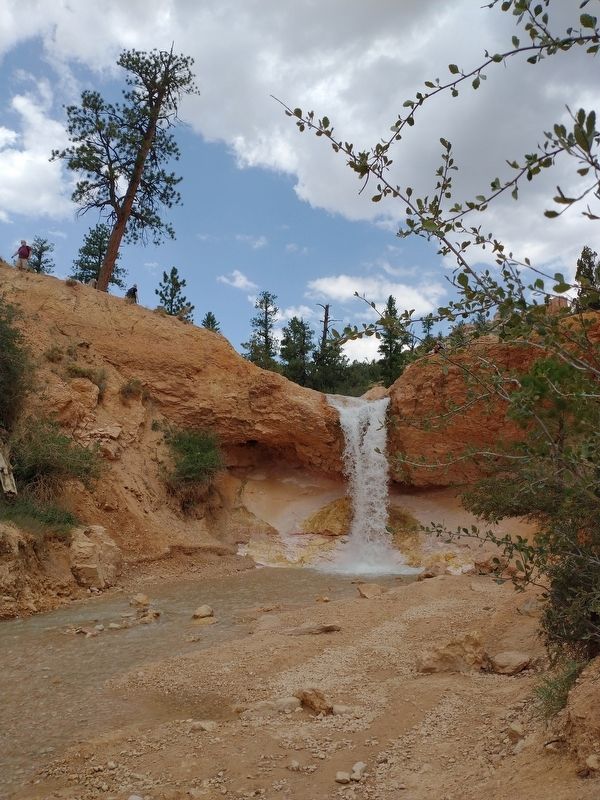
3. Mossy Cave Trail - Tropic Ditch Falls
Photographed by Tom Bosse, July 26, 2024
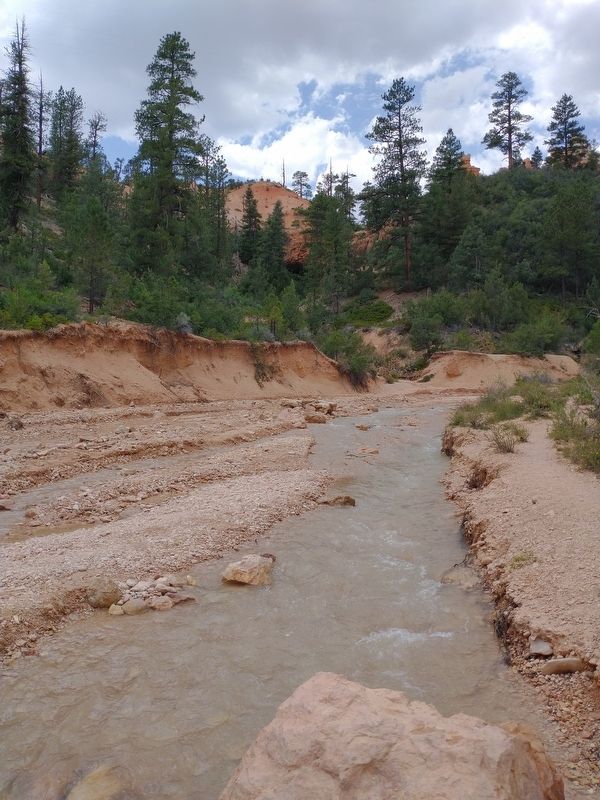
4. Mossy Cave Trail - Tropic Ditch
Photographed by Tom Bosse, July 26, 2024
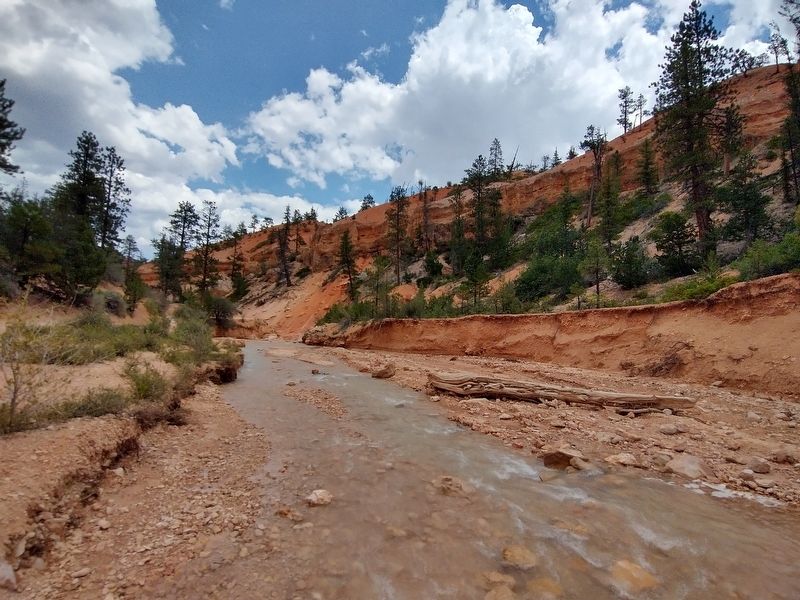
5. Mossy Cave Trail - Tropic Ditch

Photographed by Tom Bosse, July 26, 2024
6. Mossy Cave Trail - Tropic Ditch
Credits. This page was last revised on November 10, 2024. It was originally submitted on November 9, 2024, by Tom Bosse of Jefferson City, Tennessee. This page has been viewed 149 times since then and 10 times this year. Photos: 1, 2, 3, 4, 5, 6. submitted on November 9, 2024, by Tom Bosse of Jefferson City, Tennessee. • Andrew Ruppenstein was the editor who published this page.
