Penetanguishene in Simcoe County, Ontario — Central Canada (North America)
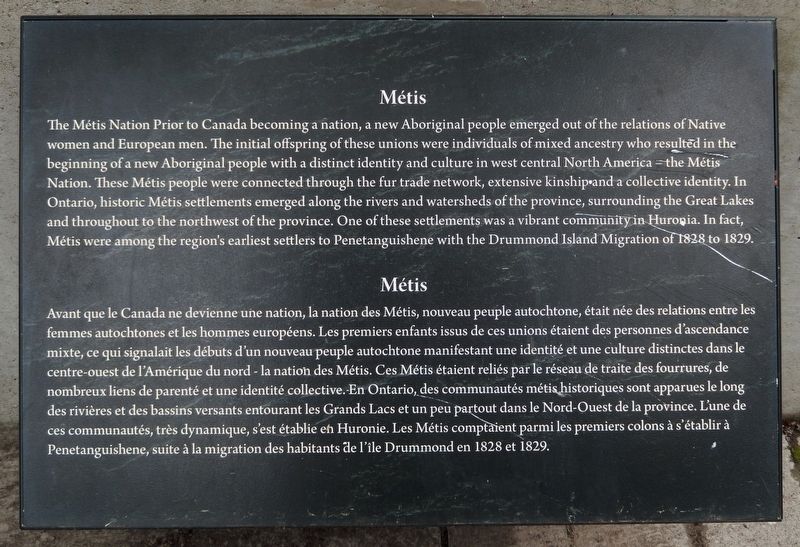
Métis
Photographed by Cosmos Mariner, June 7, 2024
1. Métis Marker

this page online
Topics. This historical marker is listed in these topic lists: Colonial Era • Indigenous Peoples and Communities • Settlements & Settlers. A significant historical year for this entry is 1828.
Location. 44° 46.18′ N, 79° 56.34′ W. Marker is in Penetanguishene, Ontario, in Simcoe County. It can be reached from Owen Street just north of Water Street. The marker and sculpture are located along the Trans-Canada Trail in Penetanguishene Rotary Champlain Wendat Park. Touch for map. Marker is at
Photographed by Cosmos Mariner, June 7, 2024
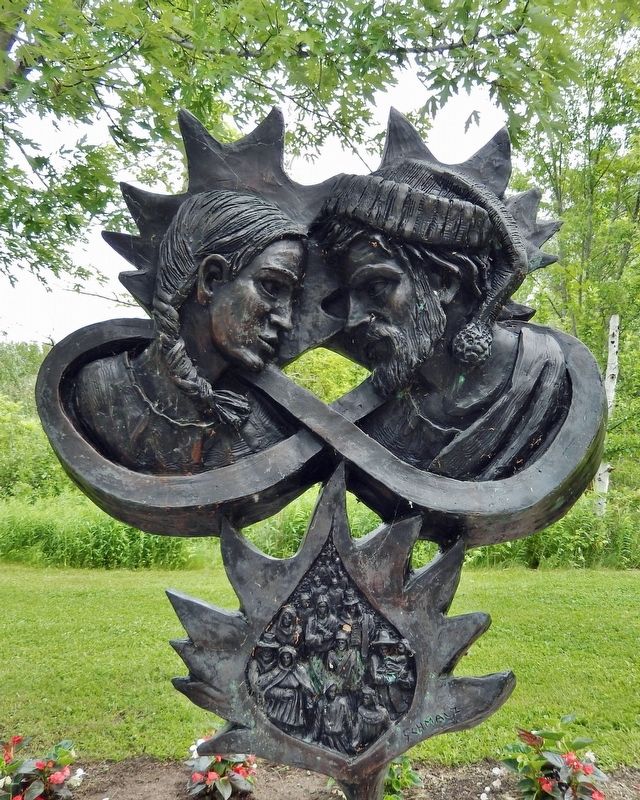
2. Métis Sculpture

Regionally, this marker is in Central Ontario Cottage Country and specifically in Georgian Bay Country. It is also in Central Canada. Globally, it is in North America, on the Great Lakes, in the Western Hemisphere, in the Western World, and in the Anglosphere. Historically, it finds itself in what was once a British colony, the Viceroyalty of New France, the Haudenosaunee (Iroquois) Confederacy, and Rupert’s Land.
Other nearby markers. At least 8 other markers are within walking distance of this marker: Joseph Le Caron (a few steps from this marker); Father Laboureau (a few steps from this marker); Athol Murray (a few steps from this marker); The Wendat (within shouting distance of this marker); John Graves Simcoe (1752-1806) (within shouting distance of this marker); Brûlé (within shouting distance of this marker); Champlain in Ontario, 1615 (within shouting distance of this marker); Huron-Wendat Circle of Nations / Cercle des Nations huronnes-wendat (within shouting distance of this marker). Touch for a list and map
Photographed by Cosmos Mariner, June 7, 2024
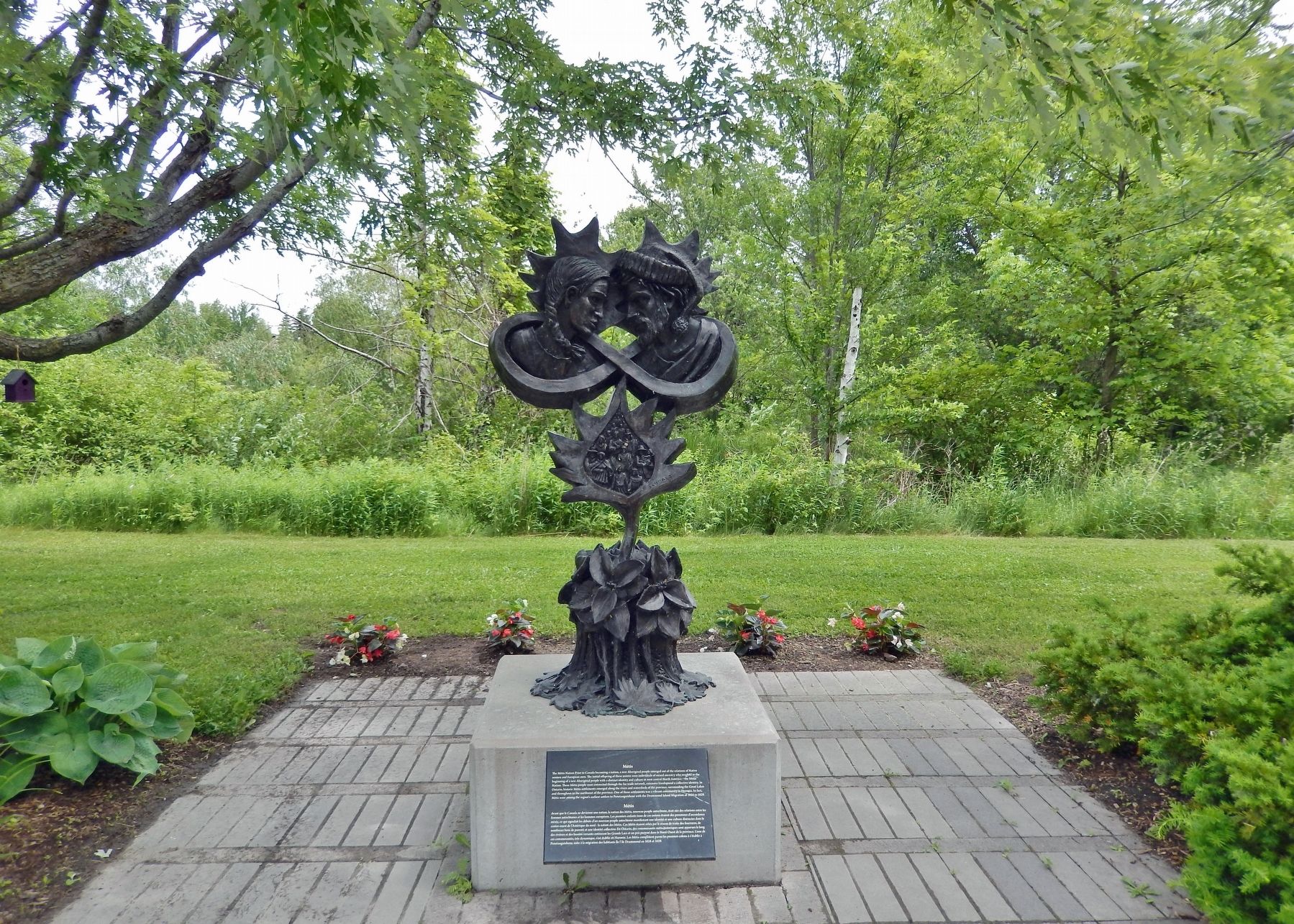
3. Métis Marker & Sculpture
Also see . . . Métis Nation of Ontario (Wikipedia).
Excerpt: Métis populations have existed in Ontario since the late 1700s. The two major fur trading companies, the Hudson's Bay Company and the North West Company, both banned employees from having relationships with Indigenous women, but that did not stop some of the men from doing so. While many Métis were of French descent, according to Campbell, there was a significant Anglo-Métis population around the Great Lakes and James Bay areas, who were the result of marriages between Indigenous women and English or Scottish fur traders and British soldiers.(Submitted on November 10, 2024, by Cosmos Mariner of Cape Canaveral, Florida.)
Credits. This page was last revised on November 10, 2024. It was originally submitted on November 10, 2024, by Cosmos Mariner of Cape Canaveral, Florida. This page has been viewed 157 times since then and 24 times this year. Photos: 1, 2, 3. submitted on November 10, 2024, by Cosmos Mariner of Cape Canaveral, Florida.
