Thurmont in Frederick County, Maryland — The American Northeast (Mid-Atlantic)
Destruction and Renewal
Catoctin Furnace Iron Trail
Photographed by Allen C. Browne, October 30, 2024
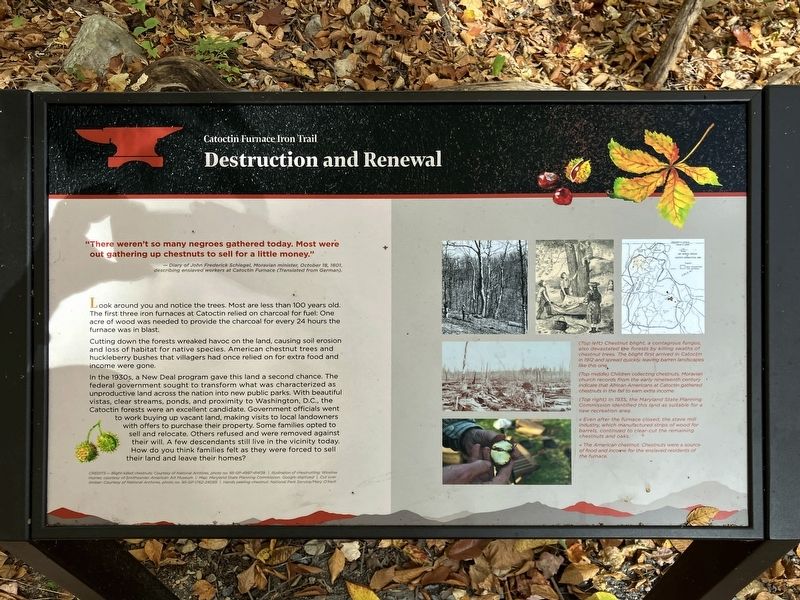
1. Destruction and Renewal Marker
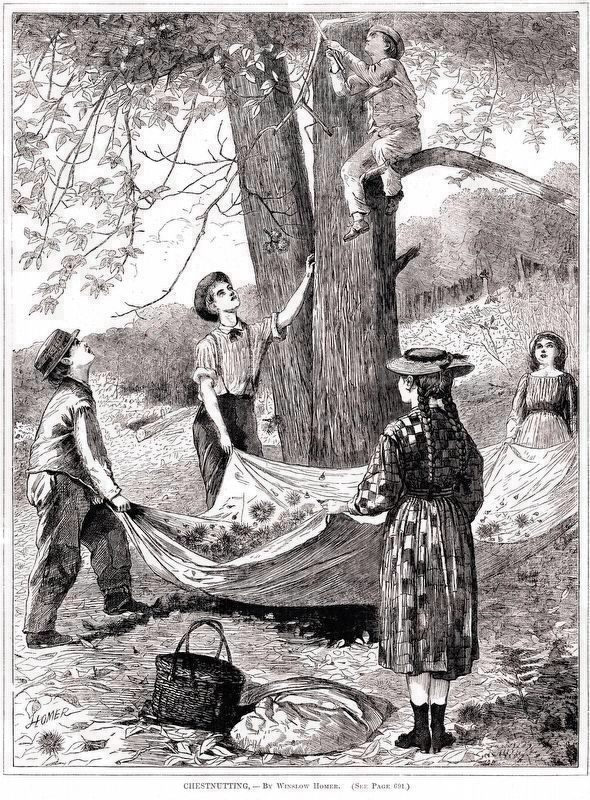
“There weren't so many negroes gathered today. Most were out gathering up chestnuts to sell for a little money.”
— Diary of John Frederick Schlegel, Moravian minister, October 18, 7801, describing enslaved workers at Catoctin Furnace (Translated from German).
Look around you and notice the trees. Most are less than 100 years old. The first three iron furnaces at Catoctin relied on charcoal for fuel: One acre of wood was needed to provide the charcoal for every 24 hours the furnace was in blast.
Cutting down the forests wreaked havoc on the land, causing soil erosion and loss of habitat for native species. American chestnut trees and huckleberry bushes that villagers had once relied on for extra food and income were gone. In the 1930s, a New Deal program gave this land a second chance. The federal government sought to transform what was characterized as unproductive land across the nation into new public parks. With beautiful vistas, clear streams, ponds, and proximity to Washington, D.C., the Catoctin forests were an excellent candidate. Government officials went to work buying up vacant land, making visits to
this page online
[Captions:]
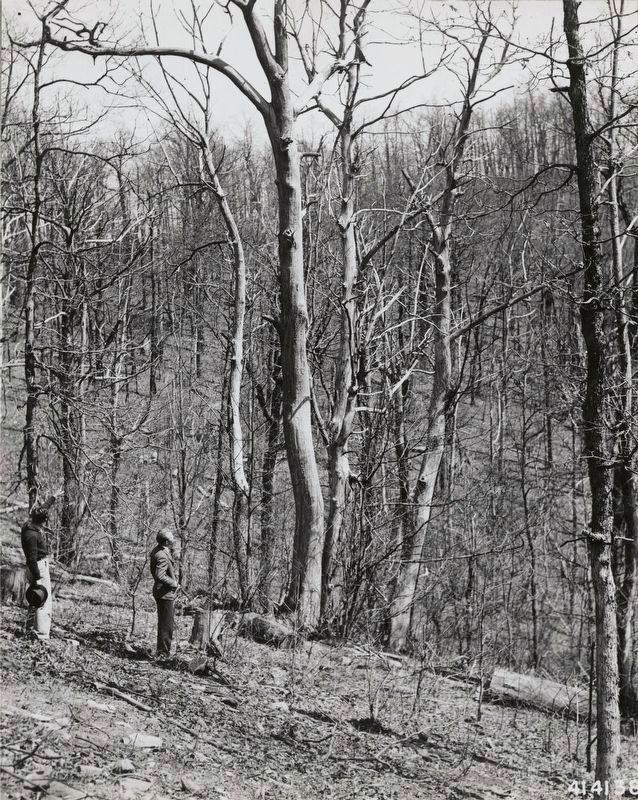
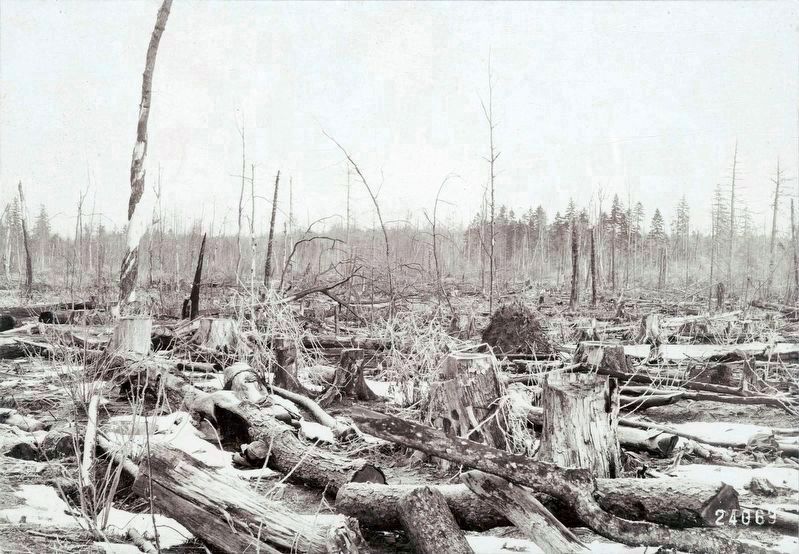
(Top left) Chestnut blight, a contagious fungus, also devastated the forests by killing swaths of chestnut trees. The blight first arrived in Catoctin in 1912 and spread quickly, leaving barren landscapes like this one.
(Top middle) Children collecting chestnuts. Moravian church records from the early nineteenth century indicate that African Americans at Catoctin gathered chestnuts in the fall to earn extra income.
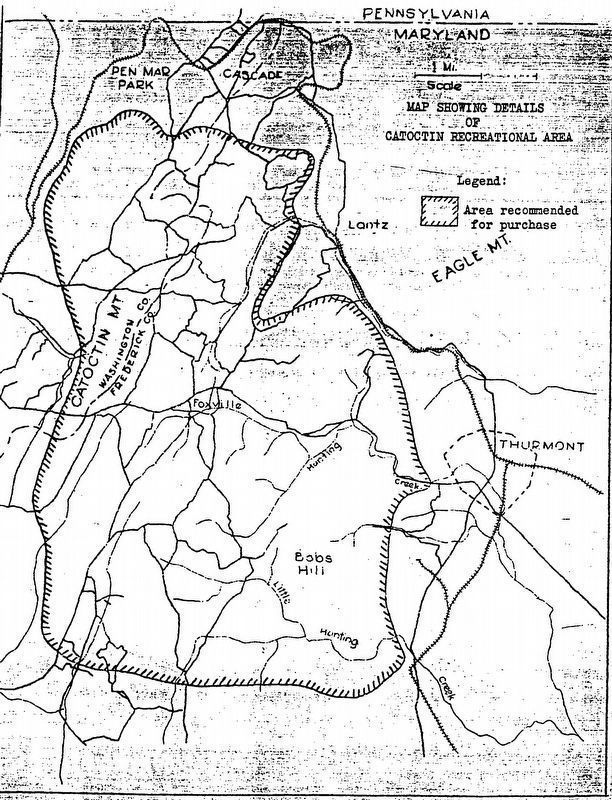
(Top right) In 1935, the Maryland State Planning Commission identified this land as suitable for a new recreation area.
« Even after the furnace closed, the stave mill industry, which manufactured strips of wood for barrels, continued to clear-cut the remaining chestnuts and oaks.
« The American chestnut. Chestnuts were a source of food and income for the enslaved residents of the furnace.
Erected by Catoctin
Photographed by Allen C. Browne, October 30, 2024
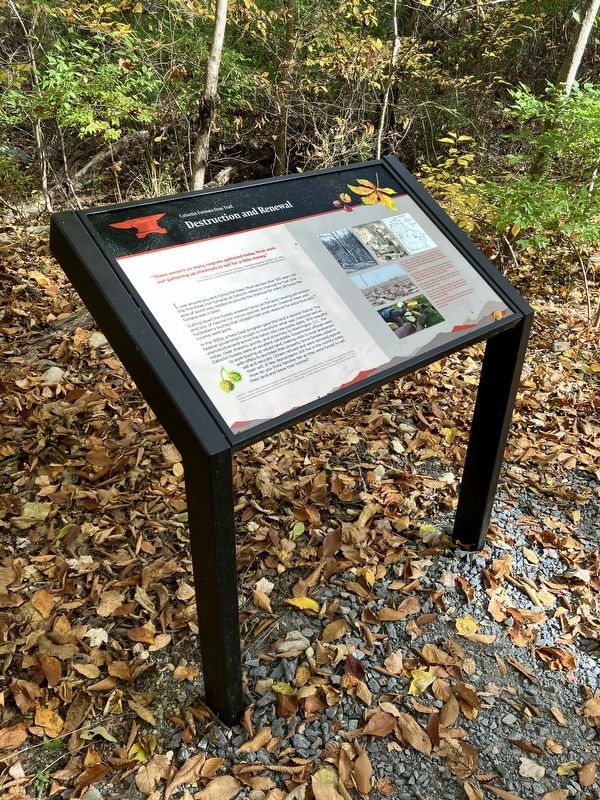
2. Destruction and Renewal Marker
Topics. This historical marker is listed in these topic lists: African Americans • Environment • Parks & Recreational Areas. A significant day of the year for for this entry is October 18.
Location. 39° 35.069′ N, 77° 26.149′ W. Marker is in Thurmont, Maryland, in Frederick County. It can be reached from Catoctin Mountain Highway. Touch for map. Marker is at or near this postal address: 10182 Catoctin Mountain Hwy, Thurmont MD 21788, United States of America. Touch for directions.

Regionally, this marker is in the Washington Metropolitan Area and in Central Maryland. It is also in the American Mid-Atlantic. Globally, it is in North America, the Western Hemisphere, the Western World, and the Anglosphere. Historically, it finds itself in what was once one of the original Thirteen Colonies and also the Antebellum South.
Other nearby markers. At least 8 other markers are within walking distance of this marker: A Creek Rediscovered (within shouting distance of this marker); A Fractured Landscape (within
Other markers no longer nearby. Second Growth Forest (was a few steps from this marker but has been replaced with another marker now near it); Little Hunting Creek (was within shouting distance of this marker but has been replaced with another marker now near it); Slag Heaps (was about 500 feet away but has been replaced with another marker now near it).
National Archives
4. Chestnut Blight
Injured Trees, Disease, Georgia, Chattahoochee National Forest photo by Clint Davis, July 1941. National Archives.
The Metropolitan Museum of Art
5. Children Collecting Chestnuts
Chestnutting, Woodcut by Winslow Homer at the Metropolitan Museum of Art in New York, This image appeared originally in Every Saturday magazine, Oct. 29, 1870, page 700.
The National Park Service
6. Catoctin Recreational Area Map
From Catoctin Mountain Park: An Historic Resource Study. by Dr. Edmund F. Wehrle, March 2000, page 269.Appendix 11: Maryland State Planning Commission Maps of Original Park Borders, 1935.(Maryland State Planning Commission, Preliminary Statement on Problems of Land Usage in Maryland, July 1935)
National Archives
7. Burned Slash
Burned Slash in Bear Creek Lumber Cos workings - photo taken by John Foley, Dec. 12, 1901. National Archives: NAID: 7020291, Local ID: 95-GP-1762-24069
Credits. This page was last revised on May 18, 2026. It was originally submitted on November 13, 2024, by Allen C. Browne of Silver Spring, Maryland. This page has been viewed 139 times since then and 24 times this year. Photos: 1, 2. submitted on November 13, 2024, by Allen C. Browne of Silver Spring, Maryland. 3. submitted on May 18, 2026, by Devry Becker Jones of Washington, District of Columbia. 4, 5, 6, 7. submitted on November 13, 2024, by Allen C. Browne of Silver Spring, Maryland.
