Highland Park in Pittsburgh in Allegheny County, Pennsylvania — The American Northeast (Mid-Atlantic)
Highland Park
Photographed by Bradley Owen, November 1, 2024
1. Highland Park Marker
Edward Bigelow
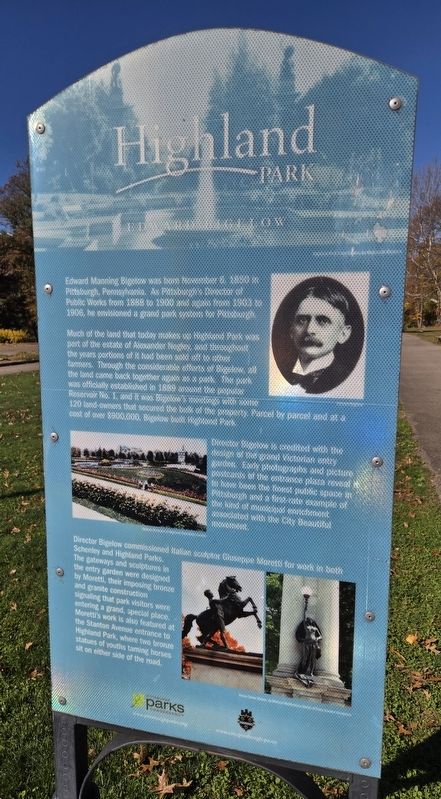
Edward Manning Bigelow was born November 6, 1850 in Pittsburgh, Pennsylvania. As Pittsburgh's Director of Public Works from 1888 to 1900 and again from 1903 to 1906, he envisioned a grand park system for Pittsburgh.
Much of the land that today makes up Highland Park was part of the estate of Alexander Negley, and throughout the years portions of it had been sold off to other farmers. Through the considerable efforts of Bigelow, all the land came back together again as a park. The park was officially established in 1889 around the popular Reservoir No. 1, and it was Bigelow's meetings with some 120 land-owners that secured the bulk of the property. Parcel by parcel and at a cost of over $900,000, Bigelow built Highland Park.
Director Bigelow is credited with the design of the grand Victorian entry garden. Early photographs and picture postcards of the entrance plaza reveal it to have been the finest public space in Pittsburgh and a first-rate example of the kind of municipal enrichment associated with the City Beautiful movement.
Director Bigelow commissioned Italian sculptor Giuseppe Moret for work in both Schenley and Highland Parks. The gateways and sculptures in the entry garden were designed by Moretti, their imposing bronze and granite construction signaling that park visitors were entering a grand, special place. Moretti's work is also featured at the Stanton Avenue entrance to Highland Park, where two bronze statues of youths taming horses sit on either side of the road.
(Captions):
Edward Bigelow
Historic Postcard of Highland Park Entry Garden
Horse Tamer Statue, by Melissa McMasters; Detail of Entry Garden Sculpture
Healthy Parks
Healthy City
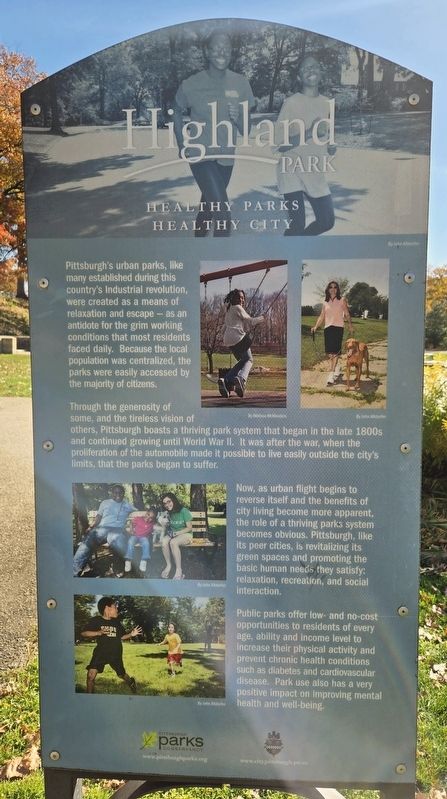
Pittsburgh's urban parks, like many established during this country's Industrial revolution,
this page online
Through the generosity of some, and the tireless vision of others, Pittsburgh boasts a thriving park system that began in the late 1800s and continued growing until World War II. It was after the war, when the proliferation of the automobile made it possible to live easily outside the city's limits, that the parks began to suffer.
Now, as urban flight begins to reverse itself and the benefits of city living become more apparent, the role of a thriving parks system becomes obvious. Pittsburgh, like its peer cities, is revitalizing its green spaces and promoting the basic human needs they satisfy: relaxation, recreation, and social interaction.
Public parks offer low and no-cost opportunities to residents of every age, ability and income level to increase their physical activity and prevent chronic health conditions such as diabetes and cardiovascular disease. Park use also has a very positive
Photographed by Bradley Owen, November 1, 2024
2. Highland Park Marker
Photos by Melissa McMasters and John Altdorfer
Erected by Pittsburgh Parks Conservancy and the City of Pittsburgh.
Topics. This historical marker is listed in these topic lists: Arts, Letters, Music • Parks & Recreational Areas • Science & Medicine. A significant historical date for this entry is November 6, 1850.
Location. 40° 28.779′ N, 79° 54.936′ W. Marker is in Pittsburgh, Pennsylvania, in Allegheny County. It is in Highland Park. It is on Reservoir Drive north of North Highland Avenue, on the left when traveling east. Touch for map. Marker is at or near this postal address: 101 Reservoir Drive, Pittsburgh PA 15206, United States of America. Touch for directions.

Regionally, this marker is in the American Northeast, in the Mid-Atlantic, in the Ohio River Valley, in Appalachia, and specifically in Northern Appalachia. Globally, it is in North America, the Western Hemisphere, the Western World, and the Anglosphere. Historically, it finds itself in what was once the Viceroyalty of New France, the Haudenosaunee (Iroquois) Confederacy, and one of the original Thirteen
Photographed by Bradley Owen, November 1, 2024
3. Highland Park Marker
Other nearby markers. At least 8 other markers are within walking distance of this marker: D.A.R. Memorial Plaque (within shouting distance of this marker); Mrs. Nathaniel B. Hogg (within shouting distance of this marker); a different marker also named Highland Park (within shouting distance of this marker); Flora (within shouting distance of this marker); Alexander Negley Memorial (approx. 0.2 miles away); Negley Memorial (approx. 0.2 miles away); Park Land History (approx. ¼ mile away); Pioneer Cemetery (approx. ¼ mile away). Touch for a list and map of all markers in Pittsburgh.
Photographed by Bradley Owen, November 1, 2024
4. Reservoir No. 1
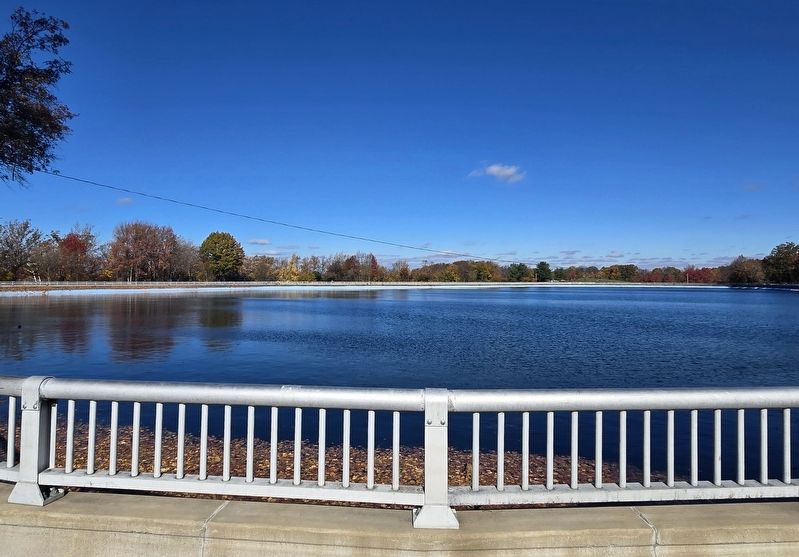
Highland Park was established in 1889 around this popular body of water.
Credits. This page was last revised on December 12, 2024. It was originally submitted on December 11, 2024, by Bradley Owen of Morgantown, West Virginia. This page has been viewed 227 times since then and 29 times this year. Photos: 1, 2, 3, 4. submitted on December 12, 2024, by Bradley Owen of Morgantown, West Virginia.
