Remington in Baltimore, Maryland — The American Northeast (Mid-Atlantic)
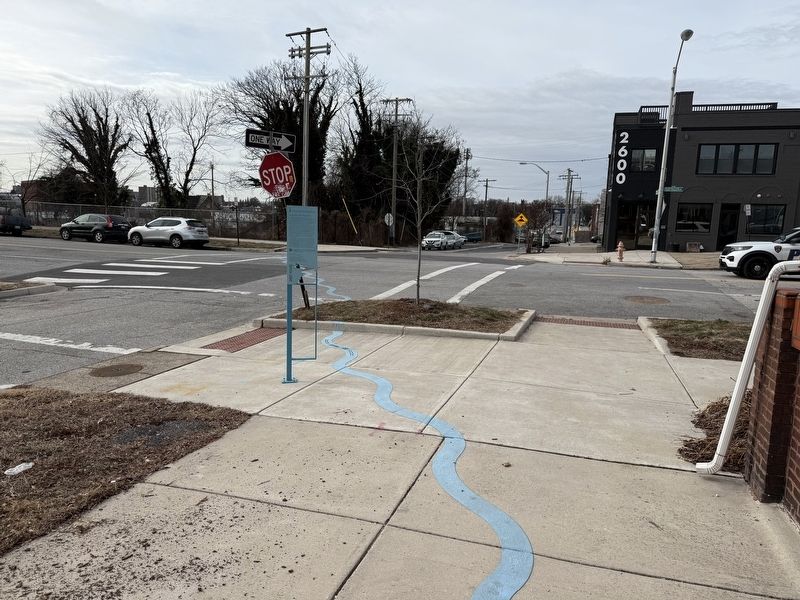
26th St
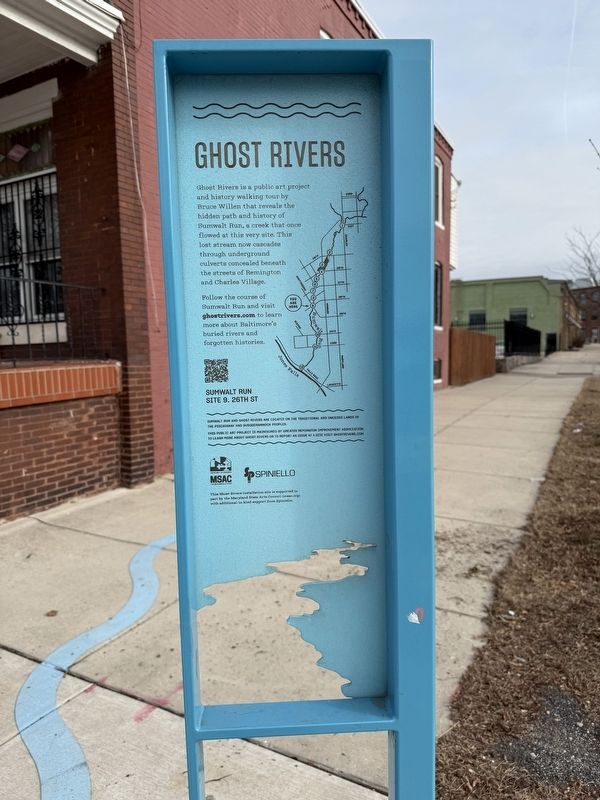
| — | Ghost Rivers | — |
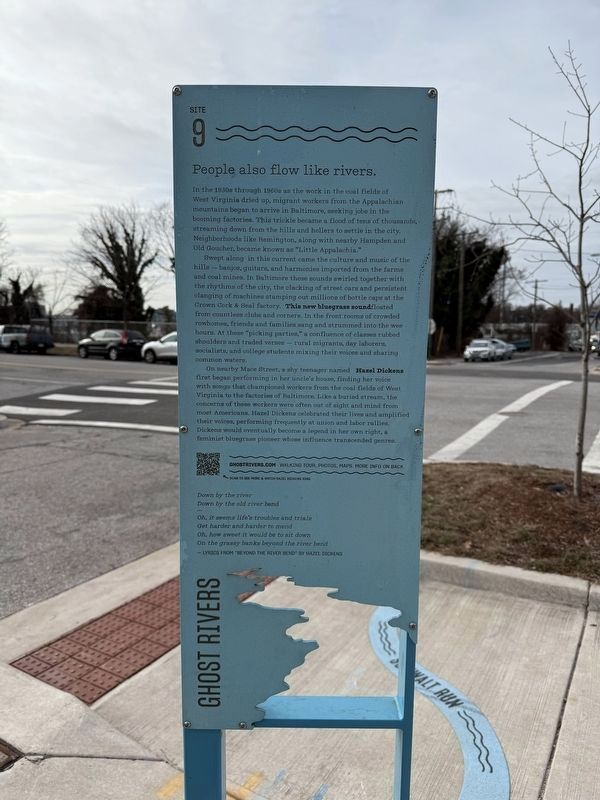
People also flow like rivers.
In the 1930s through 1960s as the work in the coal fields of West Virginia dried up, migrant workers from the Appalachian mountains began to arrive in Baltimore, seeking jobs in the booming factories. This trickle became a flood of tens of thousands, streaming down from the hills and hollers to settle in the city. Neighborhoods like Remington, along with nearby Hampden and Old Goucher, became known as "Little Appalachia."
Swept along in this current came the culture and music of the hills — banjos, guitars, and harmonies imported from the farms and coal mines. In Baltimore these sounds swirled together with the rhythms of the city, the clacking of street cars and persistent clanging of machines stamping out millions of bottle caps at the Crown Cork & Seal factory. This new bluegrass sound floated from countless clubs and corners. In the front rooms of crowded rowhomes, friends and families sang and strummed into the wee hours. at these "picking parties," a confluence of classes rubbed shoulders and traded verses — rural migrants, day laborers, socialists, and college students mixing
this page online
On nearby Mace Street, a shy teenager named Hazel Dickens first began performing in her uncle's house, finding her voice with songs that championed workers from the coal fields of West Virginia to the factories of Baltimore. Like a buried stream, the concerns of these workers were often out of sight and mind from most Americans. Hazel Dickens celebrated their lives and their voices, performing frequently at union and labor rallies. Dickens would eventually become a legend in her own right, a feminist bluegrass pioneer whose influence transcended genres.
Down by the river
Down by the old river bend
…
Oh, it seems life's troubles and trials
Get harder and harder to mend
Oh, how sweet it would be to sit down
On the grassy banks beyond the river bend
— Lyrics from "Beyond the River Bend" by Hazel Dickens
Erected by Greater Remington Improvement Association. (Marker Number 9.)
Topics. This historical marker is listed in these topic lists: Arts, Letters, Music • Labor Unions • Settlements & Settlers • Women.
Location. 39° 19.134′ N,

Regionally, this marker is in Central Maryland. It is also in the American Mid-Atlantic, in the Chesapeake Bay Region, and on the Eastern Seaboard. Globally, it is in the North Atlantic Region, North America, the Western Hemisphere, the Western World, and the Anglosphere. Historically, it finds itself in what was once one of the original Thirteen Colonies and also the Antebellum South.
Other nearby markers. At least 8 other markers are within walking distance of this marker: Lorraine Ave (within shouting distance of this marker); 27th St (about 400 feet away, measured in a direct line); Remington (about 600 feet away); Remington Ave (about 700 feet away); Cresmont Ave (approx. 0.2 miles away); 24th St (approx. 0.2 miles away); 28th St (approx. 0.2 miles away); Howard St
Also see . . . YouTube video of Hazel Dickens performing "Beyond the River Bend". (Submitted on February 2, 2025, by Devry Becker Jones of Washington, District of Columbia.)
Credits. This page was last revised on February 2, 2025. It was originally submitted on February 2, 2025, by Devry Becker Jones of Washington, District of Columbia. This page has been viewed 133 times since then and 26 times this year. Photos: 1, 2, 3. submitted on February 2, 2025, by Devry Becker Jones of Washington, District of Columbia.
